




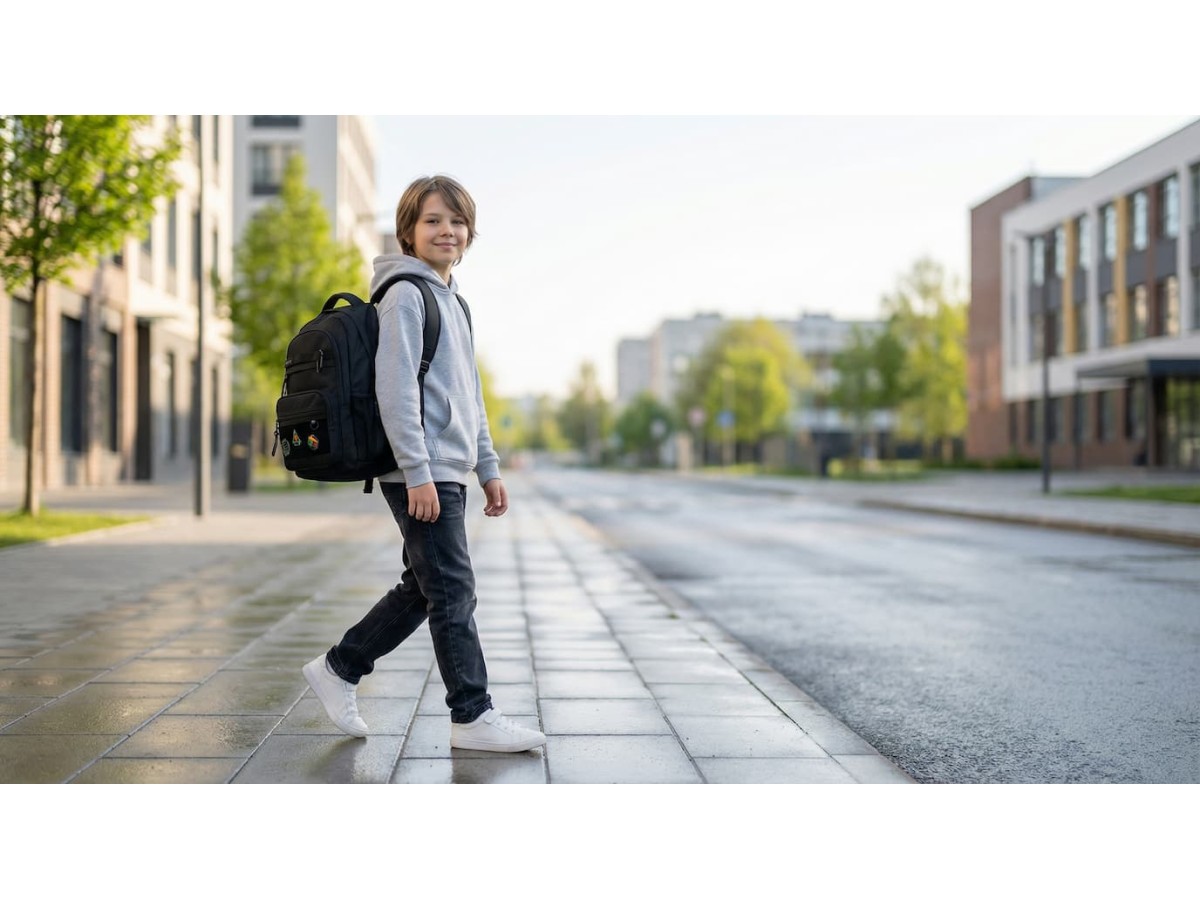
Quick answer: Under heavier daily loads, hiking backpacks with an internal frame and a true hip belt can reduce shoulder loading by transferring part of the load to the pelvis. Under lighter loads (typically under ~10% of body weight), a properly fitted school backpack can be adequate — if weight limits and correct wearing habits are enforced.
Every school day, millions of children and teens carry backpacks that are heavier than their bodies can comfortably handle. Parents searching for the safest backpack for kids, ergonomic school backpacks, or ways to prevent backpack-related back pain will find one core issue matters most: how the backpack distributes weight across the body.
If you're comparing designs, start with ergonomic backpacks built for stable weight distribution and better posture support.
Trusted by Canadian parents for daily school comfort.
Recommended Backpack Weight: What Research and Guidelines Say
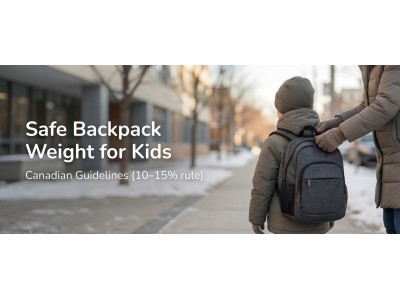
Key guideline: Many pediatric and musculoskeletal health sources commonly recommend keeping a child’s loaded backpack around 10–15% of body weight.
This guideline is widely used because heavier loads are consistently associated with increased discomfort, altered posture, and higher reports of neck/shoulder/back pain in school-age children.
Safe backpack weight reference table
Use this as a fast check at home (weigh the backpack with everything inside).
| Child’s Body Weight | 10% Limit | 15% Limit |
|---|---|---|
| 40 lb (18 kg) | 4 lb (1.8 kg) | 6 lb (2.7 kg) |
| 60 lb (27 kg) | 6 lb (2.7 kg) | 9 lb (4.1 kg) |
| 80 lb (36 kg) | 8 lb (3.6 kg) | 12 lb (5.4 kg) |
| 100 lb (45 kg) | 10 lb (4.5 kg) | 15 lb (6.8 kg) |
| 120 lb (54 kg) | 12 lb (5.4 kg) | 18 lb (8.2 kg) |
Tip: Weight is only half the equation. Use this backpack size guide to match size and volume to your child’s grade and height.
Backpacks and Back Pain: What Studies Commonly Report
Key takeaway: Research commonly finds that heavier backpacks and improper wear (one strap, low-hanging fit, load far from the back) are linked with higher reports of musculoskeletal pain in children and teens.
Back pain in children is more common than many parents expect, and multiple studies and reviews discuss associations between backpack load, posture changes, and discomfort. The pattern that repeats most often is not “a backpack causes damage overnight,” but that repeated daily overload can create ongoing strain — especially during growth periods.
Practical risk pattern: a child carries too much weight, the pack sits too low, straps aren’t adjusted, and the load sits far from the back. That combination makes the body compensate: leaning forward, tightening muscles, and altering gait.
Organization also matters. Structured packs can help students stay focused — see how backpack design affects learning and comfort.
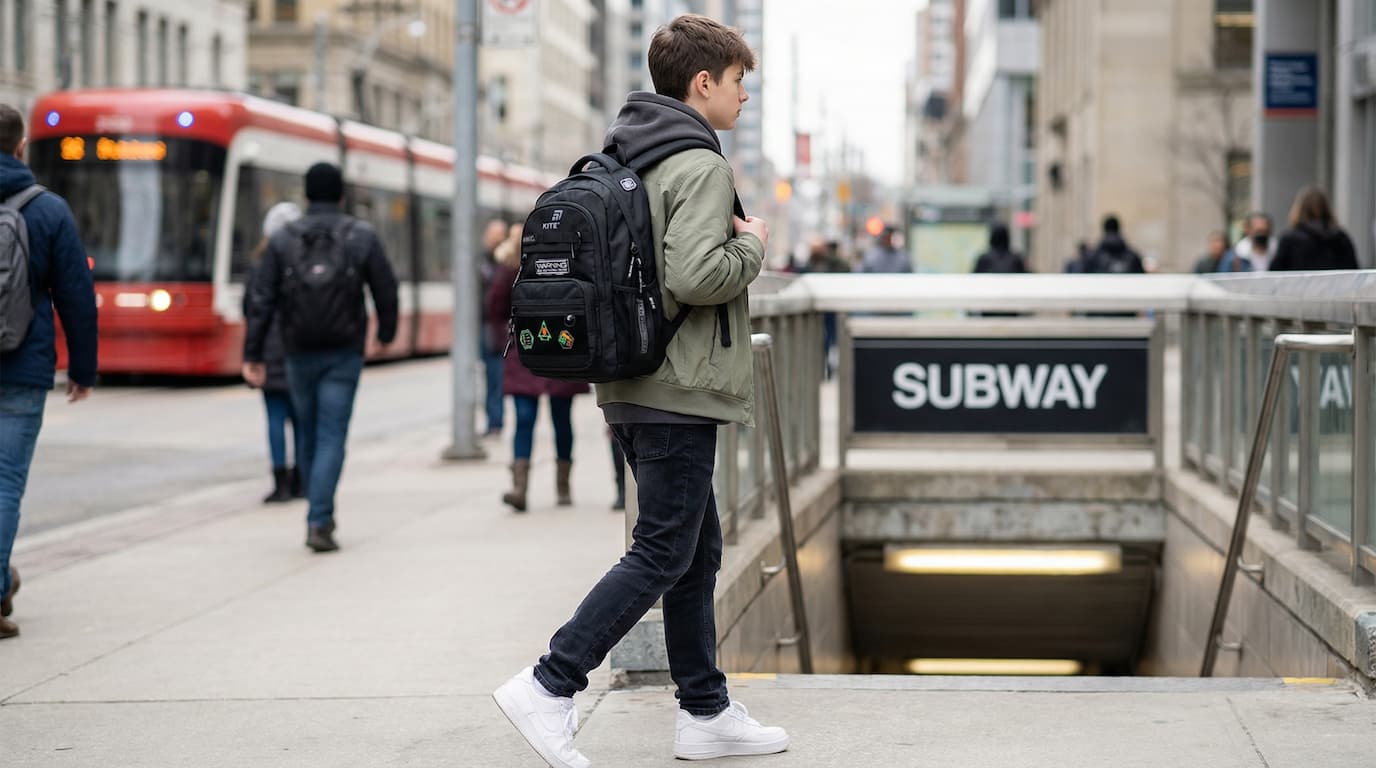
Canada factor: snow, slush, and winter layers can change fit and make packs feel heavier.
Biomechanics: Why Backpack Design Changes Spinal Load
Biomechanics in one line: The farther the load sits from the spine, the more torque (rotational force) the body must resist — which can increase strain on the neck, shoulders, and lower back.
What changes inside the body
- Center of gravity shifts: A heavier load placed far from the back encourages forward lean to keep balance.
- Neck and upper back compensation: Forward head posture and shoulder rounding can increase muscle effort and perceived pain in the neck/upper back area.
- Disc and tissue compression: Some studies show measurable changes after walking with load for short periods; repeated overload is the concern.
- Asymmetry matters: One-strap carrying often creates side-bending and uneven muscle activation.
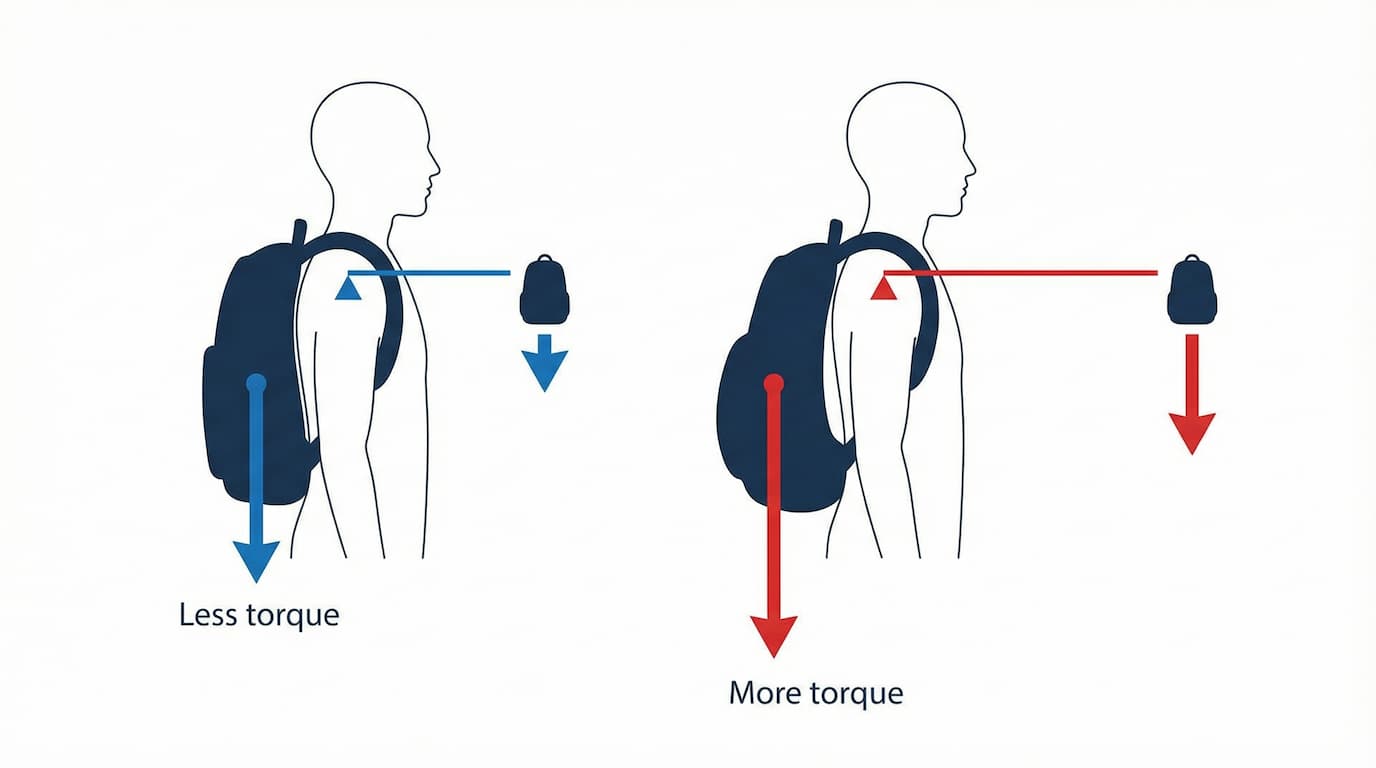
Infographic idea: “Close-to-back load = less torque” (simple lever illustration).
Hiking Backpacks vs School Backpacks: Structural Differences That Matter
Direct verdict for heavy loads: A hiking-style pack with an internal frame and a real hip belt can reduce shoulder loading under heavier weights by transferring part of the load to the pelvis — something most standard school backpacks do not do.
Side-by-side comparison
| Feature | Standard School Backpack | Hiking Backpack (Frame + Hip Belt) |
|---|---|---|
| Internal frame | Usually none | Often present (aluminum/composite) |
| Hip belt load transfer | Rare / often minimal | Designed to transfer meaningful load to pelvis |
| Sternum strap | Sometimes | Common |
| Torso-length adjustment | Rare | Common |
| Back panel structure | Soft or lightly padded | Structured, often more supportive |
| Load positioning | Often vertical book stack | Often designed to keep load close to the spine |
| Best use case | Light-to-moderate daily school loads | Heavier daily loads, longer walks/commutes |
| Tradeoffs | Less supportive under heavy weight | Can be bulkier/heavier empty; must be fitted correctly |
Bottom line: If the school load is consistently heavy (or your child already complains of pain), the “hiking pack concept” (frame + true hip belt + adjustability) is biomechanically smarter. If the load is light and managed, a school backpack can be fine — but only if it fits and is used correctly.
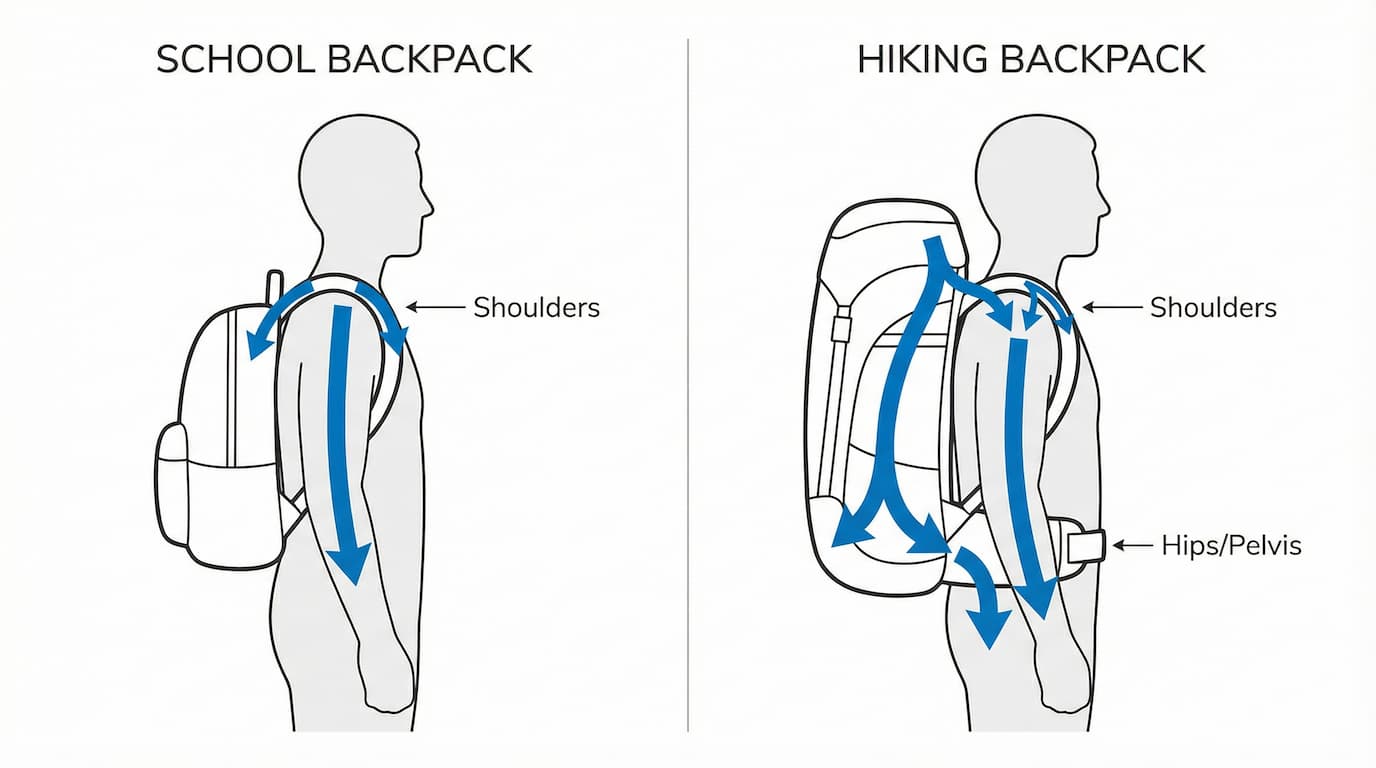
Infographic idea: arrows showing where the weight “goes” in each backpack type.
What Makes a Backpack Truly Ergonomic (Not Marketing)
Definition: An ergonomic backpack helps keep load close to the body, distributes pressure comfortably, and supports stable posture — ideally with fit adjustability and (for heavier loads) some form of load transfer beyond just the shoulders.
Ergonomic features that actually matter
- Fit for torso length: the bag shouldn’t hang low; it should sit stable and centered.
- Wide padded straps: reduce pressure points, improve comfort and stability.
- Sternum strap: helps keep straps positioned correctly.
- Structured back panel: reduces “hard item poking” and keeps shape consistent.
- Smart internal organization: lets you pack heavy items closest to the back.
- For heavy loads: a real hip belt + supportive structure matters more than extra padding.
Canada note: In winter, thick jackets can change how straps sit. Re-check strap length and sternum strap placement after switching from a T-shirt season to winter layers.
For a deeper explanation, read what makes a backpack truly orthopedic and why structure matters more than padding.
Medical-Style Safe Use Checklist (Do This First)
Action summary: Use both straps, keep total weight near 10–15% body weight, pack heavy items closest to the back, and adjust straps so the bag sits high and stable.
Correct wear and fit
- Use both shoulder straps (no one-strap carrying).
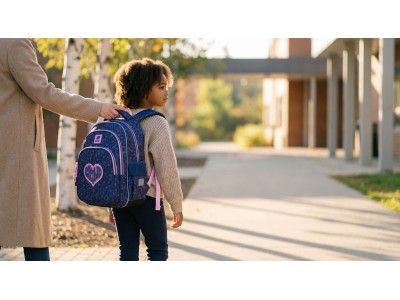
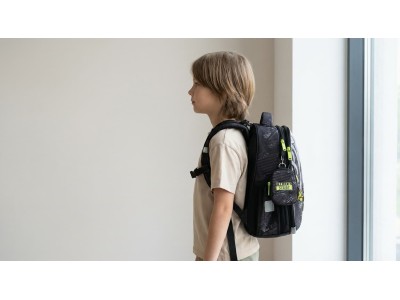
- Adjust so the bag sits high and close to the back (not sagging at the hips).
- Use the sternum strap (if present) to keep straps from sliding outward.
- Pack heavy items closest to the back panel.
- If the load is consistently heavy, consider a pack with a true hip belt and adjust it to sit on the hip bones.
Need help choosing? See how to choose a backpack that supports posture .
Warning signs the backpack is too heavy
- Numbness/tingling in arms or hands
- Shoulder or neck pain after carrying
- Deep red strap marks
- Visible forward leaning while walking
- Struggling to put the backpack on
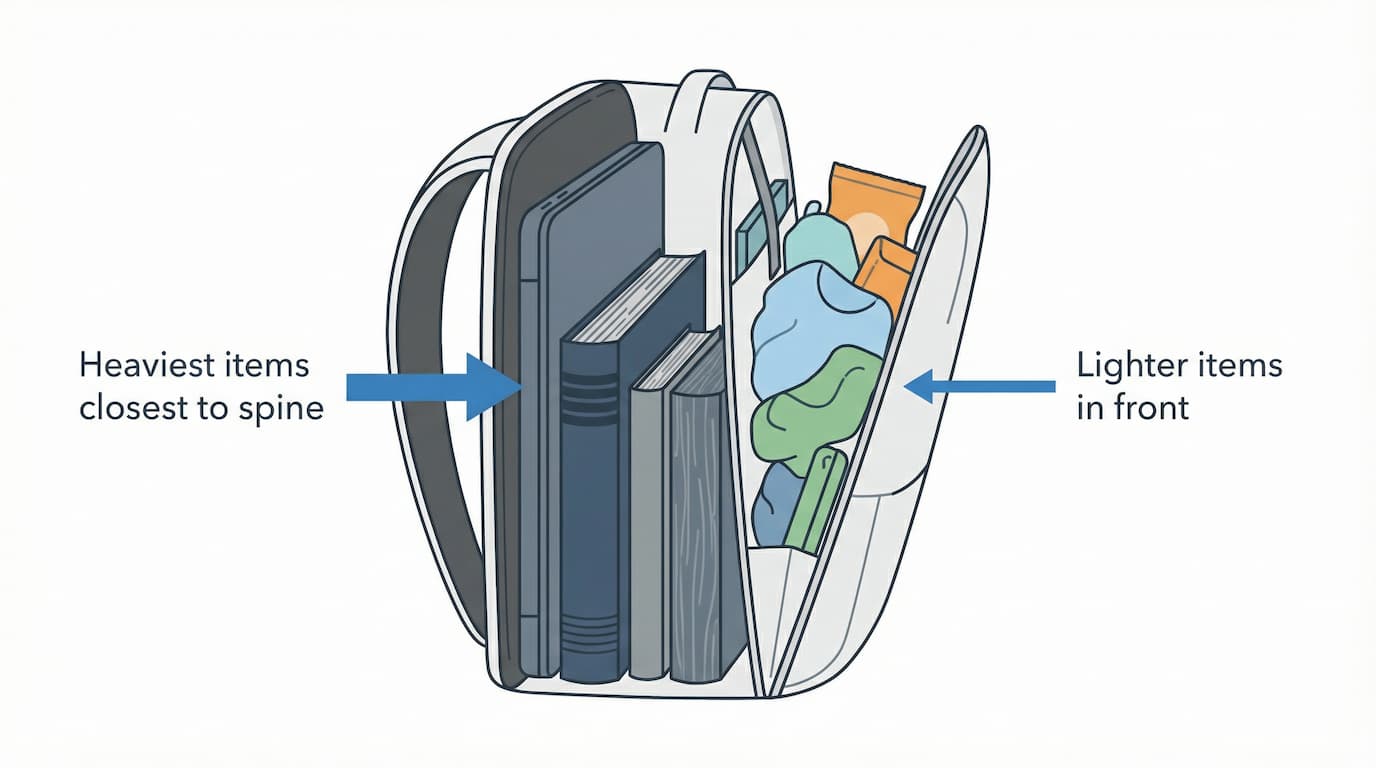
Infographic idea: packing order (heavy close to back, light outward).
Certifications That Matter (How to Talk About Them Correctly)
Best practice: Treat “ergonomic” as a claim unless there is independent testing or transparent criteria. Certification is strongest when it comes from a recognized third party with a published evaluation process.
There are different certification and testing bodies in Europe. Two names you may see referenced include:
- IGR (Institute for Health and Ergonomics, Germany): an independent organization that evaluates ergonomic products under structured processes.
- AGR (Aktion Gesunder Rücken, Germany): another back-health organization known for its seal in certain product categories.
Important: Don’t assume every backpack is certified. If a brand claims certification, look for a clear reference to the certifying body and the specific product/model list.
Verdict: Which Is Better for Spine Health?
Scientific-style verdict: If a student’s daily load is consistently heavy, a hiking-style backpack with an internal frame and a true hip belt is often the more spine-friendly design because it can reduce shoulder loading and stabilize the load closer to the body. For lighter, controlled loads, a well-fitted school backpack can be sufficient.
Choose a school backpack if your child’s daily load is moderate and you can consistently keep the pack within guideline range. Prioritize wide straps, a structured back panel, a sternum strap, and smart internal organization.
Consider a hiking-style backpack if your child carries a heavy daily load, walks longer distances, commutes, or already complains of discomfort. The key is fit: the hip belt must sit on the hip bones, and the torso length must match the child.
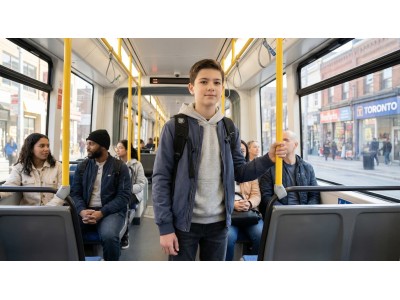
For longer walks or transit routes, see best backpacks for long school commutes .
FAQ
How heavy should a child’s backpack be?
A commonly recommended guideline is keeping the loaded backpack around 10–15% of body weight. The most practical approach is to weigh the backpack (with everything inside) on a household scale.
Are hiking backpacks always better?
Not automatically. They can be better under heavier loads if they have an internal frame and a true hip belt — but they also must fit correctly. A poorly fitted hiking pack can still feel uncomfortable.
Is a waist strap the same as a hip belt?
No. Many school backpacks have a thin strap that stabilizes the bag but doesn’t transfer meaningful weight. A true hip belt is padded, structured, and designed to sit on the hip bones to transfer load to the pelvis.
What’s the easiest thing parents can do immediately?
Weigh the backpack for a normal school day, tighten straps so it sits high and close to the back, and pack heavy items closest to the back panel.
Sources & Further Reading
- Pediatric association backpack weight guidelines (PMC)
- Canadian Chiropractic Association: Back-to-school backpack guide
- AAP publication (Backpack Weight: How Heavy Is Safe)
- Back pain and schoolbags (PMC)
- Backpack load and pain discussion (PMC)
- Biomechanics / load distribution (PMC)
- Biomechanics paper (ScienceDirect)
This article is for education only and does not replace medical advice. If a child has persistent pain, consult a pediatrician, physiotherapist, or orthopedic specialist.

Write a comment