





Canada-focused guide for parents of teens & students • Updated: December 2025
Important note: This article shares practical organization ideas and school-morning systems. It is not medical advice, does not diagnose or treat any condition, and should not replace guidance from qualified healthcare professionals or educators.
It’s 7:45 AM on a dark winter morning. You’re at the door, boots on, travel mug in hand — and your teen is turning their backpack inside out looking for a permission slip, a charger, or the homework they swore they packed. A crumpled worksheet slides across the floor. A granola bar wrapper appears from nowhere. The stress rises fast.
If you’ve lived this scene in Toronto, Mississauga, Ottawa, Vancouver, Montreal — or anywhere with icy sidewalks and early buses — you know the feeling: you’re not “overreacting.” And your teen isn’t necessarily “being lazy.” For many students navigating ADHD traits, anxiety, or executive function challenges, a well-designed, predictable system can remove a daily trigger. That’s where backpack organization for students with ADHD becomes a practical tool — not a cure, not a diagnosis — just one supportive piece of a calmer day.
A backpack isn’t just storage. For a student, it’s a mobile base: the place where school, commute, sports, food, tech, and life collide. When that base is chaotic, the day often starts chaotic. When it’s predictable, mornings can be calmer — and a calm school morning routine Canada families strive for becomes more realistic. Calmer mornings often lead to better focus, fewer conflicts, and a smoother start to learning.
Why Clutter Hits ADHD and Anxious Students Harder
Most people can handle a little mess. But for students who struggle with attention regulation, working memory, or anxiety, a backpack full of “visual noise” can drain their energy before first period even starts. The issue isn’t character. It’s friction.
Simple idea: Think of your teen’s mental energy like a phone battery. Every “Where is it?” moment drains it. If the backpack makes items easy to find, it helps protect battery life for learning.
Cognitive Load: The Invisible Weight of Disorganization
When a student has to search for a pencil, dig for a transit card, or worry whether homework is buried at the bottom, their brain is doing extra work. That extra work is cognitive load. It steals attention away from reading, math, and comprehension because the brain is busy managing uncertainty.
Even small repeated moments matter: “Where’s my charger?” “Did I pack my planner?” “Is my lunch leaking?” For many teens, those micro-stressors stack up and show up as irritability, shutdown, or refusal to engage. A predictable backpack layout reduces the number of daily decisions and searches — which means more energy left for the actual school day.
Executive Function: Why Teens Need External Systems
Executive function includes planning, time management, organization, and task initiation. When students have gaps here, they often need executive function tools for teens — external supports that reduce reliance on memory in the most stressful moments (rushing out the door, switching classes, catching the bus).
A structured backpack can act like an “external brain”: it holds the system so the teen doesn’t have to. The goal isn’t perfect organization; it’s consistent “homes” for the essentials. When the backpack becomes predictable, the teen builds confidence: “I know where my keys live. I know where my laptop is. I don’t need to dump everything to prove it.”
The Anxiety Loop: “I Can’t Trust My System”
Anxiety thrives on uncertainty. If a student doesn’t trust their bag — meaning they can’t reliably predict where things are — their body can shift into a stress response in the morning. They may arrive at school already activated: tense, rushed, and unable to settle. Predictability is one way to lower situational stress without a long conversation at 7:45 AM.
How Structure and Predictability Support Calmer Learning
The goal isn’t perfection. It’s predictability. Predictability creates a sense of safety, and safety supports attention. When “keys live here” and “laptop lives there,” the student doesn’t need to constantly check, panic, or re-pack.
Over time, routine-based systems require less effort. The brain starts to automate the steps. That matters for teens who struggle with organization because the system becomes “default” rather than “something I have to remember.” A predictable backpack routine is boring — and that’s exactly why it works.
Reality check: A “70% organized” backpack maintained by your teen beats a “100% organized” backpack maintained by you. Ownership builds the skill.
Key Design Features of an ADHD-Friendly Backpack
You don’t need a “medical backpack.” You need a bag designed for real student life: rushing, cold fingers, tech, crowded hallways, and messy transitions. Here are design traits that support structure without overcomplicating the day.
1) Visual Calm: Bright Interiors Beat “Black Holes”
Dark linings plus deep unstructured space equals lost items. If a pen disappears into a dark bag, it might as well not exist. A lighter interior makes items easier to spot quickly, which reduces digging, dumping, and stress spikes — especially helpful on winter mornings.
2) Clear Zones: Intuitive Layout, Less Decision Fatigue
Too many tiny pockets can cause decision fatigue: “Where does the charger go today?” The best layouts use a few obvious zones: a main book area, a protected tech sleeve, a quick-access pocket, and a “life” area for food or gym gear. Simple structure is more sustainable than complex structure.
3) The One-Handed Test: Reliability Under Pressure
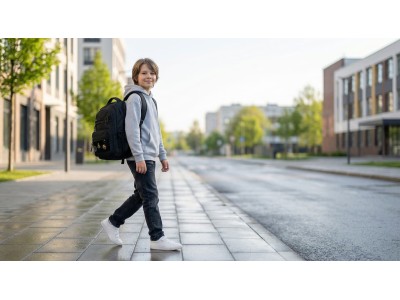
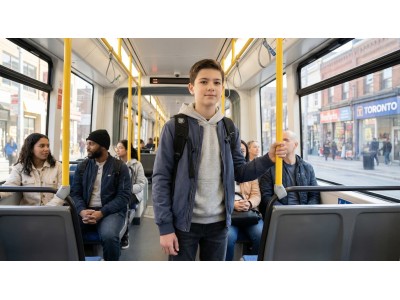
At a bus stop in January, with gloves on and the bus pulling in, frustration builds instantly if zippers snag or pockets are hard to reach. Smooth zippers, sturdy pulls, and quick-access sections matter more than most people realize.
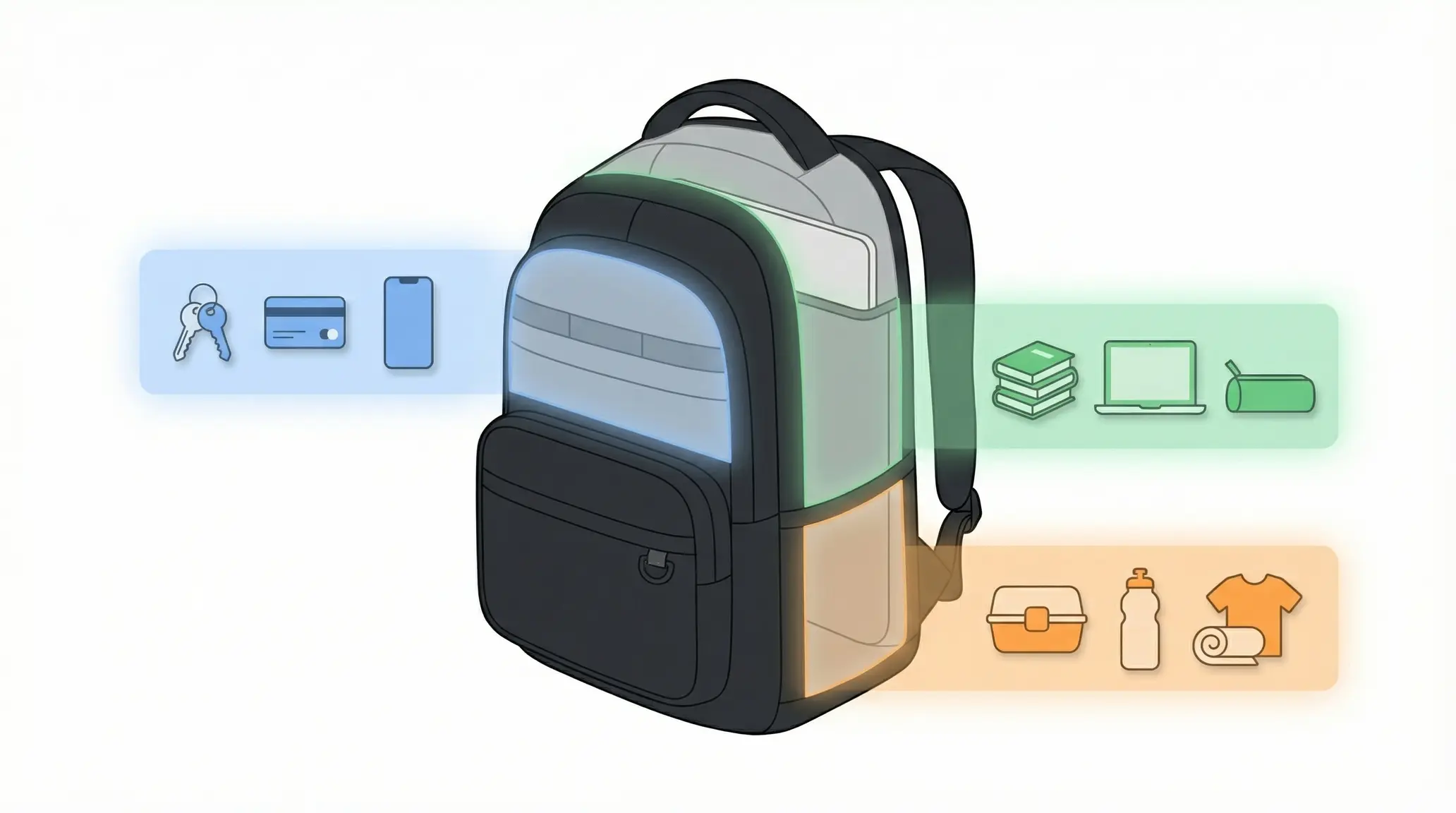
The “Backpack Zone System” That Actually Works for Teens
Forget complicated color-coded systems that collapse by October. The Zone System works because it’s based on when items are used. It reduces decision-making and supports consistency.
Rule: Items never cross zones. If the transit card belongs to Zone 1, it never goes into the book compartment “just this once.” Consistency is what makes the system reliable.
| Zone | What goes here | Why it supports focus and calm |
|---|---|---|
| Zone 1: Commute Outer / Quick-Access |
Keys, phone, wallet, earbuds, lip balm, transit pass (Presto / OPUS / bus pass), toque | These are “panic items.” Quick access prevents last-minute dumping and reassurance checking. |
| Zone 2: Classroom Main Compartment |
Binders, textbooks, pencil case, planner, laptop (in sleeve), charger (if needed) | Creates a clean “learning zone.” At the desk, everything academic is in one place. |
| Zone 3: Life Bottom / Separate Section |
Lunch, gym clothes, water bottle, snacks, wet items pouch, meds (if applicable) | Keeps moisture/food away from papers and tech. Prevents “soggy homework” disasters. |
The Canadian Winter Layer Problem (Bulk + Wet + Rushing)
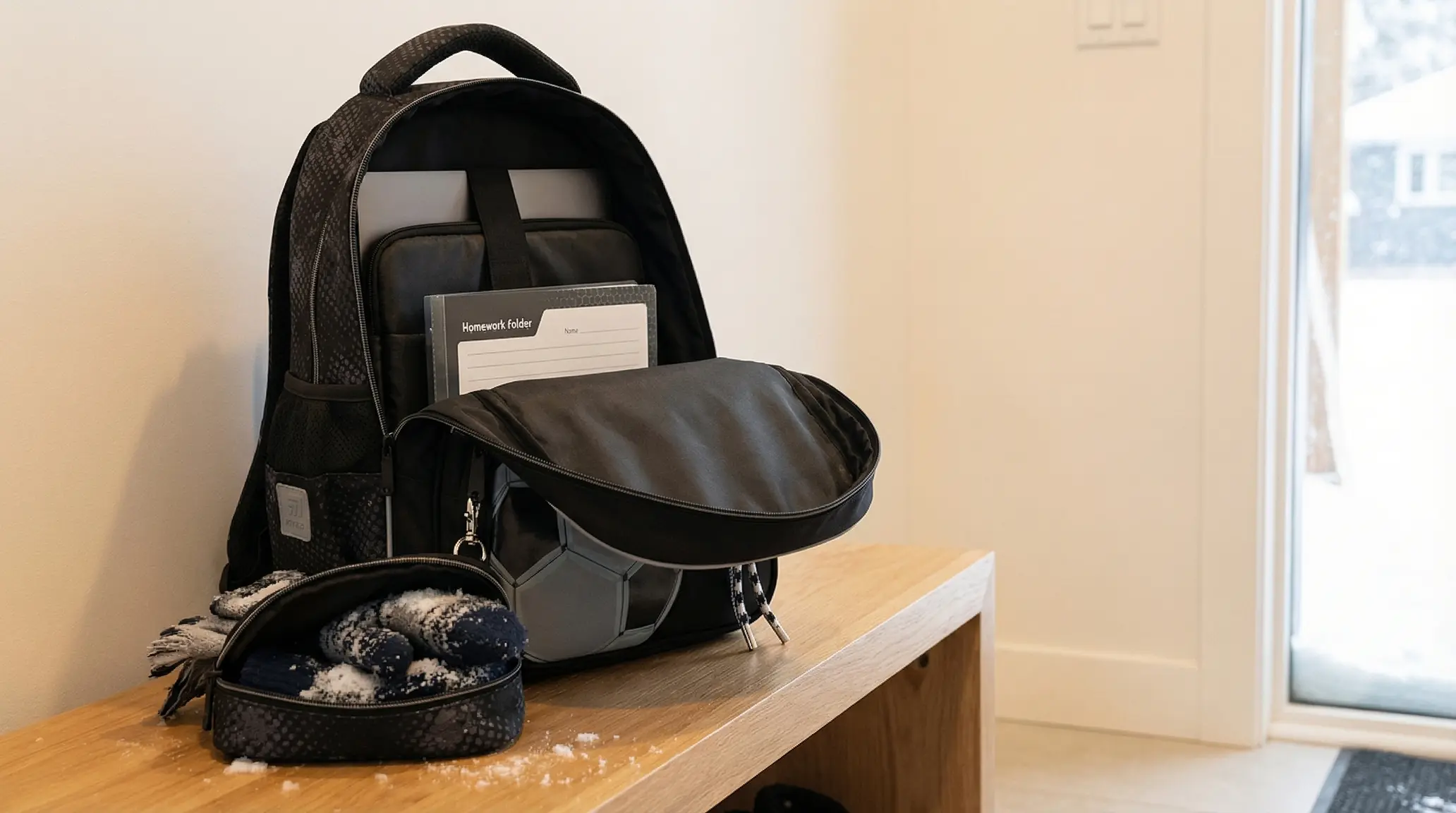
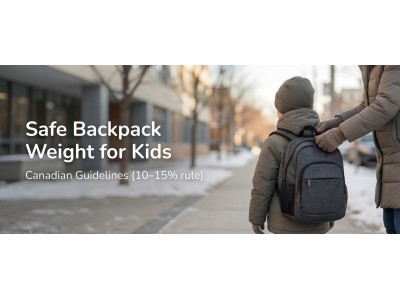
From December to March, Canada adds a real complication: bulky gear and moisture. Puffy coats, wet mitts, scarves, and snow pants can destroy even a good system if everything gets shoved into one space. Winter also makes everything harder: it’s darker, colder, and teens are moving faster to catch buses and avoid waiting outside.
This is where most general “organization tips” fail — they don’t account for gloves, wet snow, and the reality that students are opening compartments with cold fingers while juggling coffee, a phone, and transit.
Three Winter Fixes That Keep the Inside Dry
- External Carry: If the backpack has straps/loops, put wet toque/mitts outside the bag (not on top of homework).
- “Wet Bag” Trick: Keep a small washable pouch in Zone 3. Damp gear goes into the pouch first to contain moisture.
- Core Stays Protected: Papers and laptop stay in Zone 2, closest to the back panel, away from slush and snacks.
A Simple Routine That Doesn’t Start Fights
The best system is the one your teen will repeat. That means it has to be fast, predictable, and low-effort. Below are two routines that work in real homes — and support backpack organization for students with ADHD without turning into a daily argument.
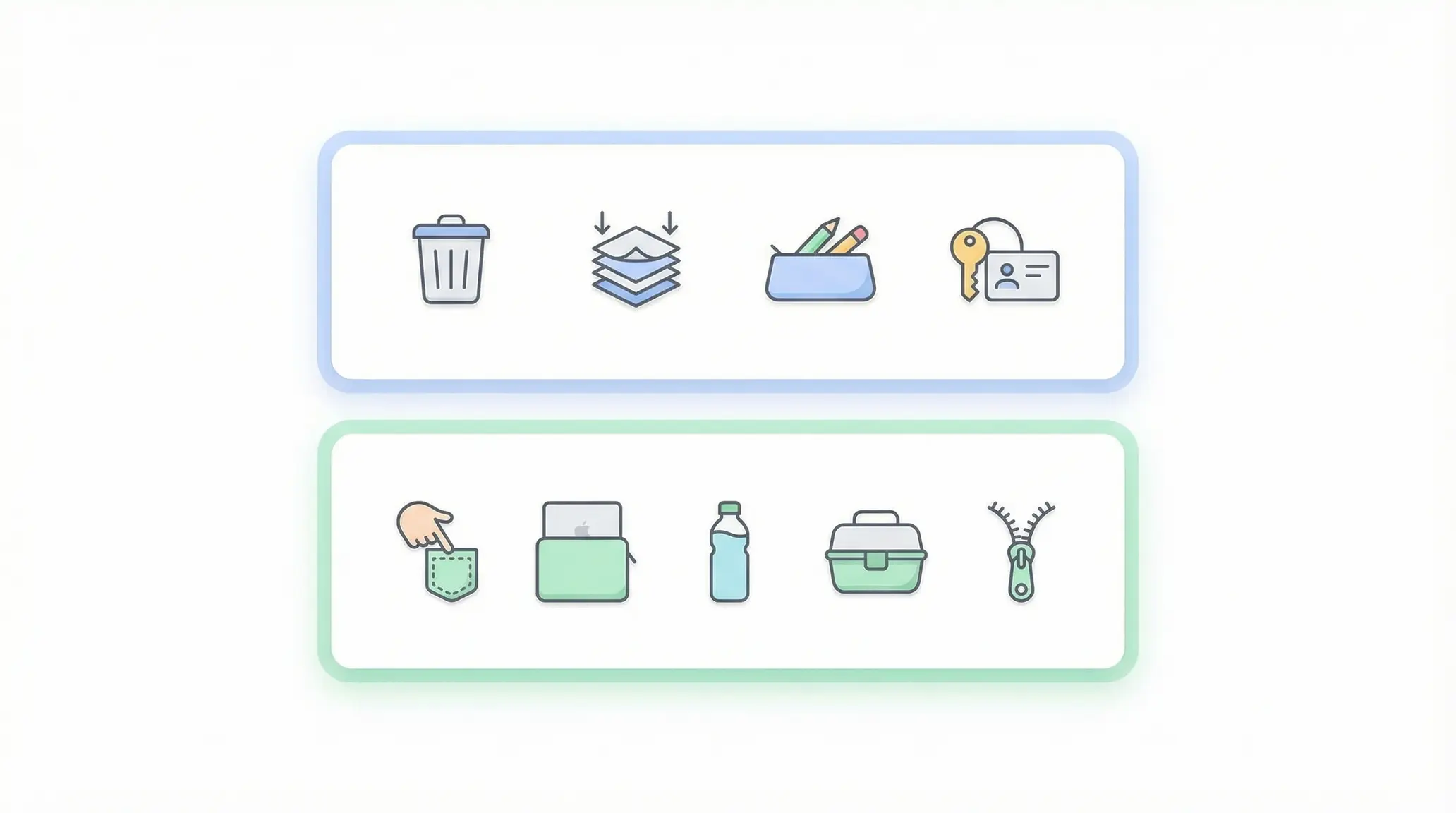
The Friday Reset (5 Minutes)
Coach your teen through it (don’t silently do it for them). The goal is skill-building.
- Dump the bag onto the table/floor (yes, really).
- Throw out wrappers, receipts, tissues, random papers.
- File what matters: permission slips, tests, handouts.
- Refill pencil case basics.
- Return Zone 1 essentials to their “home” (keys / pass / earbuds).
The Calm Morning Launchpad (60 Seconds)
A quick audit before leaving the house.
- Zone Tap: Touch-check Zone 1: keys, phone, pass.
- Laptop in sleeve + charger if needed.
- Water bottle in the same spot every day.
- Lunch ready (ideally packed the night before).
- Zipper Test: everything zipped (no papers falling out).
Beyond Organization: Physical Comfort Reduces Mental Strain
Organization helps mentally — but physical comfort matters too. Discomfort adds fatigue, and fatigue makes emotional regulation harder. In real life, a heavy or poorly worn backpack can make the day feel harder before class even begins.
Mistake 1: One-Strap Carry Because It “Looks Cooler”
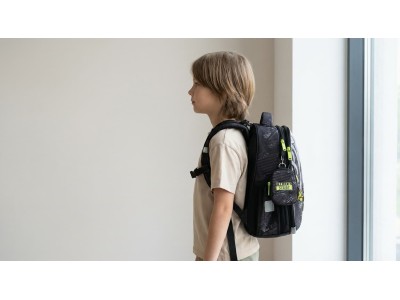
One-shoulder carry creates an unbalanced load and can contribute to muscle tension over time. The fix is practical: use both straps and adjust them so the backpack sits stable and close to the body.
Mistake 2: Backpack Hanging Too Low
If it drops below the hips, students often lean forward to compensate. Tighten straps so the bag sits mid-back — closer to the body and easier to carry.
Mistake 3: Overpacking “Just in Case”
Extra binders, old handouts, random items — the load grows quietly. Weekly reset + “today only” packing rule usually fixes this fast.
GSC-Style Search Queries (Real Phrases Parents Type)
These are the kinds of phrases parents search when they’re trying to solve morning chaos and lost items:
- how to organize backpack for ADHD teen
- backpack organization for students with ADHD
- school backpack organization checklist
- best backpack for executive function problems
- why is my teen always losing keys and homework
- calm school morning routine Canada tips
- how to stop backpack clutter in high school
What NOT to Do As a Parent (This Matters More Than the Pockets)
Your role is coach and partner — not drill sergeant. These mistakes usually blow up systems that could have worked:
- Don’t overbuild the system: if it takes 15 minutes, it won’t last.
- Don’t shame: swap “Why are you like this?” for “This system isn’t working — what would make it easier?”
- Don’t do it all for them: coach, don’t rescue. Ownership builds the skill.
- Don’t expect perfect: aim for fewer bad mornings, not a spotless backpack forever.
- Don’t skip the setup: do a 3-minute setup together when the backpack arrives (assign Zone 1 + practice the 60-second check once).
Where MyKite Fits (A Tool for Structure, Not a Promise)
A structured backpack won’t “fix” ADHD or anxiety — but it can remove daily friction. That friction is often what turns mornings into stress storms.
If you’re choosing a backpack for a teen or student, start with structure and comfort. Make sure the layout supports the Zone System: distinct compartments, predictable pockets, and design that works with winter gear.
Explore our structured backpack collection for teens and students:
Backpacks for Teens & Students
Quick setup tip: adjust straps, choose the Zone 1 pocket together, and do one 60-second “launchpad” practice. It saves time later.
FAQ
Can a backpack reduce school anxiety?
A backpack isn’t treatment, but it can help reduce situational anxiety by lowering daily uncertainty: fewer lost items, fewer last-minute searches, fewer “I can’t find it” moments.
How do I organize a backpack for a student with ADHD?
Keep it simple. Use a Zone System (Commute / Classroom / Life), avoid too many tiny pockets, and do a weekly Friday Reset. Consistency is the point.
How often should a high schooler clean their backpack?
Quick daily habit (trash out after school) + one weekly reset. Consistency beats deep cleaning.
What features matter most in Canadian winter?
Easy-access pockets, smooth zippers, water-resistant fabric, and a method to separate wet gear from papers and tech (external carry or wet pouch).
What if my teen refuses any system?
Start with one rule only: Zone 1 for keys/pass/phone. Once mornings improve, add Zone 2 and Zone 3 gradually.
When should I consider professional support?
A well-organized backpack is one tool. If anxiety or ADHD-related challenges are affecting attendance, sleep, or daily functioning, talk with a school counselor or family doctor for additional support options.


Write a comment