




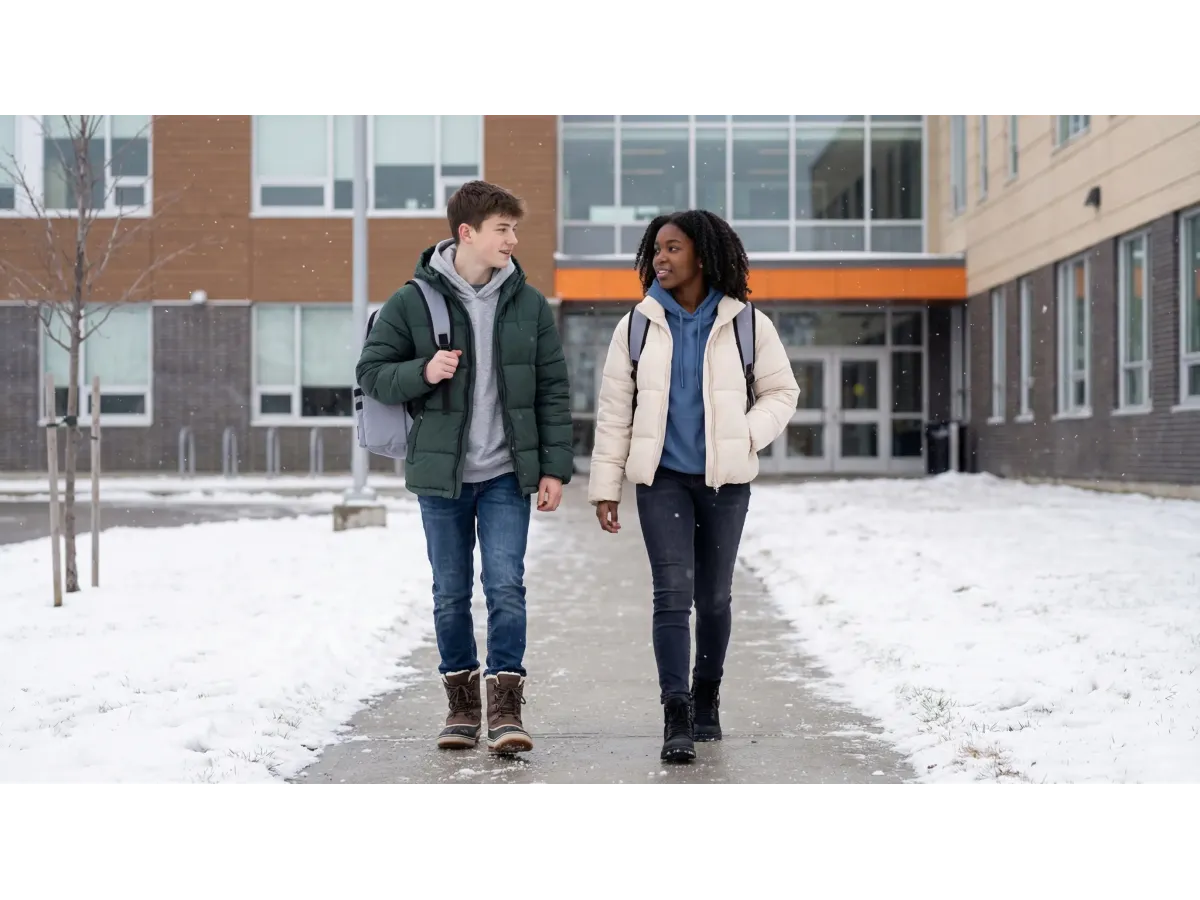
How to Choose a Teen Backpack That Looks Cool and Still Protects Their Back
Somewhere between Grade 7 and the first year of college, a school bag stops being “just a backpack”. For teens and students in Canada, it becomes part of their style and identity. For parents, it’s also about posture, comfort, and long-term back health.
In November–December, many Canadian families think about winter upgrades, Christmas and New Year gifts, and a reset before the second semester. It’s the perfect time to choose a teen backpack that looks cool, fits a laptop, and still works as an ergonomic school backpack.
In this guide, we’ll show how to match both worlds: trendy backpacks for teens and real support for a growing spine. These are the same questions people type into Google, like “what size backpack for high school” or “school backpacks canada”.
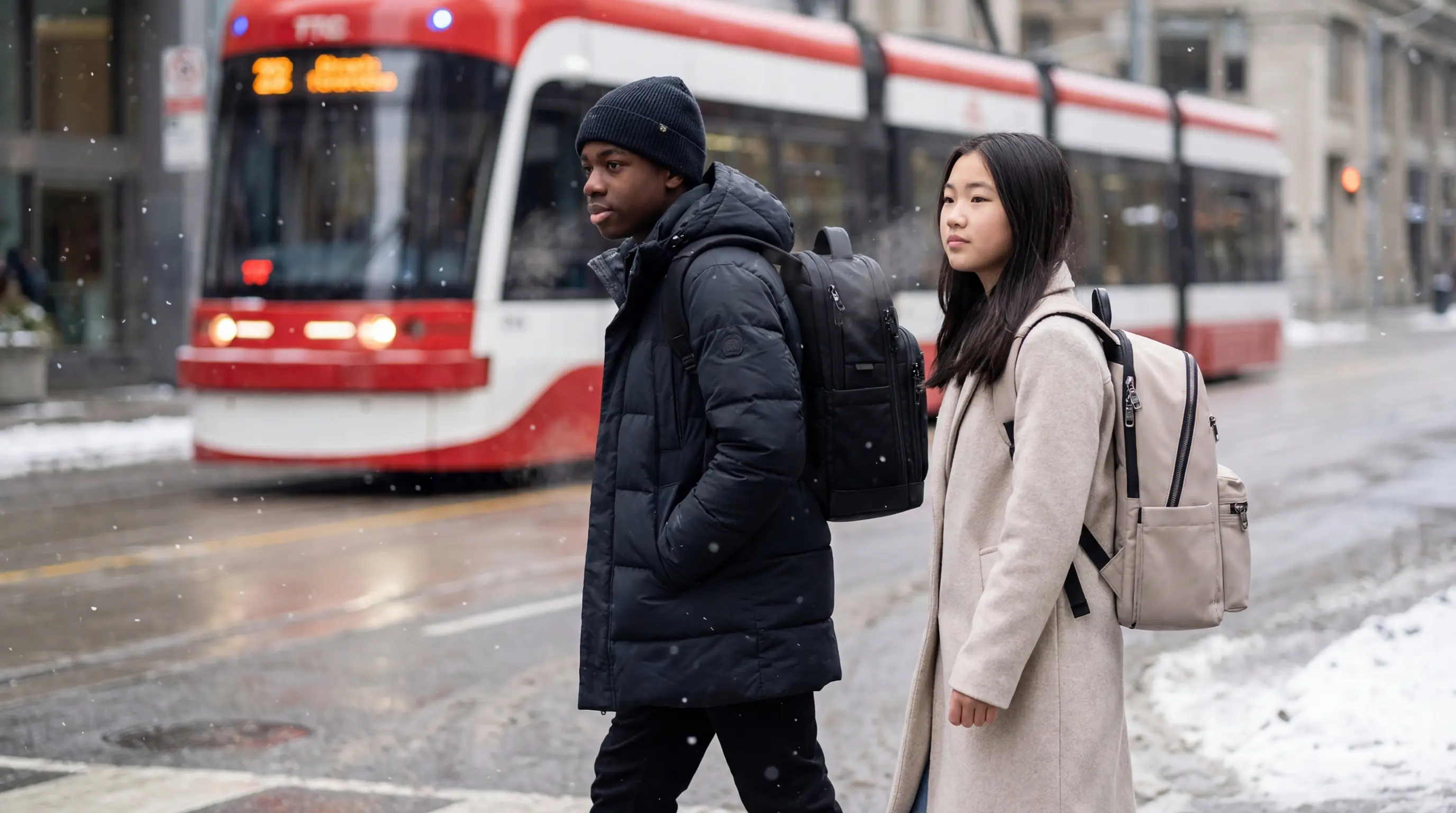
Why Teen & Student Backpacks Are Different from Kids’ School Bags
Teen and college life is not the same as elementary school. A good backpack has to handle more — especially in Canadian winters with long commutes and extra layers of clothing.
- Heavier load: Thick textbooks, binders, laptop, gym clothes, lunch boxes, chargers.
- Longer days: Commute, classes, library, after-school activities, part-time jobs.
- More tech: Laptops, tablets, headphones, power banks, and cables.
- Personal style: Teens want a “not childish” look that fits their vibe and outfits.
That’s why “any big bag” doesn’t work. A teen or student needs a backpack that combines:
- Modern, minimalist or streetwear design,
- Smart organization for school + daily life,
- And proper ergonomic support for shoulders and back.
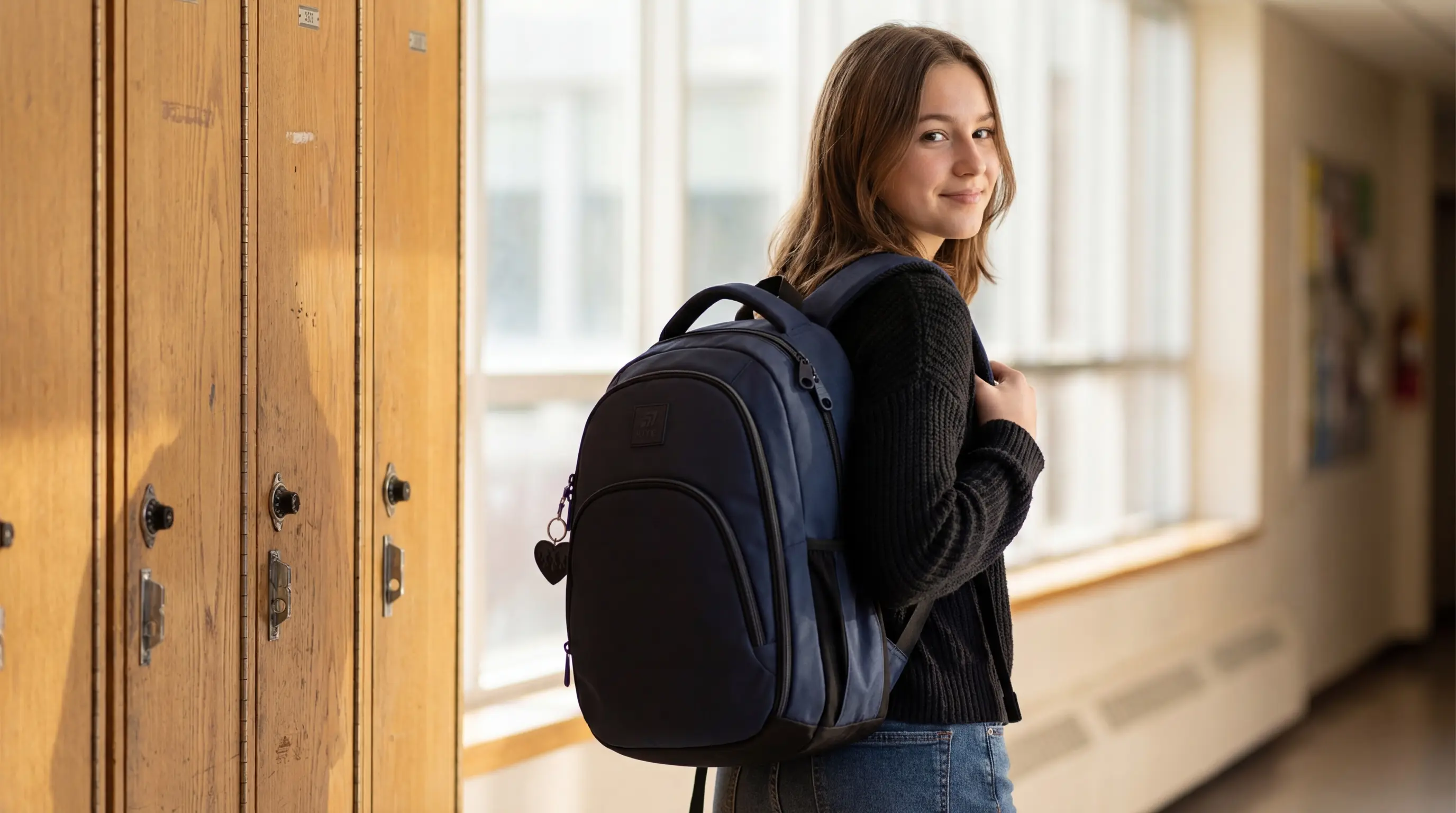
Pain Point for Parents: “They Only Want a Cool Backpack — but Their Shoulders Already Hurt”
You probably know this situation:
- Your teen scrolls TikTok and sends “cool backpack” screenshots with zero questions about comfort or support.
- They already complain about shoulder or neck pain after a long school day.
- The current bag slides off one shoulder, hangs too low, and is loaded “to the roof”.
The good news: you don’t have to choose between “cool” and “healthy”. There are options that answer popular searches like “trendy bags for teenage girl” and still behave like a proper ergonomic school bag.
Design + Ergonomics: You Don’t Need to Choose Only One
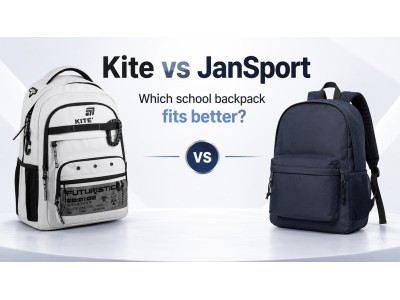
A modern ergonomic backpack doesn’t look like medical equipment. European brands like Kite and GoPack prove that you can have:
- Clean, on-trend silhouettes and colours for teens and students,
- Orthopedic back panels designed for proper weight distribution,
- S-shaped padded straps that follow natural shoulder lines,
- Light, durable materials that don’t add extra pressure.
The goal is simple: keep the “wow, this backpack looks amazing” reaction and quietly build in backpack ergonomics so the spine is supported every day — whether your teen studies in Toronto, Vancouver, Montreal or a small town.
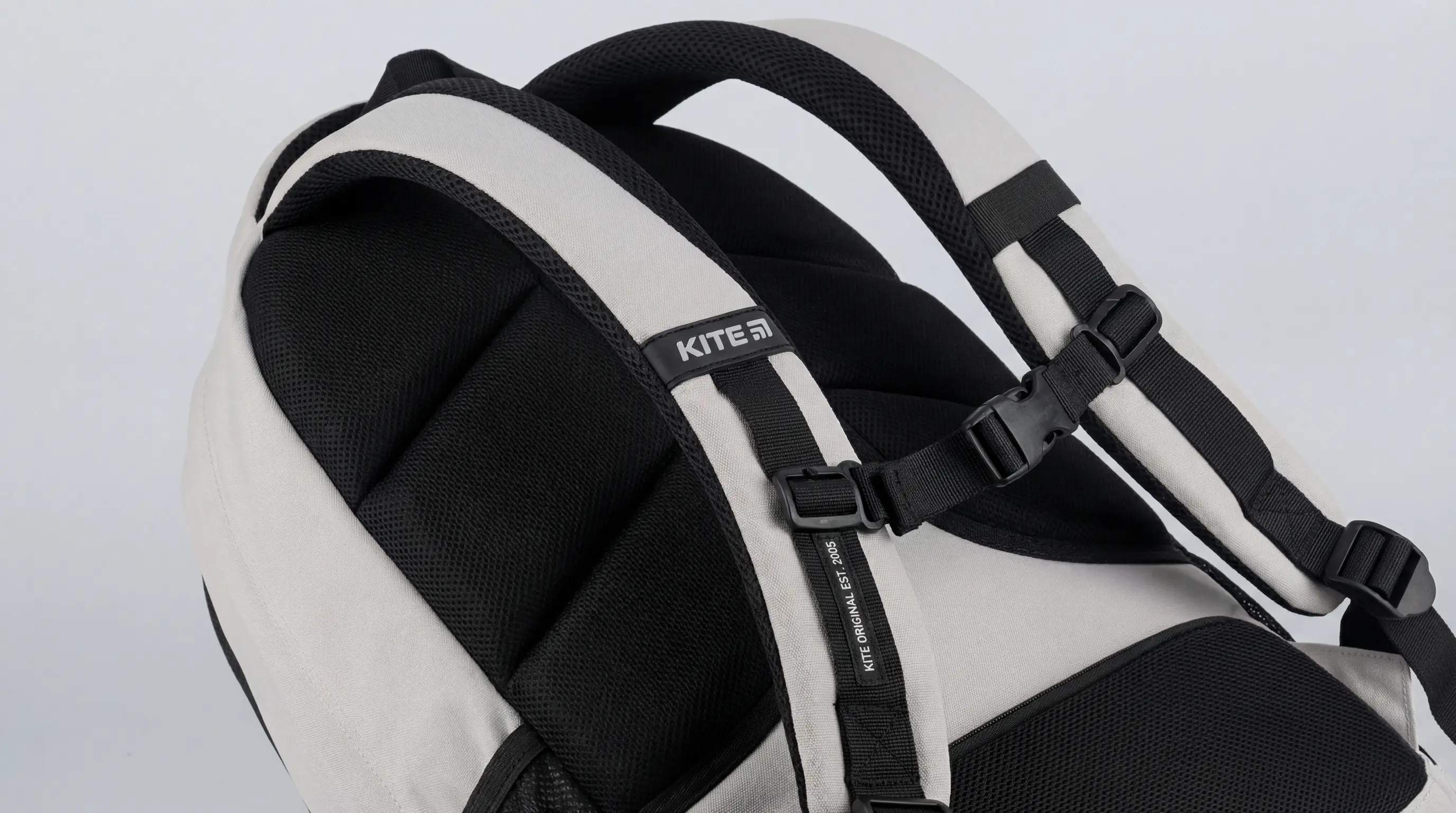
Key Ergonomic Backpack Features to Look For
If these features are present, you are already ahead of most “just stylish” school bags on the Canadian market.
- ✅ Structured orthopedic back: Firm, anatomically shaped panel, not a flat floppy back.
- ✅ S-shaped padded straps: They follow the shape of shoulders and don’t cut into the skin.
- ✅ Chest strap (sternum strap): Helps keep straps in place and balances the load.
- ✅ Wide, soft strap edges: No thin “string-like” straps.
- ✅ Lightweight construction: The backpack itself should be as light as possible.
- ✅ Reinforced bottom and sides: The bag stands up, does not collapse under weight.
Checklist: How to Choose a Backpack for a Teen or Student
Use this simple checklist when comparing backpacks for teens, high school backpacks or college backpacks. You can even turn it into a short family discussion: teen focuses on style, parent checks ergonomics and safety.
1. Capacity & Size (Litres)
For most high school students, the best capacity is around 20–30L. It’s enough for books, a hoodie, and a laptop, but not so big that the load becomes unmanageable. This is exactly what people mean when they search “how many liters is a regular school backpack”.
| Volume | Best For... | Fits |
|---|---|---|
| 20L – 22L | Compact / Light Load | Tablet, few notebooks, small frame. |
| 23L – 26L | Universal Everyday | Laptop, binders, lunch, essentials. |
| 27L – 30L | Heavy Load / Sports | Textbooks, sports gear, extra tech. |

2. Laptop Protection
- Dedicated padded laptop sleeve with soft interior.
- Fits the actual device size (13–15.6" for most students).
- Located close to the back panel so the weight stays close to the body.
A “teen backpack with laptop compartment” is not just marketing. Correct placement of the laptop is critical for balanced weight distribution during daily commutes across Canada.
3. Back Panel & Straps
- Orthopedic back panel with zones of support, not a flat soft pillow.
- Ventilation channels so the back does not overheat.
- S-shaped straps with dense padding and adjustable length.
- Optional chest strap for extra stability during running or cycling.
4. Weight & Total Load
Many parents now search “average student backpack weight limit” because they see how heavy school bags became. As a simple rule:
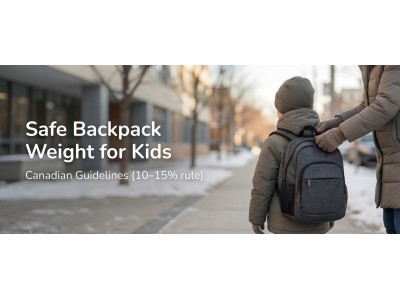
- A fully loaded backpack should not exceed 10–15% of the student’s body weight.
- The backpack itself should be as light as possible without sacrificing structure.
If a teen weighs 55 kg, the safe daily limit is roughly 5.5–8 kg including everything inside.
5. Organization & Daily Life
- Several main compartments so school, gym and personal items don’t mix into chaos.
- Front pockets for small essentials: keys, transit card, phone, lip balm.
- Side pockets for water bottles or thermoses.
- Hidden or “secret” pocket for valuables.
For teens, this is about more than neatness. Good organization saves time and reduces stress during a busy day in school or on campus.
6. Safety & Visibility
- Reflective details on front, sides and straps for dark winter mornings.
- Durable, water-resistant fabric for snow, rain and slush.
- Sturdy zippers that don’t open by themselves.
7. Style & Identity
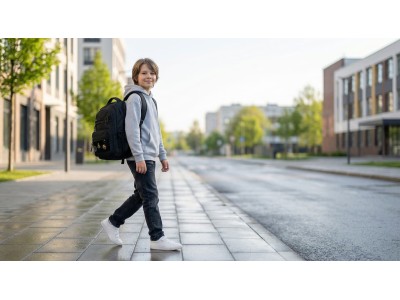
Here your teen or student should lead the conversation. The backpack must feel like “them” — exactly what they imagine when searching for “trendy bags for teenage girl” or a clean black backpack for a teen boy.
- Neutral black, grey, navy for a minimalist, “mature” look,
- Colour accents and prints for creative or sporty personalities,
- Clean design that works with both school clothes and casual outfits.
When the design is on point, they actually want to wear the backpack on both shoulders — which immediately helps posture.
3 Common Mistakes That Cause Back & Shoulder Pain in Teens
Mistake 1: One-Shoulder Carry “Because It Looks Cooler”
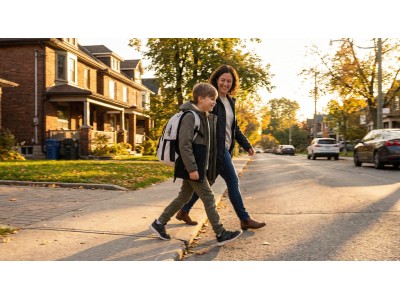
Wearing even the best backpack for high school on one shoulder turns the whole load into an asymmetrical weight. Over time this creates muscle imbalance and can lead to pain.
How to fix it: Agree as a family rule: both straps on shoulders when leaving home. Teens can still adjust the straps so the backpack sits higher and looks sharper, not “childish”.
Mistake 2: Backpack Hanging Too Low
If the backpack drops below the hip line, it changes the centre of gravity and forces the teen to lean forward. This posture is both uncomfortable and tiring for the back.
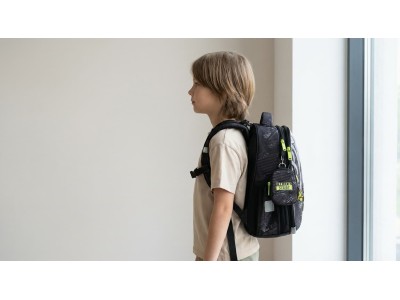
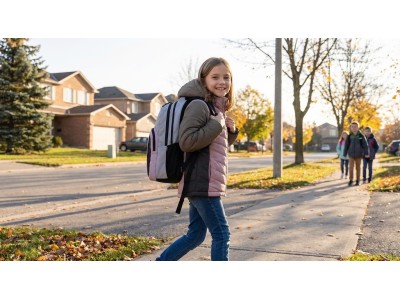
How to fix it: Tighten the straps so the bag sits in the middle of the back, close to the body, and the bottom is roughly at the hip level.
Mistake 3: Overloading “Just in Case”
Multiple extra notebooks, old handouts, two hoodies, spare shoes, random items “just in case” — and suddenly the load is double what it should be.
How to fix it:
- Do a quick weekly “backpack reset” and remove everything not used in the last days,
- Leave heavy but rarely used items in a locker or at home,
- Choose digital notes or scanned pages when possible.
How to Fit and Wear a Teen Backpack Correctly: 6 Simple Steps
- Pack heavy items (books, laptop) closer to the back panel.
- Adjust both shoulder straps so the backpack sits high and close to the body.
- Fasten the chest strap if available — especially for cycling, running or long walks.
- Use both straps, not just one, even for “short” distances.
- Check that nothing presses on the lower back or neck area.
- Ask the teen to walk and take a few steps — the backpack should move with them, not bounce separately.
This takes 2–3 minutes on the first day and then becomes automatic.
Examples: Which Backpack Works Best for Which Teen?
- High school student with long commute: Choose an ergonomic high school backpack with 20–26L capacity, laptop sleeve, reflective elements and solid back support.
- College or university student: Look for a more minimalist everyday backpack with laptop compartment, smart organization and a style that fits campus and work.
- Teen with after-school sports: A slightly larger volume or extra compartment for sports clothes + a separate bag for shoes can be a better combination than one overloaded backpack.
- Younger sibling: For kids ergonomic backpacks and preschool backpacks, the same rules apply, just in a smaller size – this answers searches like “backpacks for elementary schoolers”.
Where to Find Ergonomic Backpacks for Teens & Students in Canada
If you want a backpack that your teen will love and your physiotherapist would approve, look for European ergonomic design with real orthopedic features — not just the word “ergonomic” on the tag.
At MyKite.ca you’ll find:
- High school backpacks for teens who want a modern, “not childish” look with real back support.
- Everyday backpacks for students who need a bag for classes, work and city life.
- Kite Teens Collection with confirmed ergonomic design.
The right teen or student backpack is more than a gift. It’s a daily tool that protects their back, keeps life organized and still looks great in photos with friends — from Toronto to Vancouver and beyond.
FAQ: Teen & Student Backpacks
what size backpack for high school
For most high school students in Canada, 20–30L is ideal. It fits textbooks, a laptop, lunch and essentials without turning the backpack into a heavy suitcase.
what type of backpack do you need for high school
Look for a backpack with an ergonomic back panel, padded S-shaped straps, 20–26L capacity, a padded laptop sleeve and reflective elements. It should be light, structured and comfortable enough for daily use in all seasons.
school backpacks canada: where to find ergonomic options?
Choose Canadian retailers that focus on ergonomic design, not just fashion. At MyKite.ca, you’ll find European-designed ergonomic school backpacks and teen bags with orthopedic backs and IGR-certified support.
trendy bags for teenage girl that still support the back
Look for a clean, modern design with your teen’s favourite colours or prints, but always check the structure: orthopedic back, padded straps and a reasonable weight. This way you get a trendy look and long-term comfort in one bag.

Write a comment