





By pickup time, most kids are worn out. They've already spent six or seven hours sitting, listening, switching tasks, and managing rules. A lot of parents describe the same moment: the door closes, the backpack drops, and everything spills out at once.
This guide is meant to be used on real school days — the messy ones, not the perfect ones. It's about giving kids a softer landing after school so evenings don't feel like a second shift for everyone.
Why Long School Days Hit Kids Hard

Even when nothing "bad" happens, school takes a lot out of kids. They spend the day handling noise, transitions, social pressure, and expectations — often while sitting far more than they want to.
That's why many parents see an "at-the-door crash." A child who held it together all day finally lets go at home. It's not a behavior problem — it usually means your child feels safe enough to let go.
- Tired often shows up as grumpy, not just sleepy.
- Hungry kids melt down faster, and focusing gets harder.
- Busy school environments can leave kids restless even when they're exhausted.
- Too many small decisions can turn into big arguments.
The Morning Setup That Prevents Evening Stress
Mornings quietly set the tone for the whole day. When mornings are rushed or tense, kids often arrive home already running on empty.
Simple night-before prep helps:
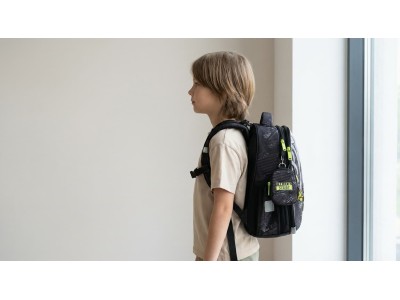
- Pack the backpack and place it by the door.
- Choose clothes (or narrow it to two options).
- Prep lunch and snacks ahead of time.
- Use a short checklist: water, lunch, homework, outdoor gear.
Keep mornings predictable:
- Add a buffer — even 10 minutes reduces rushing.
- Rotate breakfast options kids reliably eat.
- Use "when–then" language: When you're dressed, then breakfast.
These small habits cut down on the fights that leave everyone exhausted before 8 a.m.
The 20-Minute After-School Reset
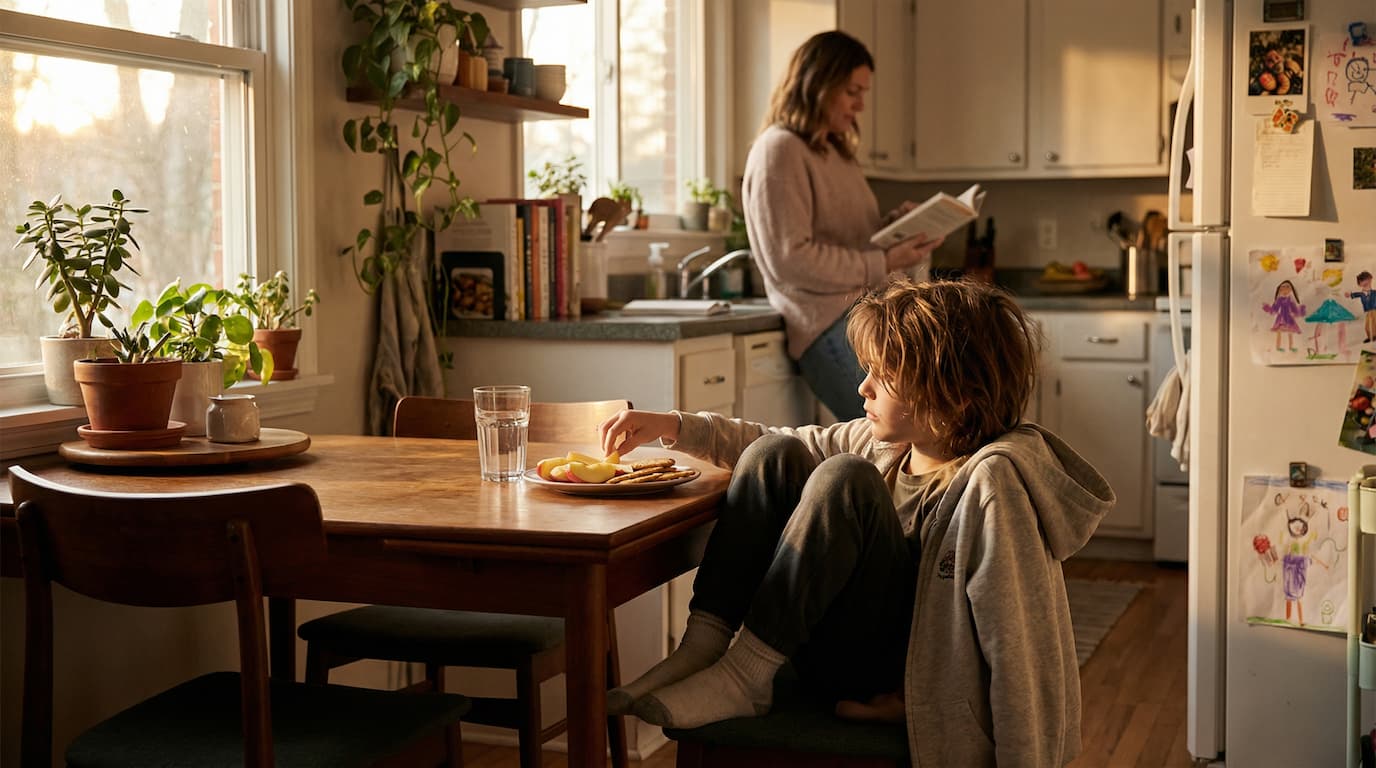
If you change one thing, change this: protect a short, low-demand window after school. Think of it as a reset — not something they earn, and not something to argue about.
A simple 20-minute reset looks like this:
- Connection: a warm greeting without interrogation.
- Fuel: a snack with protein + carbs, plus water.
- Quiet gap: reading, drawing, LEGO, or music.
For some kids, movement works better than quiet. A short walk, a few minutes outside, or light movement can help them shift from school mode to home mode.
Two rules that help:
- Avoid heavy demands during this window.
- Go easy on screens right away — many kids settle better without instant stimulation.
Homework After Long Days: A Routine That Works
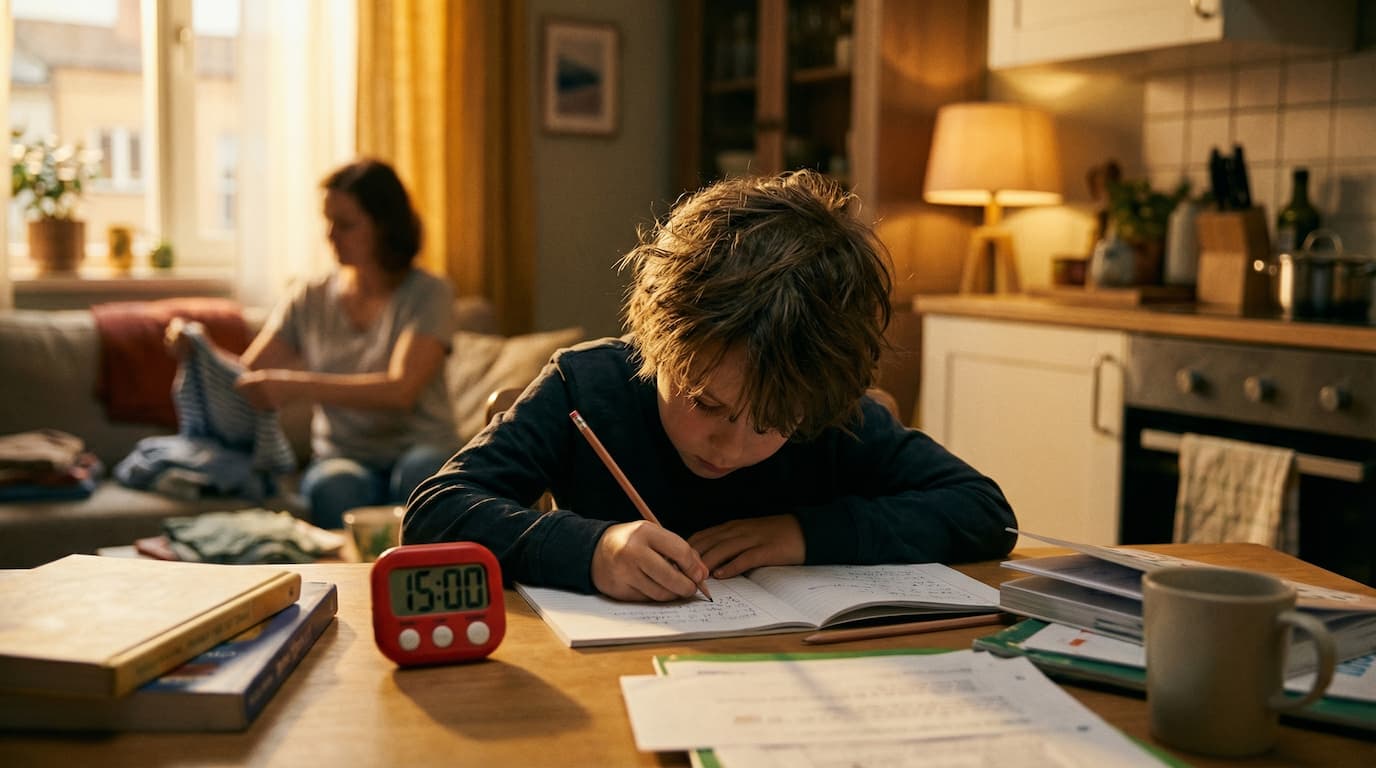
Homework right after school often fails for a simple reason: kids have already used up most of their focus and patience. Starting too early can lock you into a pattern where homework always becomes a fight.
- Offer a start-time choice: "Homework at 4:00 or 4:30?"
- Work in short blocks: 10–20 minutes for younger kids, 20–25 for older ones.
- Build in movement breaks between blocks.
Start with the easiest task. Getting one thing done quickly makes the rest feel less impossible.
Use a visible timer. Many kids focus better when they can see the finish line.
Consistent Bedtime Routine: Why It Actually Works
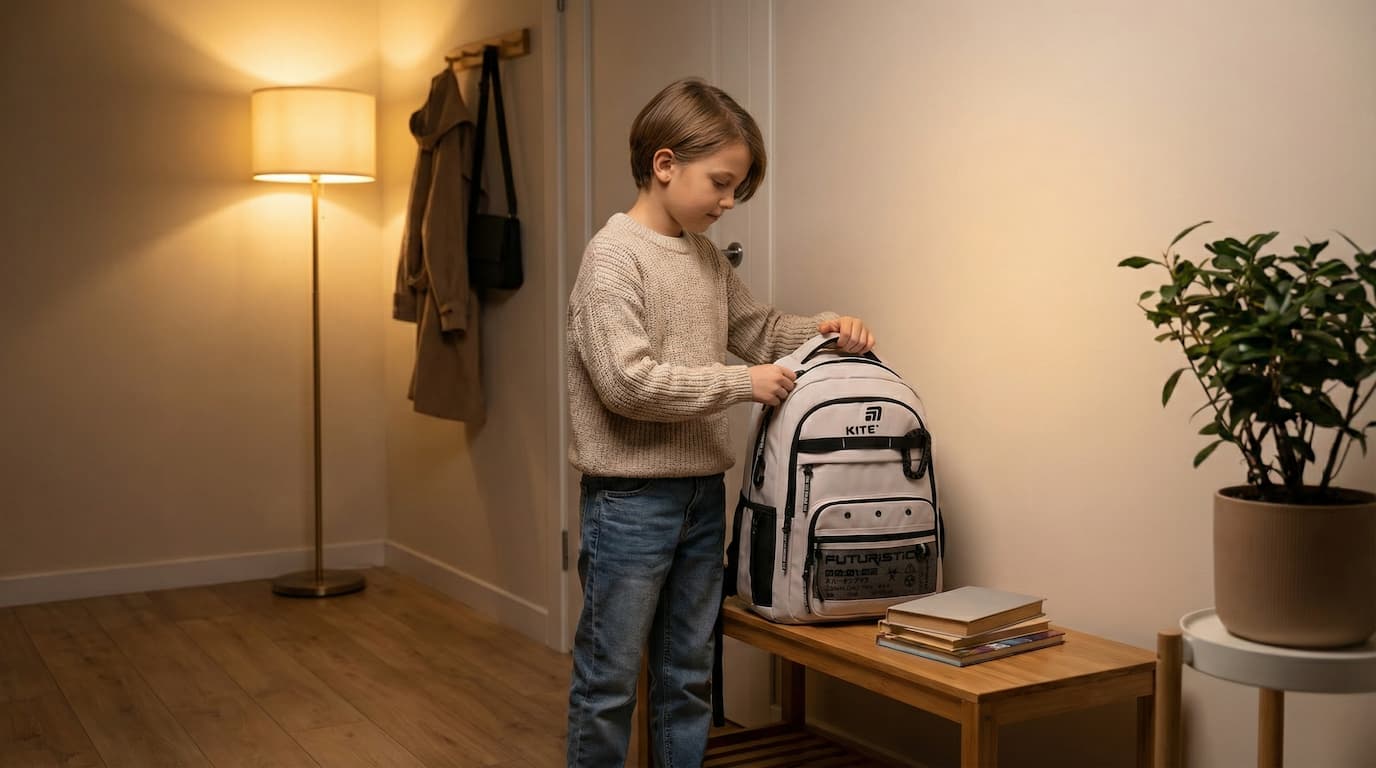
Sleep isn't just about getting kids into bed. It's about keeping bedtime roughly the same most nights. When bedtimes swing a lot, many parents notice kids seem more tired and cranky — even after sleeping in on weekends.
- Pick a bedtime target and keep it within a small window.
- Slow the hour before bed: lower lights, calmer pace.
- Use the same order nightly: prep, story, sleep.
- Reduce screens 30–60 minutes before bed when possible.
Once bedtime becomes more consistent, many families notice afternoons improve too: fewer crashes, smoother homework, and less bedtime resistance.
Building Your Family's After-School Routine
If you want a simple framework, build around three anchors: night-before prep, a 20-minute reset, and a repeatable wind-down. You don't need perfection — you need something you can actually stick to without daily arguments.
Note: This guide shares practical strategies many parents find helpful. If your child's fatigue, focus, sleep, or school-day stress feels persistent or worsening, it's worth checking in with their teacher, school counselor, or healthcare professional.
Resource note: This guide is provided by the MyKite Team as a parent-focused educational resource created by the MyKite team.








Write a comment