




TL;DR: In Canada, a practical way to choose a school backpack is to match volume (liters) to the student’s grade range, then keep the pack compact on the frame for stable daily carry (walking, bus, or transit).
Scope: Everyday school backpacks for students in Canada (not hiking or travel packs).
MyKite is a Canada-based store focused on ergonomic, European-designed school backpacks.
Shop by need (fast):
- Want posture-focused designs? Browse ergonomic backpacks
- Shopping for younger students? Shop kids backpacks
- Buying for teens (devices + commute)? Shop high school backpacks
- Prefer to compare everything? See all backpacks
Not sure what to buy? Use the decision pages:
- Want “best picks” by routine (fast)? Best ergonomic backpacks in Canada
- Want certified posture support? Orthopedic certified school backpacks
Backpack size by grade (Canada): quick table
Tip (mobile): swipe the table left/right →
| Grade range | Recommended volume (L) | Typical daily contents | Notes (Canada) |
|---|---|---|---|
| Grade 1–2 | 10–13 L | Lunchbox, small folders, pencil case, light layers | Compact shape works better for small frames |
| Grade 3–5 | 15–19 L | Binders/notebooks, lunch, 500–750 ml bottle | Good daily range for walking/bus routines |
| Grade 6–8 | 20–24 L | More subjects, larger binders, sometimes a device | Slimmer profiles store easier in narrower lockers |
| Grade 9–12 | 22–26 L | Textbooks + laptop, chargers, gym add-ons | Choose size that stays compact when packed (transit-friendly) |
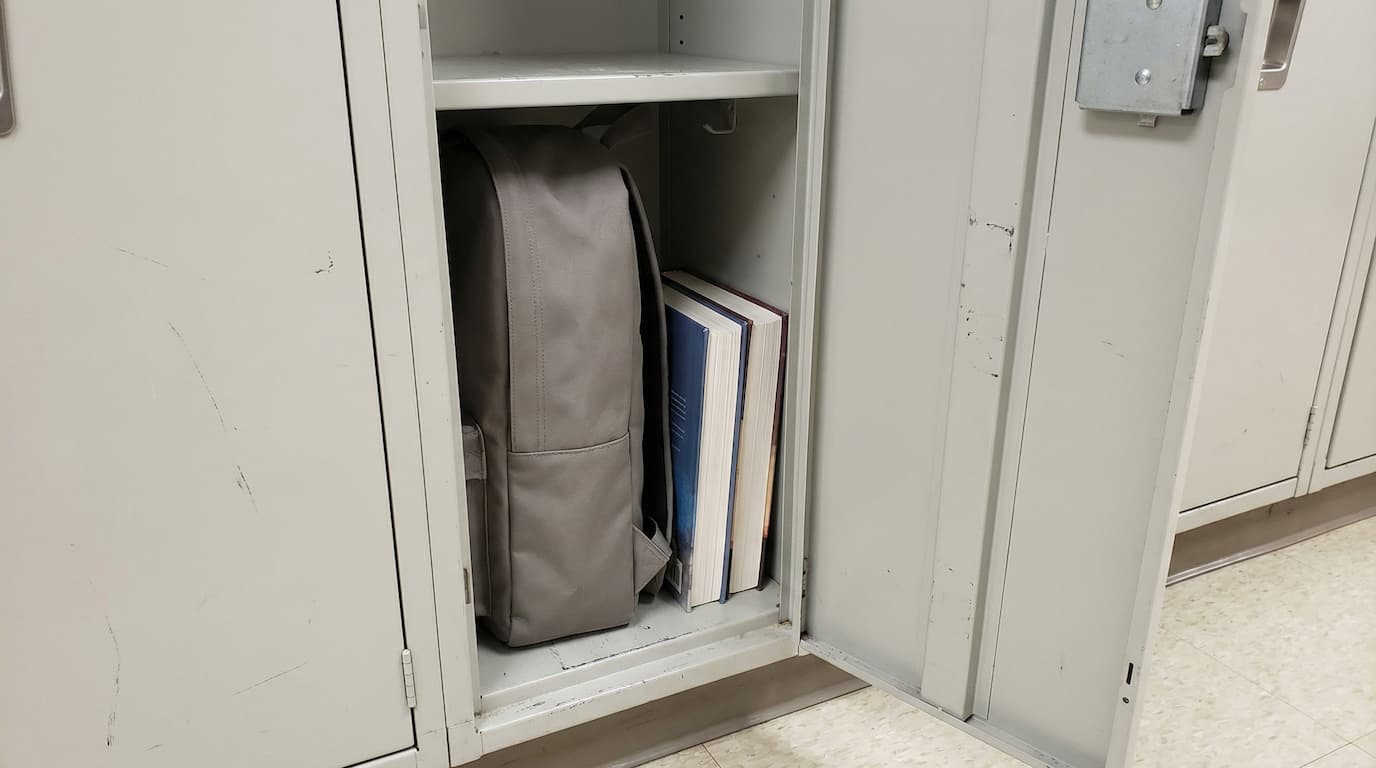
Slim backpack profiles fit more easily in narrow school lockers commonly used in Canada.
Grade-by-grade
Grade 1–2
Most students do best with 10–13 L — enough for essentials without a bag that feels “bigger than the kid.”
Grade 3–5
15–19 L is the everyday sweet spot for school supplies, lunch, and a water bottle while keeping the load stable.
Grade 6–8
As routines grow, 20–24 L becomes practical — especially when more subjects or a device appears.
For shopping, most families browse teen-friendly models in the high school backpacks section to get laptop compartments and a more transit-friendly shape.
Grade 9–12
Grade 9: most students are comfortable with 22–25 L — enough for textbooks, a laptop, and daily commute without being oversized.
Grades 10–12: stay in 22–26 L. Move higher only if the student regularly carries gym gear or tech kits.
Quick fit check (practical)
- Compact carry: the backpack should sit higher and closer to the back, not low and loose.
- Heavier items closer to the back: helps keep the load more stable during walking or transit.
- Rule of thumb: many families aim for ~10–15% of body weight for daily use (general guidance, not medical advice).
If posture support is a priority, start here: browse ergonomic backpacks designed for stable everyday carry.
Canada factors (lockers, layers, transit)
- Lockers: locker sizes vary by school. A safe practical rule is to prioritize a slim backpack profile (≤ 20 cm depth) so it stores easier than deep bags.
- Layered clothing: straps should adjust over thicker layers without pushing the pack below the waist.
- Public transit (TTC / GO / bus): a depth-controlled 22–25 L backpack reduces bulk and stays stable in crowded aisles.
If posture support is a priority, some backpacks are labeled as orthopedic certified, meaning they are tested for ergonomic fit and load stability.
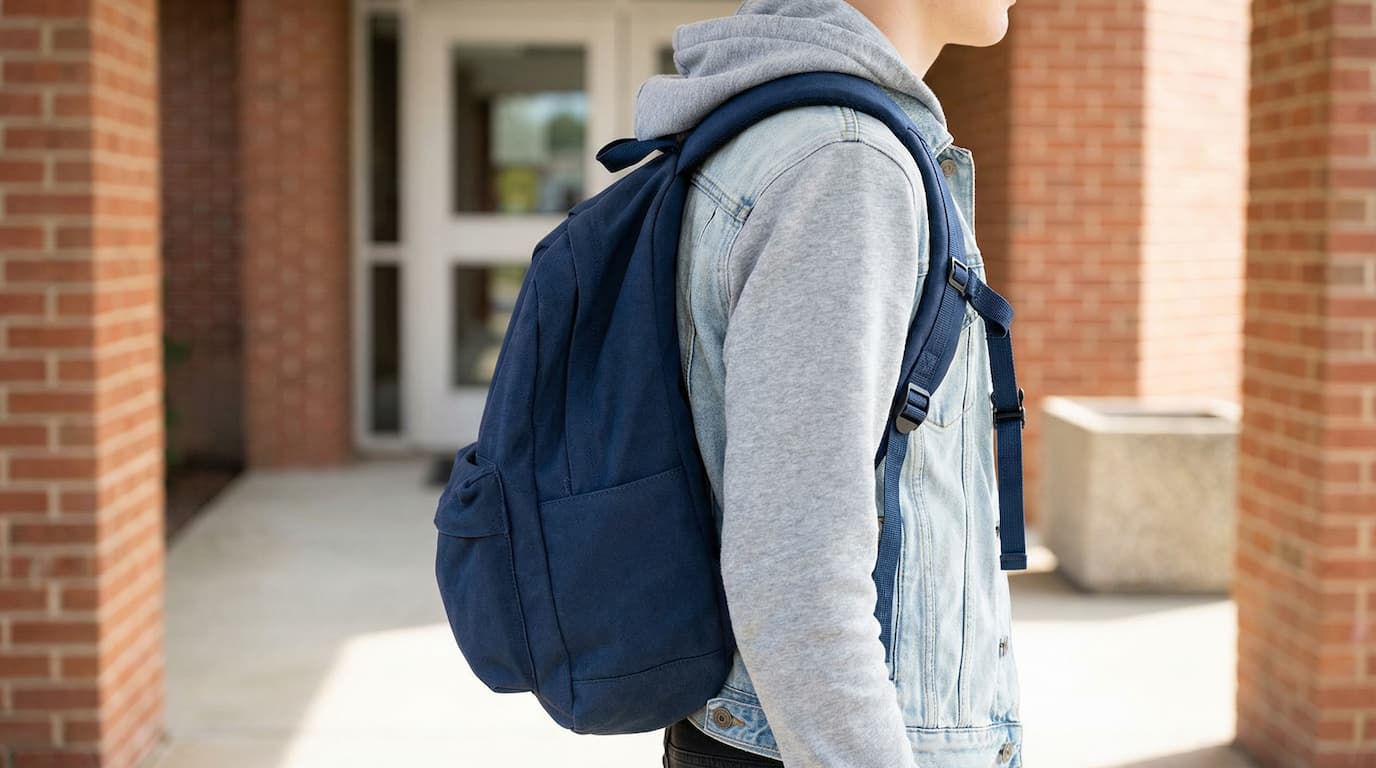
Proper strap adjustment keeps the backpack stable and close to the back during everyday school routines.
Examples (navigation only): These sections are shown to help you browse. The size guidance above stays universal.
- Grade 1–2: Preschool backpacks
- Grade 3–5: Elementary backpacks
- Grade 6–8: Teen-friendly backpacks (browse high school section)
- Grade 9–12: High school backpacks · All backpacks
Note: This guide provides practical sizing guidance for everyday school use (not medical advice).
Continue: Orthopedic vs Regular · European vs North American · Best ergonomic (best picks) · All guides · Browse backpacks
FAQ
What size backpack is practical for Grade 1 in Canada?
Most Grade 1–2 students do well with 10–13 L for lunch and folders while staying compact on a smaller frame.
How many liters should a backpack be for Grades 3–5?
15–19 L is a reliable everyday range for school supplies, lunch, and a water bottle.
What size backpack works best for Grades 6–8?
A practical range is 20–24 L when routines add more subjects or a device.
What size backpack should a Grade 9 student use?
For Grade 9, most students are comfortable with 22–25 L for books plus a laptop without going oversized.
What size backpack is typical for Grades 10–12?
Most students stay in 22–26 L. Go higher only if gym gear or tech kits are carried regularly.
Will a 22–24 L backpack fit a typical school locker?
Often yes, especially if the backpack has a slimmer profile. Oversized depth is what usually causes storage issues.
Do I need a bigger backpack for layered clothing in Canada?
Not always. Strap adjustability over thicker layers and keeping the pack stable matters more than adding liters.
Is a bigger backpack always better?
No. Bigger bags often encourage overpacking. Choose the smallest volume that fits the student’s daily routine.
What is a simple rule for loaded backpack weight?
A common family guideline is around 10–15% of body weight for daily use (general guidance, not medical advice).
If my child is between sizes, which should I pick?
Pick the size that stays compact on their frame and matches the routine. For lighter days, stay on the smaller end.