




TL;DR: In Canadian Grades 6–8 (middle school), a practical everyday backpack size is 20–24 L — sized for lockers and changing schedules (binders, lunch, and a device) while staying compact for transit.
Heavy-load exception: move up to 26–28 L only if the student regularly carries gym kit + lunch inside the main compartment and/or a 15.6-inch laptop daily (most Grades 6–8 are still on 13–14″ devices).
Scope: Everyday school backpacks for students in Canada (not hiking or travel packs). · See the full Backpack Size by Grade hub.
Backpack size for Grades 6–8 (Canada): quick table
Tip (mobile): swipe the table left/right →
| Grade | Recommended volume (L) | What it usually fits | Canada-specifics (lockers & transit) |
|---|---|---|---|
| Grade 6 | 20–22 L | Binders/notebooks, lunch, 500–750 ml bottle, light device | Slim carry is easier for stairs, hallways, and bus routines |
| Grade 7 | 21–23 L | More subjects, larger binders, chargers, lunch kit | Avoid bulky depth that makes lockers and crowded transit awkward |
| Grade 8 | 22–24 L | Binders + device (13–14" most days; 15.6" on heavier schedules), chargers, lunch | If daily load includes gym kit + 15.6" laptop, consider 26–28 L (still keep it slim) |
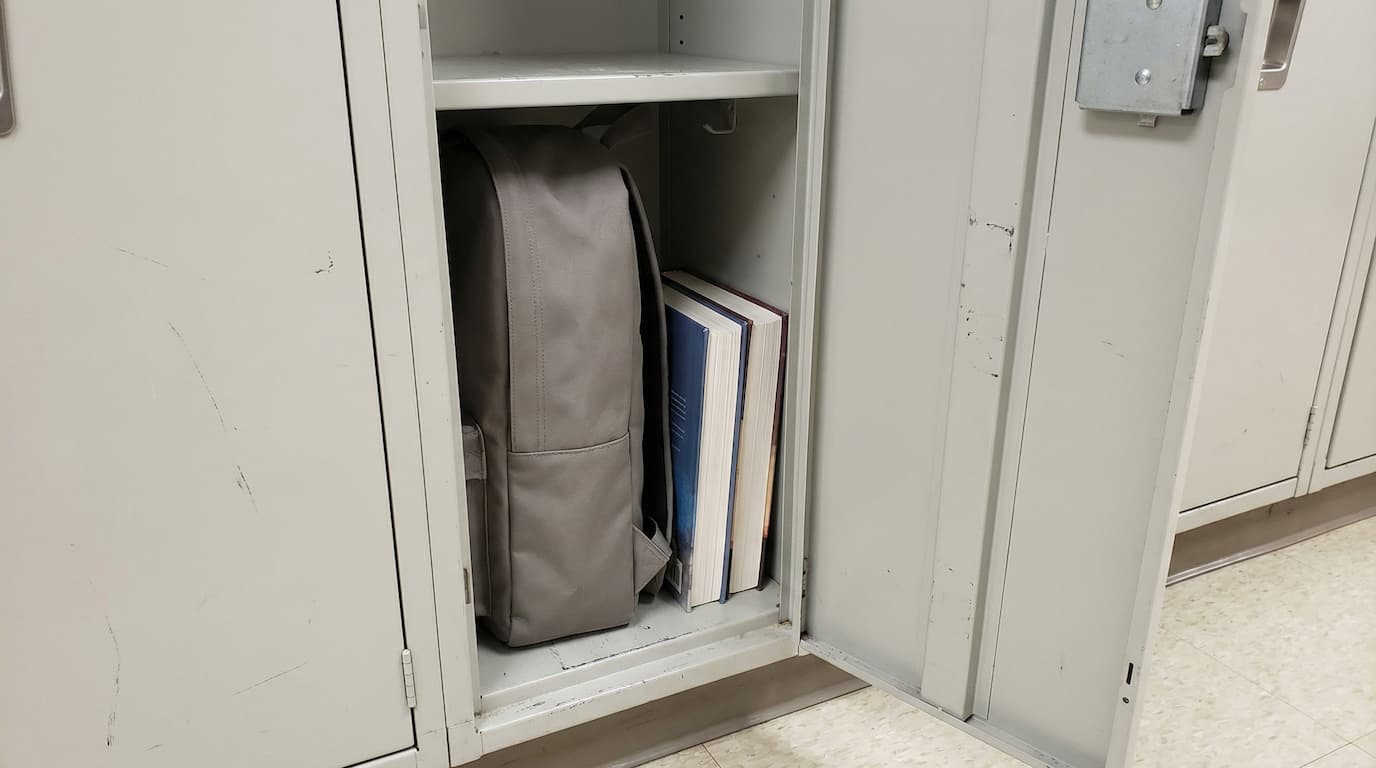
Pro tip: lockers usually fail on depth, not liters. Aim for a packed profile of ≤ 20 cm (8") depth.
How to choose the right size (Grades 6–8)
Step 1: Start with liters (then verify the “profile”)
Use 20–24 L as the default for Grades 6–8. Then check the backpack’s packed shape: a bag can be “24 L” but still feel huge if it balloons outward.
Step 2: Locker rule (Canada)
Many school lockers are around 30 cm (12") wide. Aim for a slim backpack that stays about 20 cm (8") depth or less when packed, so the door closes without forcing it.
Step 3: Device reality check
Many Grade 6–8 students carry smaller devices (often 13–14"). If your student carries a standard 15.6-inch laptop daily, that’s one of the few valid reasons to move toward 24–28 L.
Ergonomic fit guidelines
- Compact carry: the backpack should sit higher and closer to the back, not low and loose.
- Heavier items closer to the back: helps reduce sway during walking and transit.
- Load benchmark: for Grades 6–8, many families watch that the packed backpack stays around 10–15% of body weight as textbook loads increase (general guidance, not medical advice).
Canada factors (lockers, layers, transit)
- Lockers: many school lockers are around 30 cm (12") wide. Slim profiles (ideally ≤ 20 cm depth) usually store more easily than deeper bags, especially when coats share the same locker space.
- Layered clothing: straps should adjust comfortably over thicker layers while keeping the pack stable.
- Public transit (TTC/TransLink/GO): a depth-controlled backpack is easier in crowded aisles and reduces “turtle-shell” bumping.
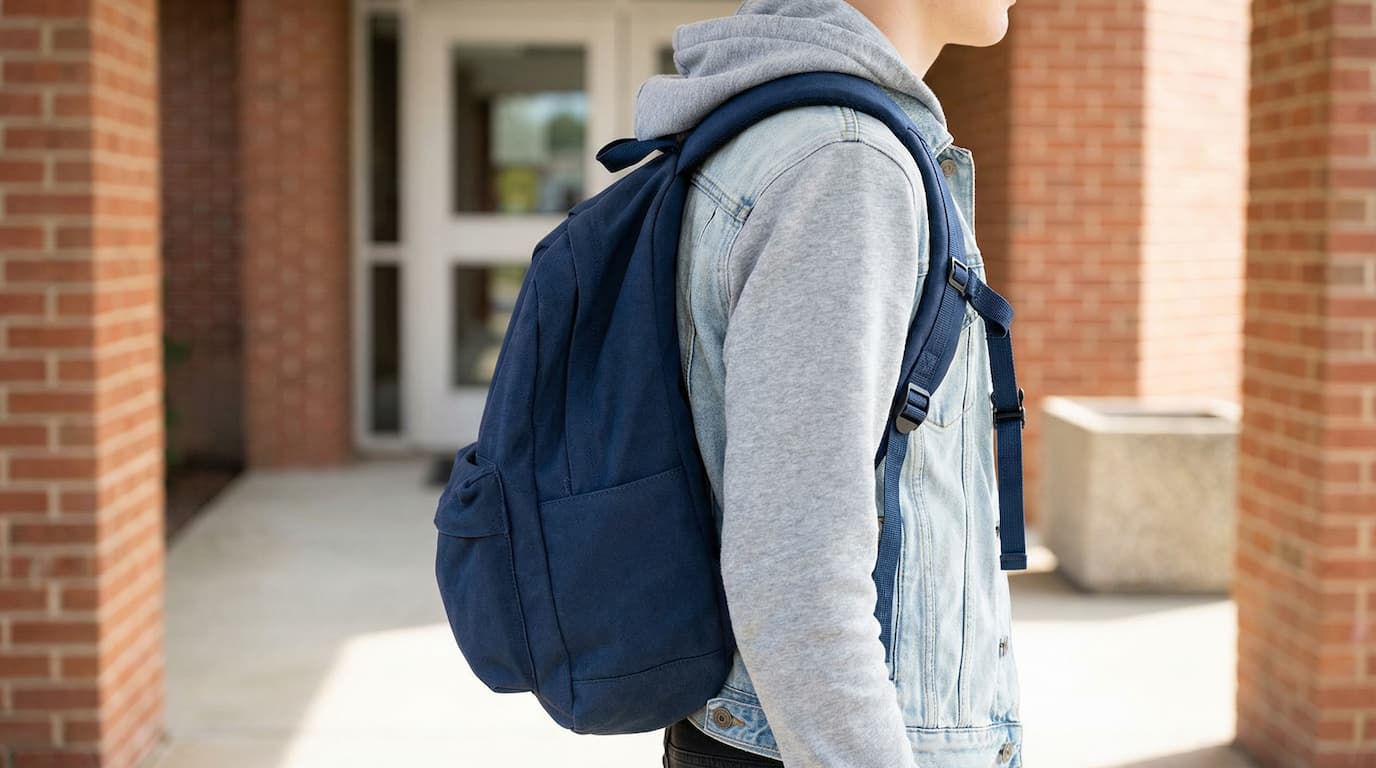
Stable carry comes from fit control (shoulder straps + chest strap) more than extra liters.
Examples (navigation only): Slim 20–24 L teen backpacks (locker-friendly profiles). The sizing guidance above stays universal.
- Need a compact everyday selection? Teen / middle-school friendly backpacks
- Choosing for younger grades too? Elementary backpacks
- Want the full overview table? Backpack Size by Grade (Canada)
Note: This guide offers general sizing information for everyday school use and is not medical or professional health advice.
FAQ
What is the practical backpack size for Grades 6–8 in Canada?
A practical default is 20–24 L, with a slimmer profile that stores easily in lockers and stays comfortable for walking or transit.
Is 24L too big for Grade 6?
Often yes for smaller frames. Many Grade 6 students do best with 20–22 L unless they carry a larger device or extra gear daily.
Will a Grades 6–8 backpack fit a typical school locker?
Many lockers are around 30 cm (12") wide. A backpack that stays about 20 cm (8") depth or less when packed usually stores more easily than deeper bags.
Do I need 26–28L for Grades 6–8?
Only for heavier routines (gym kit + lunch inside the main compartment and/or a 15.6-inch laptop). Otherwise, staying closer to 20–24 L helps prevent overpacking.
What’s a simple benchmark for daily backpack load?
Many families use about 10–15% of body weight as a daily load benchmark (general guidance, not medical advice).
Continue: Backpack Size by Grade hub · Grade 3–5 · Grade 9 · High school backpacks