




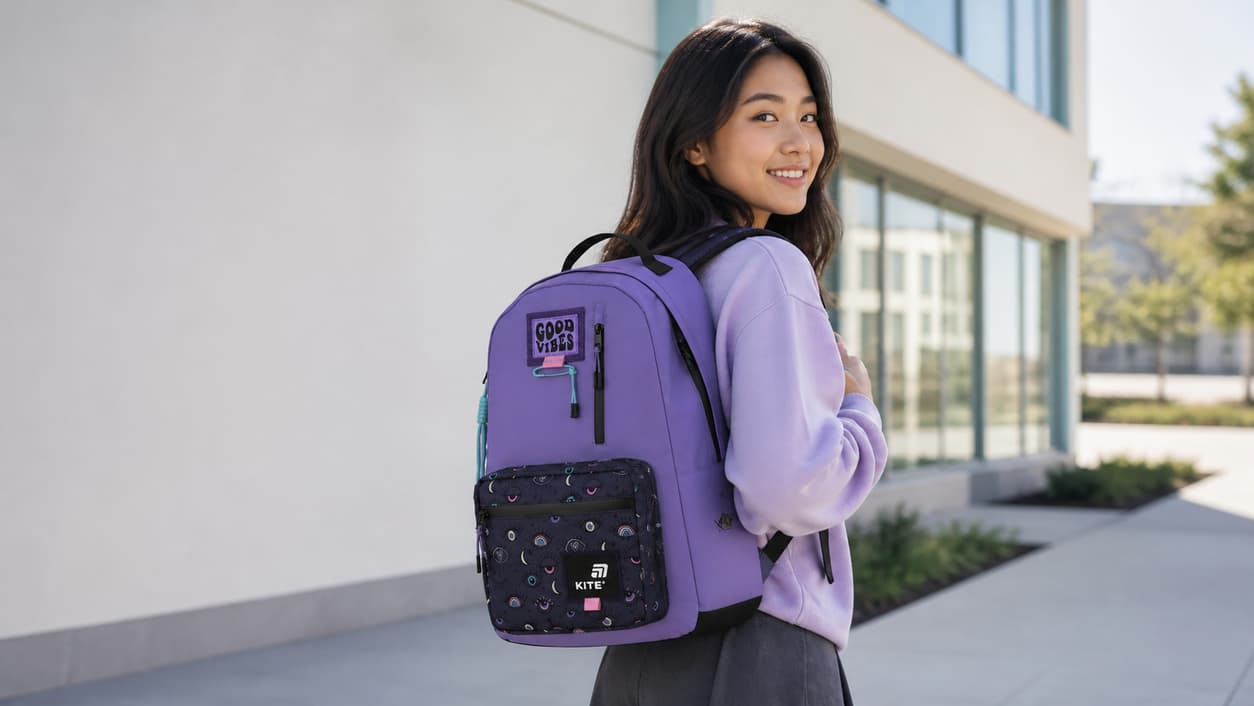
TL;DR: European-style school backpacks are typically built as structured ergonomic tools with fit control (stabilizing straps, shaped back panel) to keep the load stable and closer to the body. Many North American backpacks are designed as flexible, high-volume carriers with softer structure and fewer stabilizing straps. For daily books, walking + transit (TTC/bus/subway), and winter layers, a structured fit-control design is usually the more practical choice for everyday school use.
Scope: Everyday school backpacks in Canada (not hiking, travel, or technical outdoor packs).
Key differences at a glance
| Feature | European-style school backpack | Typical North American school backpack |
|---|---|---|
| Back panel | Structured / shaped to hold form | Soft / flexible, less structured |
| Weight position | Designed to keep weight closer to the back | Can sit further from the back when fully packed |
| Internal organization | Book sleeve / heavy items placed near the back | Large main compartment; items can mix and shift |
| Stabilizing straps | Chest strap common; some models include waist strap | Less common; often minimal or absent |
| Fit range | More fit adjustment; often sized by age/height | General “kids/teen” sizing; fewer adjustment points |
| Shape & profile | Narrower, taller profile to match a child’s back | Wider/deeper casual shapes are common |
| Winter layers (Canada) | Fit control helps keep the pack stable over bulky coats | May shift more over thick coats if worn loose |
| Everyday use intent | Often built around daily school routine | Often designed for mixed school + casual use |
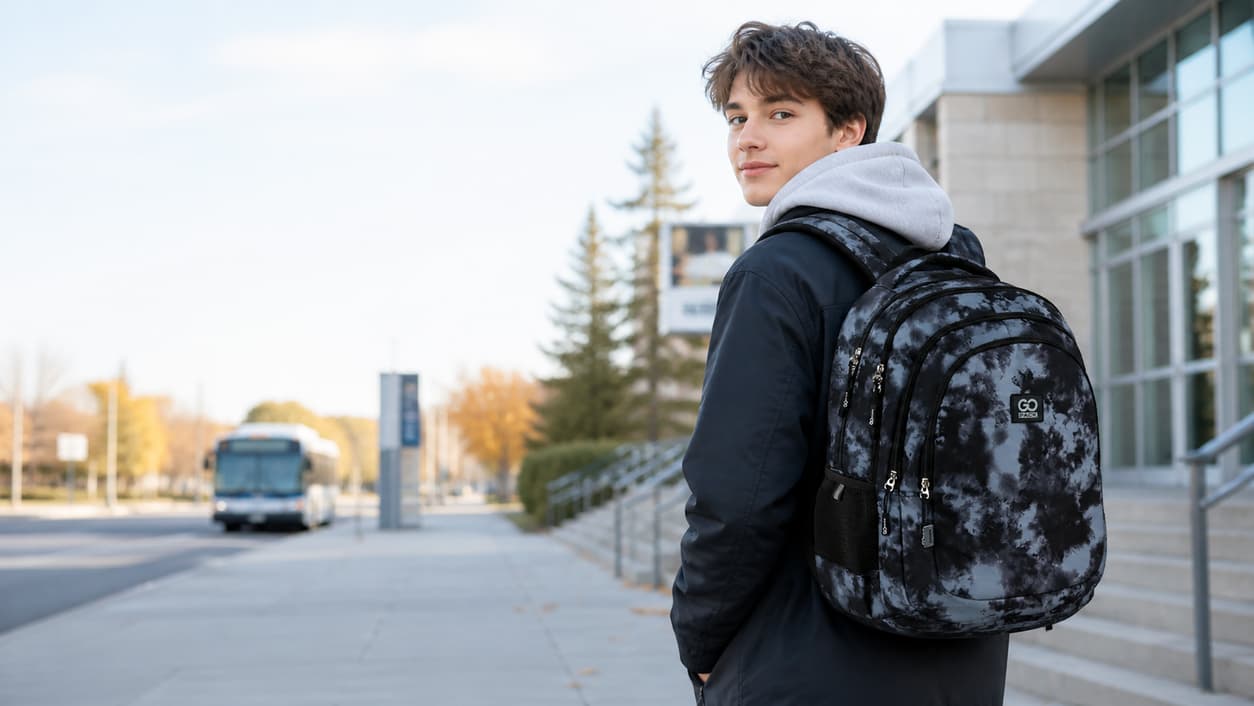
Canada context: winter coats + commuting
- Transit days: if your child walks to stops and stands on TTC/bus/subway, load stability matters more than extra volume.
- Winter layers: bulky coats make loose backpacks shift. Fit-control features (good strap geometry + stabilizing straps) help keep the pack in place.
- Daily routine: for “books + lunch + bottle + extra layers”, structured organization keeps heavier items closer to the back.
Who should choose what?
Choose European-style (structured) if:
- Your child carries books and supplies most school days
- The commute includes walking + transit (TTC/bus/subway)
- You want more fit control and less shifting during the day
- Winter coats are a normal part of the routine
Choose North American-style (flexible) if:
- The load is usually light and carry time is short
- You prioritize flexible storage volume for mixed use
- The backpack is not worn long (no daily long commute)
- You can still choose supportive features (two straps, good fit, organization)
Bottom line: For Canadian school routines with daily books and longer wear time (walking + transit), a structured, fit-control backpack is usually the more practical default; a flexible high-volume backpack is best kept for lighter or shorter carry.
Quick fit check (practical)
- Rule of thumb: many ergonomic guidance for students keep the loaded backpack around 10–15% of body weight (general guidance only, not individualized medical advice).
- Use both shoulder straps and keep the pack higher on the back, not low and loose.
- Pack heavier items closest to the back to reduce swing during walking and transit.
- If the backpack shifts over winter layers, look for fit control (strap geometry + stabilizing straps).
Examples by use case (navigation only): These are just shortcuts into the catalog — the general guidance above stays the same.
- Transit + daily books (teens): GO25-185L-2, K25-1020S-3 · High school backpacks
- Walk + bus/subway (younger kids): GO25-162M-5 / GO25-162M-6 · Elementary backpacks
- Heavier daily load: K25-905M-3, K25-700M-1 · All backpacks
Note: This comparison is feature-based and practical; it does not provide medical advice or claims.
Continue: Orthopedic vs regular · Best ergonomic (best picks) · All guides · Browse backpacks
FAQ
What is the main difference between European and North American school backpacks?
European-style school backpacks are typically more structured with fit control for load stability, while many North American backpacks are more flexible and volume-focused.
Are European-style backpacks more supportive for daily book carry?
Often yes, because the structure and organization are designed to keep heavier items closer to the back and reduce shifting during walking and commuting.
Do European backpacks fit better over winter coats in Canada?
Fit-control features like stabilizing straps and better adjustment can help the backpack stay secure over bulky layers, especially if the pack is worn higher and tightened correctly.
Can a North American backpack be supportive if I choose the right features?
Yes. Look for a structured back panel, good strap adjustment, two-strap carry, and internal organization that keeps heavy items close to the back.
Is a European-style backpack worth the higher price for Canadian school routines?
It can be, especially for daily school use with books and commuting, because structure, durability, and fit control often hold up better over a full school cycle.
How heavy is too heavy for a school backpack?
A common rule of thumb keeps the loaded backpack around 10–15% of body weight, alongside proper fit and using both straps. This is general guidance only, not individualized medical advice.
Which style works better for kids who walk or use TTC/bus/subway?
Structured backpacks with fit control often feel more stable during longer wear time because the load shifts less while walking and standing on transit.
Do European backpacks take up more or less space in school lockers?
Many European-style designs are narrower and hold their shape, so they can be easier to place neatly, but locker fit depends on the backpack’s height and the school’s locker size.
Can I find North American brands with similar structured panels and stabilizing straps?
Yes. Focus on features rather than origin: structure, fit adjustment, stabilizing straps, and organization for heavy items near the back.
Are there official Canadian regulations for “ergonomic” or “orthopedic” backpacks?
There is no single universal Canadian regulation that defines these terms for school backpacks, so compare specific features, fit system, and load stability.