




Ergonomic backpacks are built to carry the load differently — keeping weight closer to the body, spreading it across more contact points, and reducing the forward pull that causes most backpack-related strain. For kids who carry a full daily school load, that design difference is practical, not cosmetic.
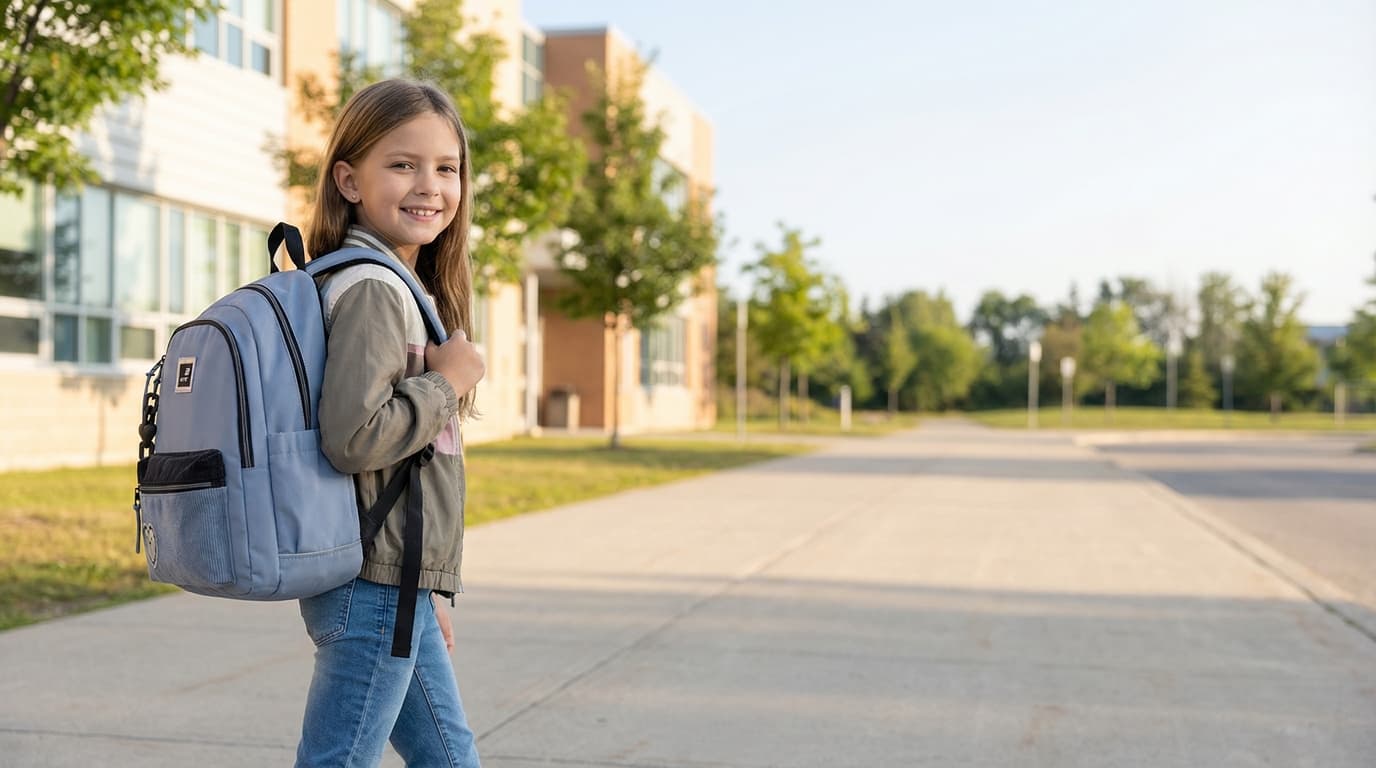
Ergonomic backpacks: designed to distribute weight across the back and shoulders, reducing strain and helping maintain a more natural posture during daily school use.
Browse our ergonomic backpacks for kids or see curated picks by grade in our best backpacks for kids guide.
Why Ergonomic Backpacks Reduce Strain
A standard backpack hangs from two shoulder straps. All of the load transfers through those two attachment points — which means the shoulders and upper back absorb most of the force. When the bag is light, this works fine. When it's packed with books, a water bottle, a lunch bag, and a device, the pull becomes significant.
An ergonomic backpack changes the geometry. The structured back panel holds the bag against the body instead of letting it pull away. The wider, shaped shoulder straps spread the contact area. A chest strap keeps the whole system stable during movement. Together, these features mean the load is carried with the body rather than against it.
The result is less forward lean, less concentrated shoulder pressure, and less end-of-day fatigue — for the same total weight. That is the core ergonomic benefit, and it does not require a heavy load to be noticeable.
How Weight Distribution Works
Weight distribution in a backpack comes down to three factors: where the load sits, how it contacts the body, and how stable it stays during movement.
Same 4 kg — two different carrying experiences:
- Standard backpack → load hangs from shoulder attachment points → pulls body backward → child leans forward to compensate → pressure concentrated on upper shoulders and neck
- Ergonomic backpack → structured panel holds load flush against the back → weight transfers through a larger contact surface → body stays more upright → pressure distributed across shoulders, upper back, and torso
The back panel is the most important element. A rigid or semi-rigid panel keeps the bag's shape under load and prevents contents from shifting outward. Heavier items packed nearest the panel — books, a device — stay close to the spine where the body carries weight most efficiently.
Shoulder straps shape and width determine how pressure spreads across the shoulder joint. Narrow straps concentrate force on a small area. Wide, padded, anatomically shaped straps spread the same force across a larger surface — the difference between a pressure point and an even load.
For proper fit, use our backpack size guide by age to match the bag to your child's torso length — correct sizing is what lets the ergonomic design actually work.
What Makes a Backpack Ergonomic
Not every bag marketed as ergonomic actually is. These are the features that make a measurable difference:
- Padded shoulder straps — wide enough to spread pressure across the shoulder, not dig into it. Should be adjustable and shaped to the natural shoulder curve, not straight across.
- Structured back panel — rigid or semi-rigid construction that holds the bag's shape and keeps the load against the body. This is the single most important ergonomic feature. A flat, soft panel provides little benefit under a real school load.
- Chest strap (sternum strap) — connects the shoulder straps across the chest, preventing them from slipping outward and stabilizing the bag during movement. Especially useful for younger children and longer commutes.
- Hip belt (optional) — transfers a portion of the load from the shoulders to the hips. More common in hiking packs and heavy-duty school bags. Useful for very heavy loads but not standard in everyday school backpacks.
- Load positioning — multiple compartments that allow heavier items to be placed closest to the back panel. Organization is part of ergonomic design — a bag that lets everything pile at the bottom loses most of its weight distribution advantage.
- Lightweight construction — an ergonomic bag that weighs 1.5 kg empty undermines its own benefit. Quality ergonomic backpacks achieve structure without adding unnecessary weight — ideally under 900 g empty.
Do Ergonomic Backpacks Actually Help Posture?
Do ergonomic backpacks help posture? Yes — with conditions.
An ergonomic backpack reduces the forward pull that causes postural compensation. Less pull means less forward lean, which means the spine stays closer to its natural position during carry. That is a real postural benefit — not a guarantee of perfect posture, but a reduction in the mechanical stress that makes poor posture more likely under load.
The conditions matter. The benefit depends on correct fit — the bag must be sized to the child's torso and adjusted properly. A bag that hangs too low or has loose straps loses most of its ergonomic advantage regardless of its design. It also depends on load — a bag packed well beyond safe limits will cause strain regardless of construction. See our guide on backpack weight limits for kids for the 10–15% body weight guideline.
Within those conditions — correct fit, reasonable load — an ergonomic backpack consistently outperforms a standard bag on posture impact. It does not fix existing posture problems. It reduces the daily mechanical stress that contributes to them.
Are ergonomic backpacks worth it? Yes — for kids carrying a full daily school load, the difference in weight distribution and stability makes the same weight easier and safer to carry.
Ergonomic vs Regular Backpacks
When Ergonomic Backpacks Matter Most
The ergonomic benefit scales with load, carry time, and commute type. It matters most in these situations:
- Heavy daily load — binders, textbooks, a device, water bottle, lunch. When the packed weight approaches the upper end of safe limits, how that weight is carried becomes the most important variable. See our backpack weight limit for kids guide for grade-by-grade numbers.
- Long school days — children who carry their bag for six or more hours, including commute time, accumulate more mechanical stress than those who store their bag most of the day. Ergonomic design reduces the per-hour impact.
- Walking commute — a child who walks 15–20 minutes each way with a full bag puts significantly more total stress on the body than one who is dropped off at the door. Load stability and weight distribution are most noticeable during active movement.
- Growth periods — children going through growth spurts are building musculature and skeletal structure simultaneously. Reducing unnecessary mechanical stress during this window is more valuable than at other times.
- Transit commutes — standing on a bus or subway with a poorly distributed load is more demanding than walking. The bag cannot be set down, and movement without stability increases effective load.
When Ergonomic Design Makes Less Difference
Ergonomic backpacks are not necessary in every situation. The benefit is smaller when:
- The load is very light — a child carrying 1–2 kg will not experience meaningful strain from a standard backpack. The ergonomic advantage is proportional to load.
- Carry time is short — a bag worn for 10 minutes total across a school day creates minimal cumulative stress regardless of design.
- The child is dropped off and picked up — no walking commute, locker available, bag stored most of the day. In this scenario, fit matters more than ergonomic construction.
- JK and SK students — very young children carry very little. At this stage, correct size and light empty weight matter more than structured ergonomic features.
Final Recommendation
Most kids (Grades 1–12) carrying a full daily school load: choose an ergonomic backpack. The structured design makes the same weight more comfortable to carry, reduces forward lean, and holds up better through a full school year. It is not a medical device — it is a better-built tool for a daily physical task.
Exception: very light loads, very short carry times, or JK–SK students. In these cases, correct size and low empty weight matter more than ergonomic construction. Use our backpack size guide by age to find the right fit first.
Not sure whether to go ergonomic or standard? See our full backpack vs rolling backpack comparison, or browse our best backpacks for kids guide for curated picks by grade.

Frequently Asked Questions
Are ergonomic backpacks worth it for kids?
Yes — for children who carry a full daily school load. The structured design distributes weight more effectively, reduces forward lean, and makes the same load noticeably more comfortable across a full school day. For very light loads or very short carry times, the benefit is smaller but the bag still holds up better.
Do ergonomic backpacks help posture?
Yes, with conditions. Ergonomic backpacks reduce the forward pull that causes postural compensation under load — which means less forward lean and less concentrated shoulder pressure. The benefit depends on correct fit and reasonable load. A properly fitted ergonomic bag within safe weight limits consistently outperforms a standard bag on posture impact.
What makes a backpack ergonomic?
A structured back panel that holds the load against the body, wide padded shoulder straps shaped to reduce pressure points, a chest strap that stabilizes the bag during movement, and multiple compartments that allow heavier items to be positioned closest to the back. Empty weight under 900 g is also part of a genuinely ergonomic design.
Are expensive backpacks better for kids?
Not always — price does not guarantee ergonomic design. A higher price often reflects brand, materials, or features that do not improve the carry experience. The features that matter — structured back panel, wide straps, chest strap, lightweight construction — are present in well-designed bags across a range of price points. Check the specifications, not the label.
Do kids need ergonomic backpacks?
Need is the wrong framing. A child carrying a full daily school load for a walking commute benefits meaningfully from ergonomic design. A child carrying a light bag for a short time does not need it — a correct fit matters more. The question is whether the daily carrying demand is high enough to make the design difference noticeable. For most school-age children in Grades 1–8, it is.
How is an ergonomic backpack different from a regular backpack?
A regular backpack is designed to hold things. An ergonomic backpack is designed around how the load sits on the body. The structural difference — back panel rigidity, strap shape, chest strap, load positioning — changes how the same weight is carried. The total weight does not change. How the body experiences it does.
Related Guides
- Ergonomic Backpacks for Kids — browse options by age and grade.
- Best Backpacks for Kids — curated picks by school stage.
- Backpack Weight Limit for Kids — safe load guidelines by age and grade.
- Backpack Size Guide by Age — capacity and fit by school stage.
- Backpack vs Rolling Backpack — which is better for most Canadian kids.
Shop Ergonomic Backpacks for Kids
Browse our full range of ergonomic backpacks for kids — structured, lightweight, and built for Canadian school routines from Grade 1 through high school.