




Backpack size means two things: capacity in litres, and how the bag fits the child's body. Both matter. A bag with the right litre count but the wrong fit creates the same problems as a bag that is too large — poor weight distribution, forward lean, and daily discomfort. Getting both right is what this guide is for.
Backpack size for kids: match capacity to the grade, then check torso fit — the bag should sit between the shoulder blades and the top of the hips, not below the waist.
How to choose backpack size for kids: match grade first, then check fit, then avoid oversizing.
Browse our full range of school backpacks for kids filtered by age and grade, or go directly to ergonomic backpacks if weight distribution and posture support are the priority.
What size backpack should a child use? Match the size to the child's grade (in litres), then adjust for torso fit — the bag should sit between the shoulders and hips, not below the waist.
Backpack Size by Grade — Canada
Use the grade column as your starting point. Adjust based on your child's actual torso height and daily load — not just their age.
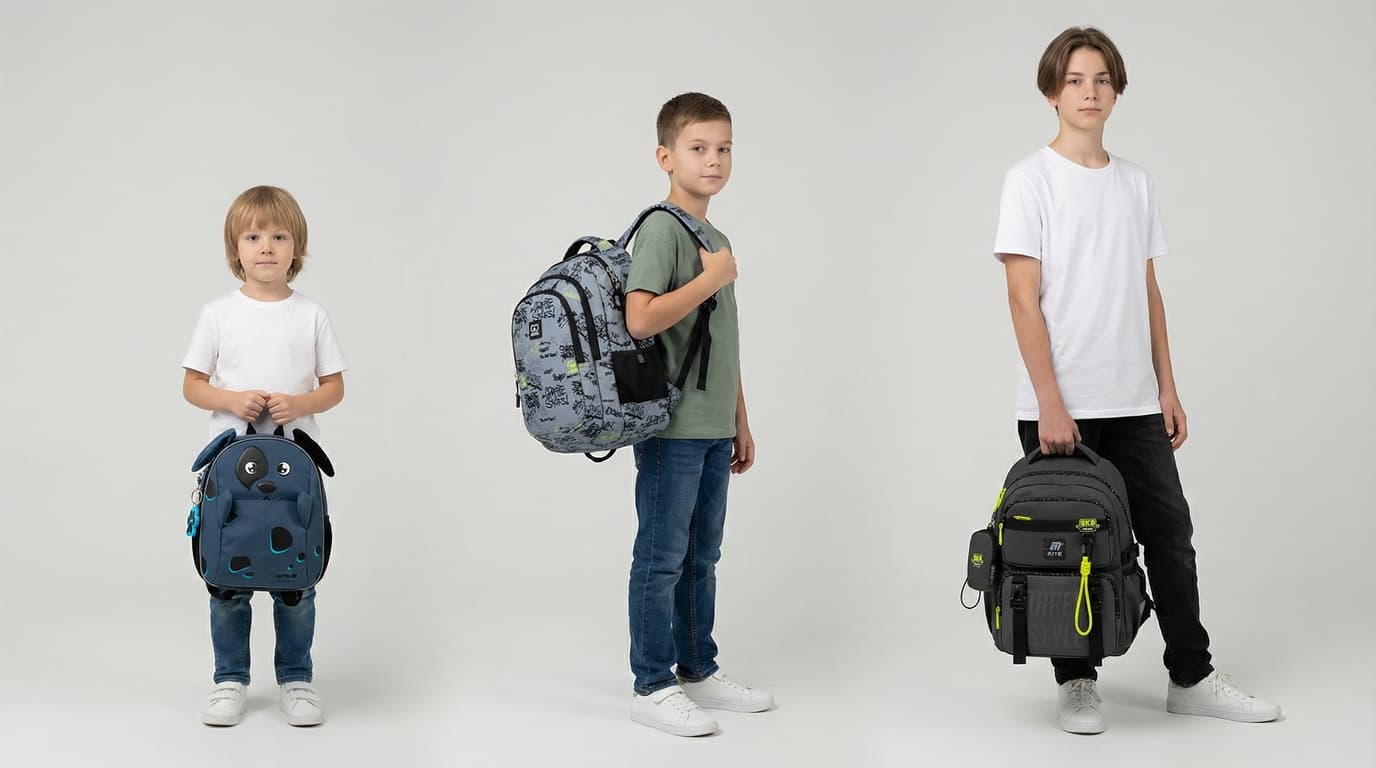
These ranges assume the bag is worn correctly on both shoulders with straps adjusted to the child's torso. Children on the smaller or larger end of their grade range may need to size up or down by one tier. For grade-specific pages with more detail, see: Grade 1–2 backpacks, Grade 3–5 backpacks, Grade 6–8 backpacks, and Grade 9+ backpacks.
How to Choose the Right Backpack Size
Litres tell you how much the bag holds. Fit tells you whether the bag is right for the child. Both need to be correct. A 20L bag that sits below the waist or rises above the shoulders is the wrong size regardless of its capacity.
Fit checklist:
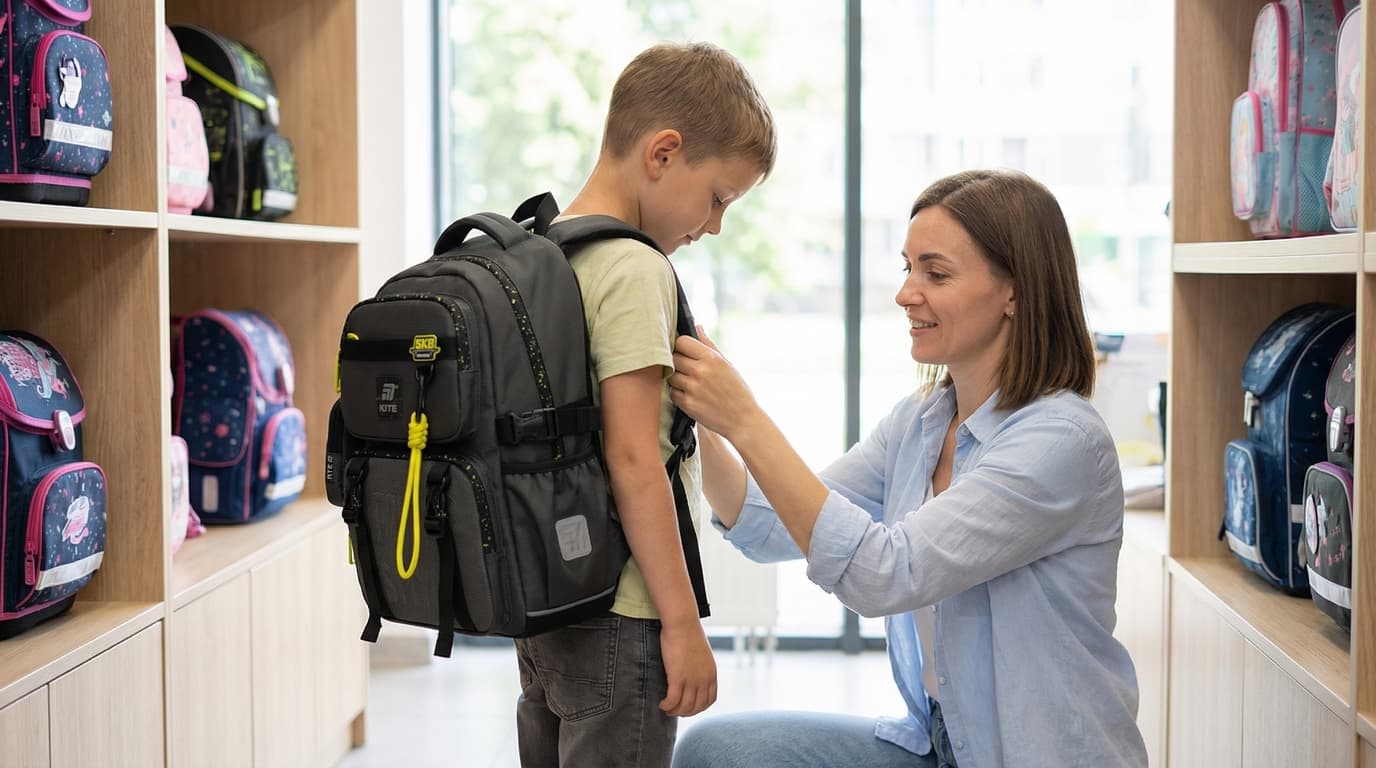
- Torso height, not total height — size the bag to the distance between the shoulder blades and the top of the hips, not the child's overall height. Two children the same height can have significantly different torso lengths.
- Width — the bag should not be wider than the child's shoulders. A bag that extends past the shoulders shifts weight laterally and creates instability.
- Bottom position — the base of the bag should sit at or just above the hips. A bag hanging below the waist increases forward pull and lower back strain.
- Top position — the top of the bag should not rise above the top of the shoulders.
- Adjustable straps — both shoulder straps should be adjusted so the bag stays close to the back. A gap between the bag and the body means the load is pulling away from the spine.
- Try it loaded, not empty — a bag that fits well empty can sit completely differently with a full day's worth of school supplies inside.
Fit works together with ergonomic design. An ergonomic backpack with a structured back panel keeps the bag in position as straps are adjusted — making correct fit easier to achieve and maintain across a full school day.
Backpack Size vs Backpack Weight
Bigger is not safer — it is often riskier. A larger bag holds more, which means it gets packed with more. Children with a 22L bag will fill it differently than children with a 15L bag — and the difference in daily load can be significant.
Size vs weight — how they interact:
- A 15L bag for a Grade 3 student is appropriately sized — it physically limits how much can go inside
- A 22L bag for the same child gives more room than needed and encourages overpacking
- The safe loaded weight is 10–15% of the child's body weight — bag included — regardless of how many litres it holds
Capacity and safe weight are separate variables. Getting the size right for the grade is the first step — but it does not replace checking the actual packed weight. See our full guide on backpack weight limits for kids for grade-by-grade load limits and practical tips on keeping the daily weight manageable.
Common Backpack Sizing Mistakes
These are the sizing errors that show up most often — and are easiest to avoid:
- Buying too large "to grow into" — an oversized bag sits incorrectly, hangs below the waist, and encourages overpacking. A bag that fits well now is always better than one the child might grow into later. Buy for the current school year.
- Sizing by age instead of torso — two children in the same grade can have very different torso lengths. A bag that fits one child perfectly may sit too low or too high on another of the same age. Always check fit against torso, not birthday.
- Focusing only on litres — capacity tells you what fits inside, not how the bag fits the child. A 20L bag in a compact shape fits very differently than a 20L bag in a taller, narrower cut. Check dimensions and try the bag on.
- Ignoring empty weight — a bag that weighs 1.2 kg empty takes a large portion of the safe weight allowance before anything goes inside. Aim for under 900 g empty, especially for younger students.
- Skipping the loaded fit check — always adjust straps and check the position of the bag with a realistic load inside, not with the bag empty. The fit can look correct empty and be completely wrong once packed.
Quick Size Decision
What size backpack does my child need?
Backpack Size by School Stage
For more detail by grade, each page below covers the right size range, key features, and load expectations for that school stage:
- Grade 1–2 Backpacks — 12–15L, lightweight, easy to manage independently
- Grade 3–5 Backpacks — 15–18L, structured support, organized compartments
- Grade 6–8 Backpacks — 18–22L, ergonomic design, device-ready
- Grade 9+ High School Backpacks — 20–25L, laptop sleeve, heavy-load support
Not sure whether to go with a standard or ergonomic model? See our backpack vs rolling backpack comparison, or go straight to our best backpacks for kids guide for curated picks by grade.
Already know the grade? Browse our ergonomic backpacks for kids filtered by school stage — structured, lightweight, and sized to fit Canadian school routines from JK through Grade 12.
Frequently Asked Questions
What size backpack for Grade 3?
A Grade 3 student (age 8–9) typically needs a 15–18L backpack. This capacity handles the standard daily load — binders, notebooks, water bottle, lunch, pencil case — without encouraging overpacking. The bag should sit between the shoulder blades and the top of the hips when worn correctly.
How many litres should a school backpack be for kids?
It depends on grade: 10–12L for JK–SK, 12–15L for Grades 1–2, 15–18L for Grades 3–5, 18–22L for Grades 6–8, and 20–25L for high school. Capacity is a starting point — torso fit and empty bag weight are equally important in the final decision.
Is a bigger backpack better for kids?
No. A larger bag holds more, which leads to overpacking. Overpacking pushes the total weight beyond the safe 10–15% of body weight guideline and causes the bag to sit incorrectly on the child's frame. The right size for the grade — not the largest available — is the correct choice.
How should a backpack fit a child?
The bottom of the bag should sit at or just above the hips — not below the waist. The top should not rise above the shoulders. The bag should not be wider than the child's shoulders. Both straps should be adjusted evenly so the bag stays close to the back, not pulling away from the spine. Always check fit with a realistic load inside.
What size backpack for elementary school?
Elementary school covers Grades 1–5 in most Canadian provinces. For Grades 1–2, a 12–15L bag is appropriate. For Grades 3–5, 15–18L. Both ranges assume the bag weighs under 900 g empty and is sized to the child's torso, not just their grade level.
Can I buy a larger backpack for my child to grow into?
No — this is one of the most common sizing mistakes. An oversized bag sits below the waist, strains the lower back, and encourages overpacking. A correctly sized bag for the current school year is always better than one the child may fit into next year. Reassess size at the start of each school year as the child grows.
Does backpack size affect posture?
Yes — directly. An oversized bag hangs too low and pulls the body backward, causing forward lean. A bag that is too wide shifts the weight laterally. Correct sizing keeps the load centered and close to the spine, which is the foundation for good posture under load. Ergonomic design builds on top of correct size — it cannot replace it.
Related Guides
- Ergonomic Backpacks for Kids — browse by age and grade, structured for daily school carry.
- Best Backpacks for Kids — curated picks by school stage and daily use.
- Backpack Weight Limit for Kids — safe load guidelines by age and grade.
- Ergonomic Backpack Benefits — why structured design changes the carrying experience.
- Backpack vs Rolling Backpack — which is better for most Canadian kids.
Find the Right Backpack for Your Child
Browse our full range of ergonomic backpacks for kids — sized by grade, built for Canadian school routines, and structured to carry daily loads without strain from JK through Grade 12.