




What are the best backpacks for kids in 2026? The ones that fit the child's frame, carry the daily load without strain, and survive a full Canadian school year. Not the biggest. Not the cheapest. The right one.
Best backpacks for kids: ergonomic, lightweight, and sized to the child's grade and body.
Compare the best backpacks for kids: ergonomic vs standard, by age, weight, and daily school load.
Parents buying a school backpack are balancing three things at once: comfort and posture support for a growing body, enough durability to last through rain, slush, and daily use, and enough organization to actually keep a school day manageable. Most bags on the market make trade-offs on at least one of those. This guide helps you find the options that don't.
Browse our full range of kids school backpacks or go directly to ergonomic backpacks for kids if support and weight distribution are the priority.
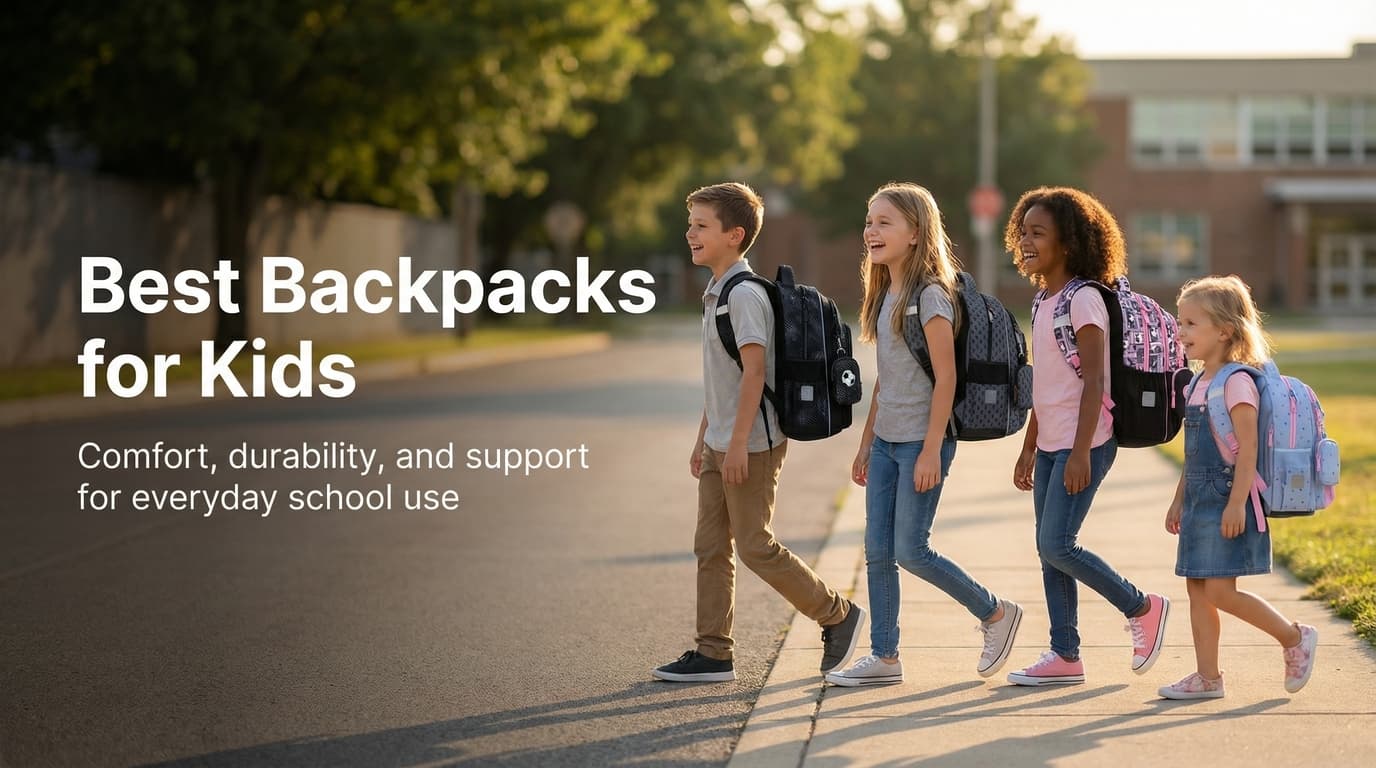
Quick Picks — Best Backpacks by Category
Best school backpacks for kids at a glance: structured support, right size for the grade, under 1 kg empty.
Not sure which size fits your child's grade? See our backpack size guide for kids for a full breakdown by age and school stage.
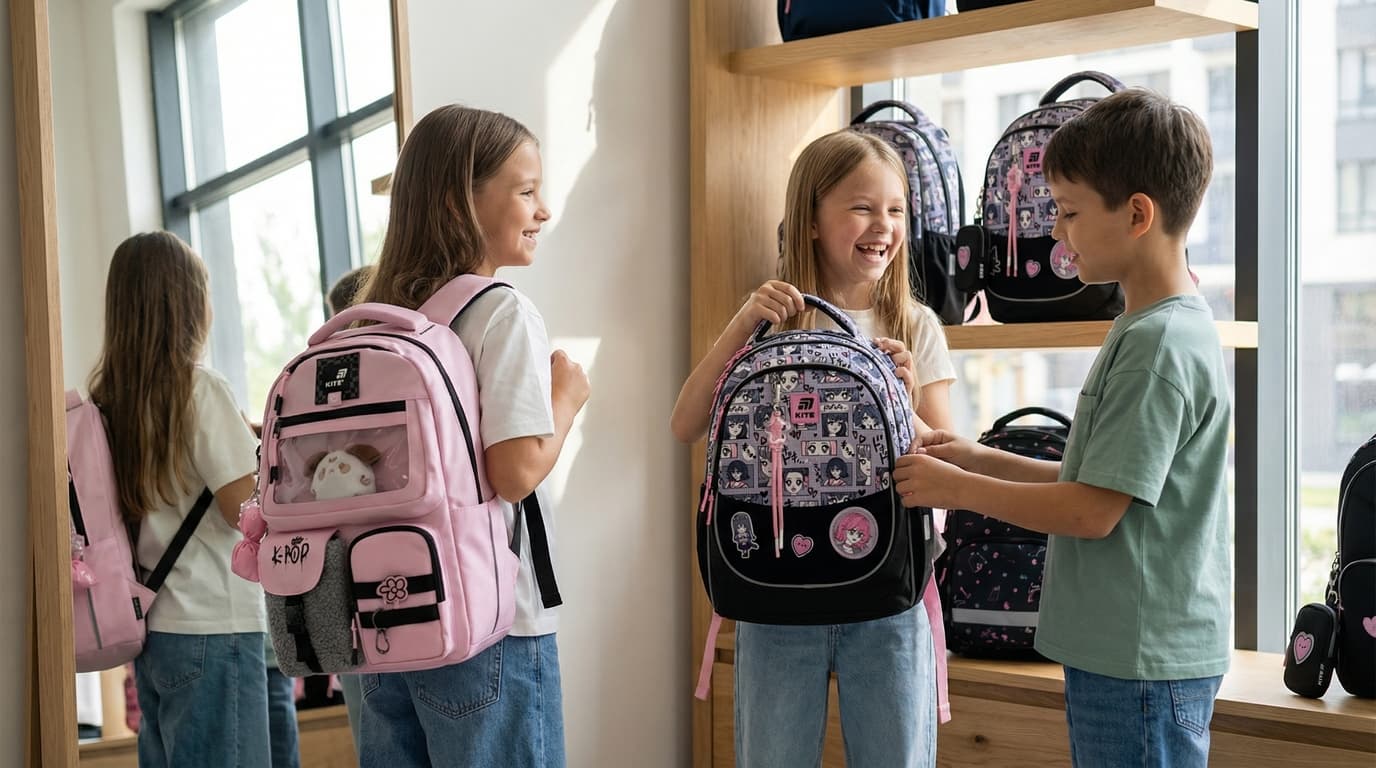
What Makes a Backpack Good for Kids?
A good kids' school backpack does three things well: it fits the child's body, it carries the daily load without creating strain, and it holds up through the school year. Most buying decisions focus on looks or price. The backpacks that actually work for kids focus on fit and weight distribution first.
The fit question matters more than capacity. A 20L bag that sits incorrectly on a small frame is worse than a 14L bag that fits well. The bag should sit between the shoulder blades and the top of the hips — not below the waist, not rising above the shoulders.
Weight matters too. Pediatric and chiropractic associations recommend keeping the fully loaded backpack at 10–15% of the child's body weight. A bag that already weighs 1.2 kg empty takes a large bite out of that allowance before a single book goes in. For a deeper look at safe load limits, see our guide to backpack weight limits for kids.
Key Features to Look For
Ergonomic Design
Ergonomic design means the backpack is built around how the load sits on the body, not just how much it holds. A structured back panel keeps the bag's shape and holds the load against the spine rather than pulling away from it. Wide, anatomically shaped shoulder straps spread pressure across the shoulder instead of digging into one line. A chest strap stabilizes the whole system during movement. Together, these features change how a given weight feels — significantly.
Weight Distribution
A backpack that keeps the load close to the body reduces the forward pull that causes posture strain. Heavier items packed nearest the back panel, combined with a structured design, make the same total weight noticeably easier to carry. This is the core functional difference between a well-designed backpack and a bag that simply holds things.
Durability
Canadian school conditions are hard on bags — rain, slush, wet floors, crowded lockers, and five-day-a-week zipper use across ten months. Durable backpacks have reinforced stitching at strap attachment points and the base, water-resistant fabric, and zippers that open and close reliably through the full year without fraying or sticking.
Compartments and Organization
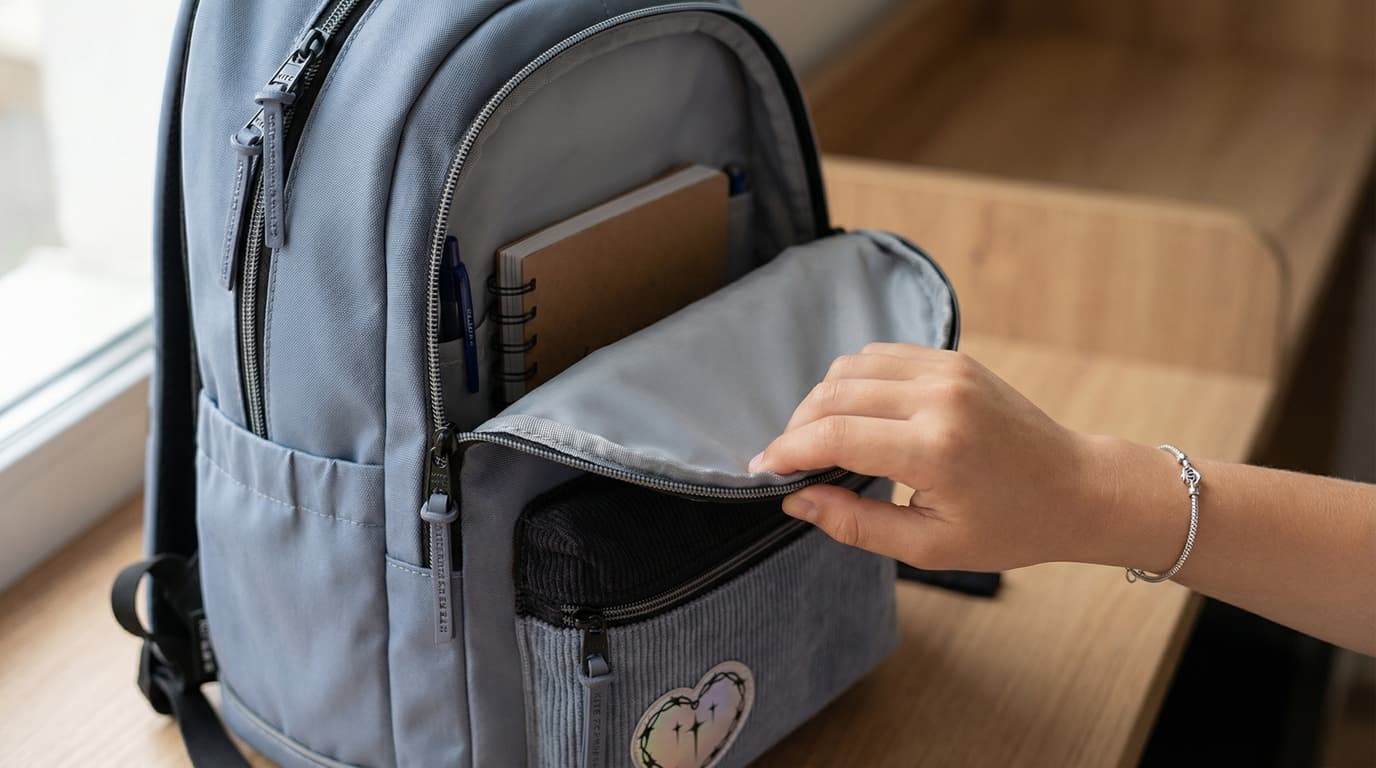
A well-organized backpack helps children manage their school day more independently — and distributes weight more sensibly. A dedicated main compartment for binders and books, a front pocket for smaller items, an external water bottle sleeve, and a padded inner sleeve for a tablet or laptop covers most needs from Grade 1 through high school. Too few compartments means everything ends up in one heavy pile at the bottom.
Best Backpacks by Age Group
Best Backpacks for Elementary School (Grades 1–5)
Elementary-age children need a bag that fits a smaller frame, is light enough to manage independently, and doesn't encourage overpacking. The priority at this stage is fit and empty weight — not maximum capacity. A well-fitting 12–16L bag with padded straps, a structured back panel, and simple organization is more useful than a larger bag with more features the child won't use.
- Capacity: 12–16L
- Empty weight: under 700 g
- Back panel: padded, structured
- Straps: wide, adjustable, padded
- Chest strap: recommended
Browse kids school backpacks filtered by age to find elementary-appropriate options.
Best Backpacks for Middle School (Grades 6–8)
Middle school students typically carry a heavier daily load — more subjects, more binders, a device. The bag needs to handle a fuller pack without losing shape or comfort. At this stage, a stronger back panel, more compartments, and better organization become noticeably important. Durability matters more too: middle schoolers are harder on their gear.
- Capacity: 18–22L
- Back panel: rigid or semi-rigid ergonomic
- Device sleeve: recommended (tablet or laptop)
- Water bottle pocket: exterior, accessible
- Material: high-density nylon or polyester, water-resistant
Best Backpacks for High School (Grades 9–12)
High school students carry the heaviest daily load. A good high school backpack needs a stable, well-padded back panel, strong zippers rated for daily use, a padded laptop sleeve, and enough compartments to organize books, devices, and extras without everything ending up in one heavy pile. Ergonomic support matters more at this stage, not less — the loads are heavier and the carry times are longer.
Ergonomic Backpacks vs Regular Backpacks
What backpacks are best for posture? Ergonomic backpacks — designed to keep the load close to the body and distribute weight across the back and torso, not just the shoulder attachment points.
Same 4 kg load — two different outcomes:
- Regular backpack → weight pulls backward from the shoulder points → forward lean → concentrated pressure on shoulders and upper back
- Ergonomic backpack → structured panel holds the load against the body → weight spread across back and torso → less lean, less pressure, less end-of-day fatigue
For children who carry a full daily load, the difference in how it feels by the end of the day is significant. Read our full breakdown of ergonomic backpack benefits or browse ergonomic backpacks for kids directly.
Backpack Comparison Table
How the main backpack types compare across the features that matter most for school use:
How to Choose the Right Backpack for Your Child
How to choose a backpack for kids — the short version: fit first, weight second, features third.
- Start with the right size for the grade. Match capacity to what your child actually carries, not the largest option available. Oversized bags encourage overpacking and sit incorrectly on smaller frames. Use our backpack size guide as a starting point.
- Check the empty weight before buying. A bag that weighs over 1 kg empty significantly reduces how much can be carried safely within the 10–15% body weight guideline.
- Try it on loaded, not empty. A bag that feels fine empty can sit very differently once packed. The bottom should sit at or just above the hips — not hanging below the waist.
- Check the straps. Wide, padded, and fully adjustable. Both straps should be worn evenly. If your child immediately drops one shoulder strap, the fit or the weight is wrong.
- Look for a chest strap. It stabilizes the bag during movement and helps keep the shoulder straps in position — especially useful for younger children and longer commutes.
- Prioritize a structured back panel. Particularly important for older students carrying heavier loads. A rigid or semi-rigid panel holds the bag's shape and keeps contents from pressing into the spine.
- Match compartments to actual needs. A binder compartment, a front organizer pocket, an exterior water bottle sleeve, and a device sleeve covers most school-age needs without unnecessary bulk.
If your child is already carrying close to the safe weight limit and the load can't be reduced further, choosing a backpack with better structural support matters more than any other variable. See our ergonomic backpacks for kids for options built specifically for that scenario.
Not sure where to start? Browse our full kids school backpacks collection filtered by age and grade — or go straight to ergonomic backpacks for kids if posture support and weight distribution are the priority.
Frequently Asked Questions
What are the best backpacks for kids?
The best backpack for a child fits their frame, keeps the daily load within safe weight limits, and has enough structure to distribute that weight comfortably. Ergonomic backpacks with a contoured back panel, wide padded straps, and a chest strap consistently outperform standard models for posture, comfort, and long-term durability.
What backpacks are best for posture?
Ergonomic backpacks. They are specifically designed to keep the load close to the body, reduce forward lean, and spread weight across the back and torso rather than concentrating it on the shoulder attachment points. For children who carry a full daily load, the difference in posture impact is significant compared to a standard bag.
What backpack brand is best for kids?
The best backpack comes down to design and construction, not brand name alone. Look for a structured back panel, wide padded straps, quality zippers, water-resistant fabric, and a weight under 1 kg empty. Those specifications matter more than the logo on the front.
How do I choose the right backpack for my child?
Match capacity to the child's grade, check the empty weight, and try it on loaded before deciding. The bag should sit between the shoulder blades and the top of the hips. Both straps should be worn evenly and adjusted so the bag stays close to the back. See our backpack size guide for grade-by-grade recommendations.
How heavy should a school backpack be for kids?
No more than 10–15% of the child's body weight, fully loaded — including the bag itself. For a 30 kg child, that's 3 to 4.5 kg total. A lighter empty bag leaves more room for the daily load within that limit. Read the full guide on backpack weight limits for kids.
Are ergonomic backpacks worth it for kids?
Yes — particularly for children who carry a full daily load or have a longer commute. Ergonomic backpacks distribute the same weight more comfortably and reduce the postural strain that builds over months of daily carry. The difference is most significant during elementary and middle school years when posture habits are forming.
What size backpack does my child need?
It depends on age, grade, and torso height — not just the number of years in school. General ranges: 12–16L for Grades 1–3, 15–18L for Grades 4–6, 18–22L for middle school, 20–25L for high school. The most important check is whether the bag fits the child's torso correctly, not whether it has maximum capacity. See the full backpack size guide for kids.
Related Guides
- Backpack Weight Limit for Kids — safe load guidelines by age and grade.
- Backpack Size Guide for Kids — capacity and fit by school stage.
- Ergonomic Backpack Benefits — what structured design actually changes.
- Ergonomic Backpacks for Kids — browse options by age and grade.
- Backpack Buying Guides Hub — all guides in one place.
Shop the Best Backpacks for Kids
Browse our full range of kids school backpacks or go straight to ergonomic backpacks for kids — designed for Canadian school routines, built to carry daily loads comfortably from Grade 1 through high school.