




How heavy should a school backpack be? For most children, no more than 10–15% of body weight — fully loaded, bag included. Yet many Canadian kids carry double the safe limit to school every day. That gap leads to posture changes, back pain, and fatigue that builds quietly over months.
This guide covers the safe backpack weight limit by age and grade, what overloading does to a child's body, and what parents can do — including when the problem is not the load, but the backpack itself. Browse our school backpacks or go directly to ergonomic backpacks for kids built to distribute daily loads more safely.
Max safe backpack weight: 10–15% of child's body weight.
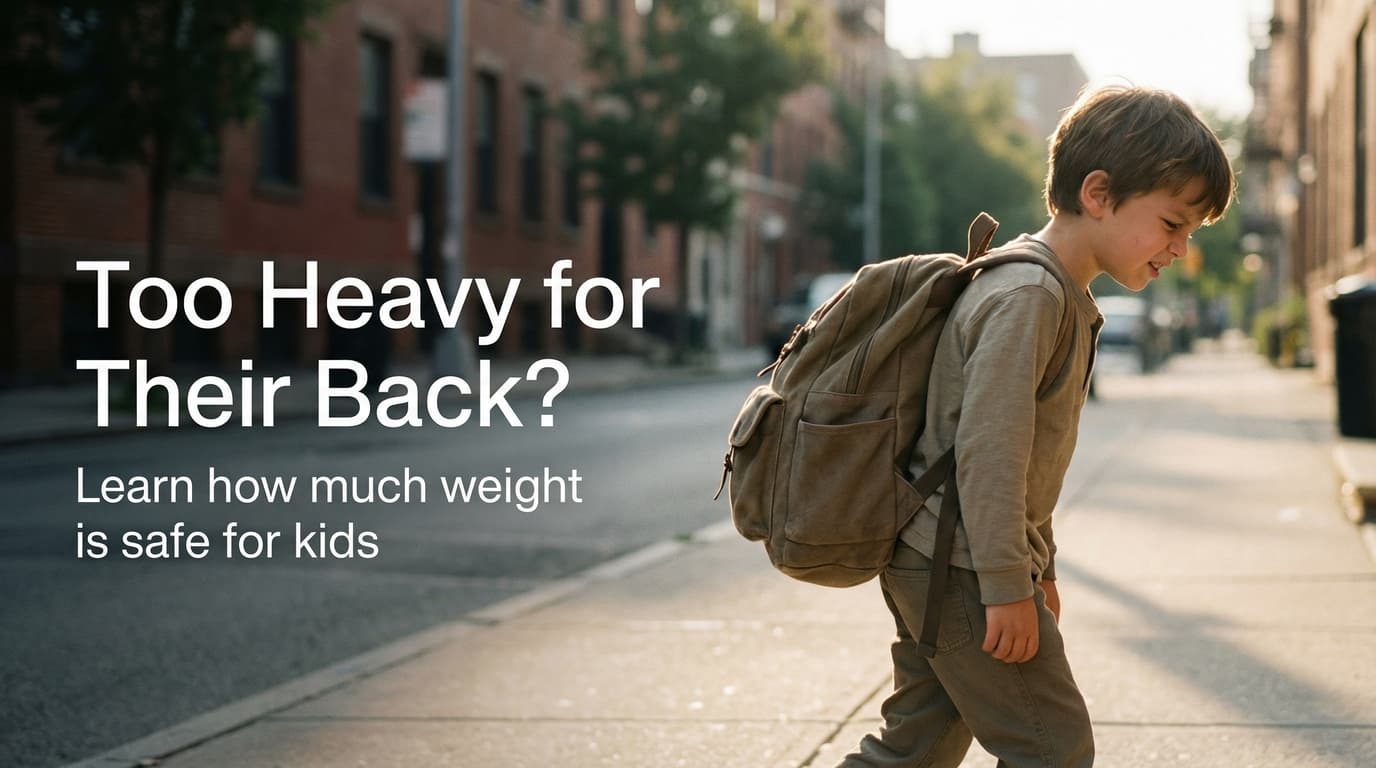
TL;DR — Key Numbers at a Glance
How Heavy Should a School Backpack Be?
Safe backpack weight for kids: 10–15% of body weight, fully loaded — bag included.
That is the guideline used by pediatric and chiropractic associations. It means everything inside counts — books, binders, water bottle, lunch, device, and the bag itself. Not just the heavy items.
How much should a school backpack weigh?
No more than 10% of body weight for younger children and those with longer commutes. Up to 15% for older, larger students with shorter carry times. When in doubt, use the lower number.
The empty bag itself matters more than most parents realize. A bag that already weighs 1.2 kg before anything goes in leaves far less room for books and supplies than one weighing 700 g. Construction quality and material choices in the bag directly affect how much a child can safely carry.
For help matching bag size to your child's grade, see our backpack size by grade guide for Canada.
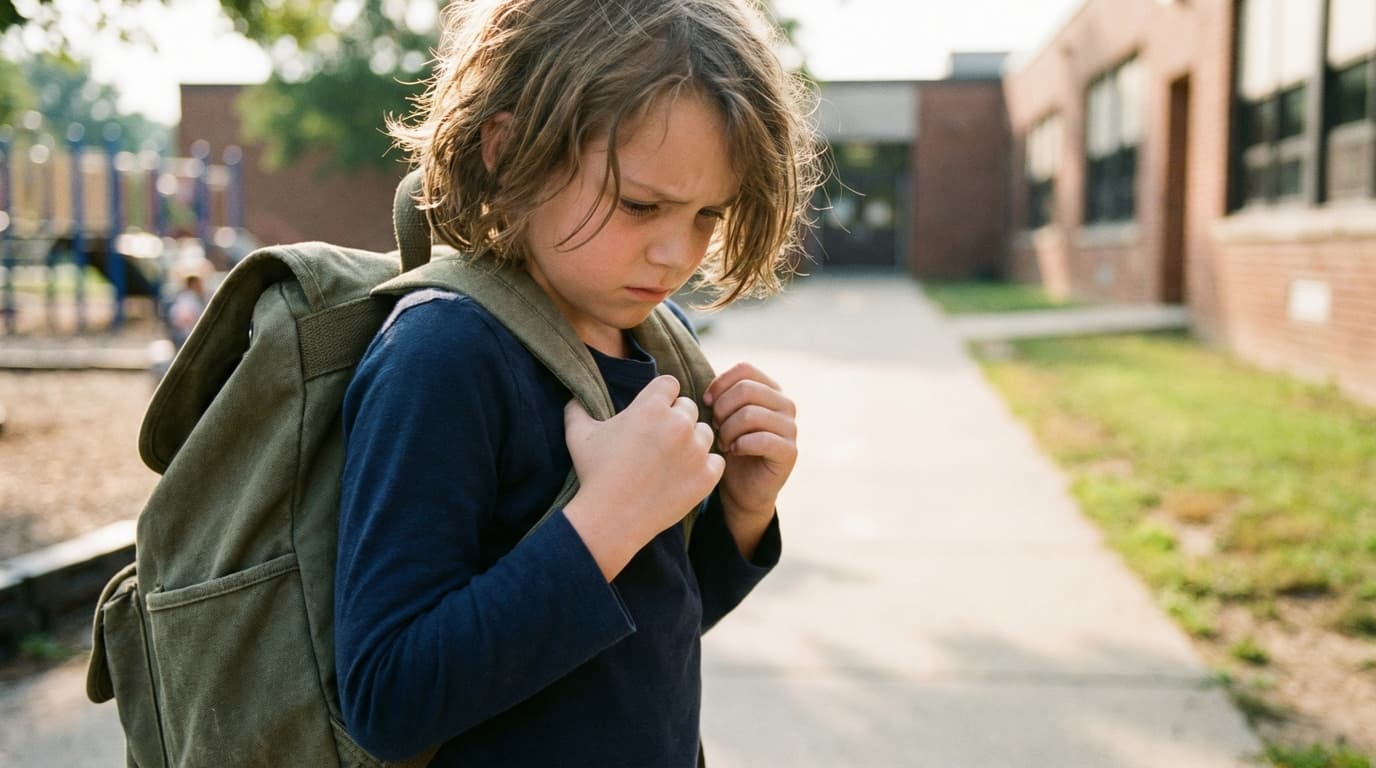
Backpack Weight Limit by Age and Grade
Children's body weight varies within the same grade, so use these ranges as a starting point. The final check is always your child's actual weight against the 10–15% rule.
What is the ideal backpack weight for a Grade 3 student?
A Grade 3 child typically weighs 27–32 kg. The safe loaded backpack weight is approximately 2.7–4.8 kg — bag included. If the bag regularly exceeds that, start by reviewing what actually travels home each day.
Is 20 lbs Too Heavy for a School Backpack?
Is 20 lbs too heavy for a school backpack?
Yes. 20 lbs is approximately 9 kg. For that to fall within the 10–15% safe limit, a child would need to weigh at least 60–90 kg. For most elementary and middle school students, 20 lbs significantly exceeds what is safe for daily carry.
Even at high school age, 20 lbs is at the outer edge of what is recommended — and only for larger students with shorter carry times. If a bag regularly hits this weight, reducing the load is the first step. If the load genuinely cannot be reduced, the design of the backpack itself becomes the critical factor.
What Happens If a Backpack Is Too Heavy?
Backpack overload doesn't cause a single dramatic injury. It's cumulative — the same mechanical stress, repeated five days a week, across the years when a child's spine and muscles are actively developing.
Posture Changes
A heavy bag pulling backward forces the body to lean forward to compensate. Over time, this alters the natural curve of the spine. The younger the child and the longer they carry the bag each day, the more significant the effect.
Back and Shoulder Pain
Back pain is not just an adult problem. Children who consistently carry overloaded bags report higher rates of upper and lower back pain, shoulder discomfort, and neck tension. Thin or narrow straps make this worse — they concentrate all of the pressure into a smaller contact area rather than spreading it.
Fatigue
Carrying more weight than the body manages comfortably burns extra energy. Children arrive at school more tired, which affects attention and capacity through the rest of the day. In Canadian winters, a snow jacket, indoor shoes, and extra layers can push the load considerably before a single book goes in.
What Is Heavy Backpack Syndrome?
What is heavy backpack syndrome?
Heavy backpack syndrome is the term used by physiotherapists and pediatricians to describe the cluster of musculoskeletal complaints — back pain, neck tension, shoulder soreness, and postural changes — linked to prolonged backpack overloading in children. It is not a formal clinical diagnosis, but the pattern is well recognized and preventable.
Why This Matters Long Term
A heavy bag on one school day causes no lasting harm. The problem is what happens when this repeats five days a week, month after month, through years of active skeletal growth:
- Posture habits form early — forward lean during growth years can become a structural pattern, not just a habit
- Repeated asymmetric loading (one-shoulder carry) can create muscular imbalances that persist into adulthood
- Growth spurts are the highest-risk window — the spine adapts most rapidly and is most vulnerable to repeated mechanical stress during this period
- Children often don't complain clearly — discomfort is normalized and goes unnoticed until it becomes significant
⚠ Signs Your Child's Backpack Is Too Heavy
Watch for these during the morning routine or after school:
- Leans noticeably forward when walking with the bag on → bag is pulling the body out of alignment
- Shoulder, neck, or back pain after school → poor weight distribution or total overload
- Red marks or skin indentations on the shoulders → strap pressure too concentrated
- Unusual fatigue during or after the commute → daily load exceeds what the body manages comfortably
- Needs help putting the bag on → total weight is too high for the frame
- Carries on one shoulder only → discomfort wearing both straps, a fit or weight problem
What to do:
First: reduce the load — remove non-essentials, check what's accumulating at the bottom of the bag.
If the load can't be reduced further: the problem is not the weight — it's the backpack. A regular bag places all of that load on the shoulders. An ergonomic backpack distributes the same weight across the full back and torso — which changes how it feels completely.
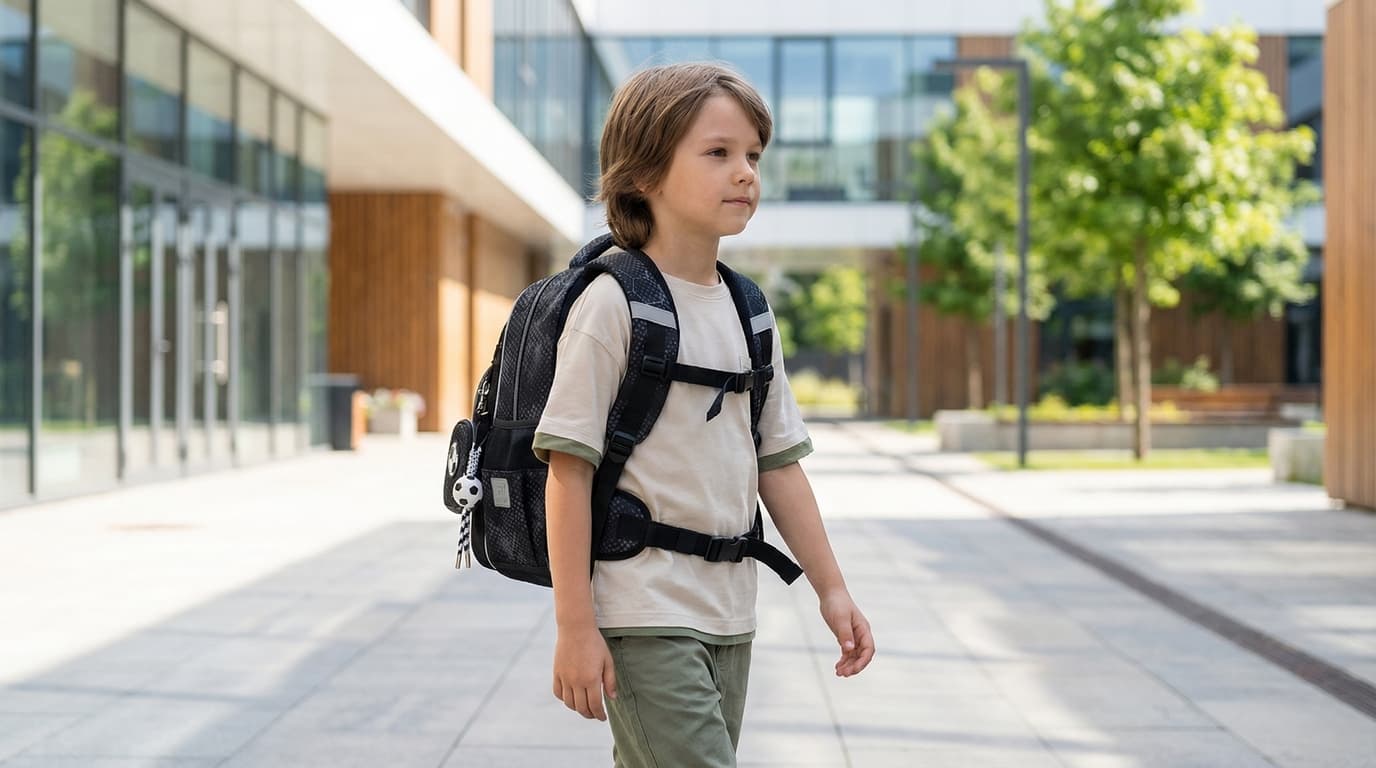
How to Reduce Backpack Weight
Reducing the load is usually possible without affecting what a child actually needs at school:
- Weigh the bag regularly. Use a luggage or bathroom scale. Compare the result against 10–15% of your child's body weight. Most parents are surprised the first time.
- Clear it out weekly. Accumulated sports gear, extra clothing, and previous days' handouts add weight with no daily purpose.
- Use lockers or classroom storage. Not everything needs to travel home every night. If the school provides lockers, use them consistently.
- Start with a lighter empty bag. A backpack weighing under 800 g empty leaves significantly more room before hitting the safe limit — without sacrificing durability.
- Use digital resources where available. If materials are available online, physical textbooks may not need to come home every day.
- Pack heaviest items closest to the back. This keeps the centre of gravity close to the spine and reduces the forward pull — even without changing total weight.
In Canadian winters, added layers push the total higher before books factor in. Better compartmentalization manages this more efficiently than a single large main pocket.
How Ergonomic Backpacks Distribute Weight Differently
Total weight matters. But so does how that weight sits on the body. Two bags with the same packed weight can feel entirely different depending on design.
Same 4 kg load — two different outcomes:
- Regular backpack → weight pulls backward from the shoulder attachment points → forward lean → shoulder and back pressure concentrated in a narrow area
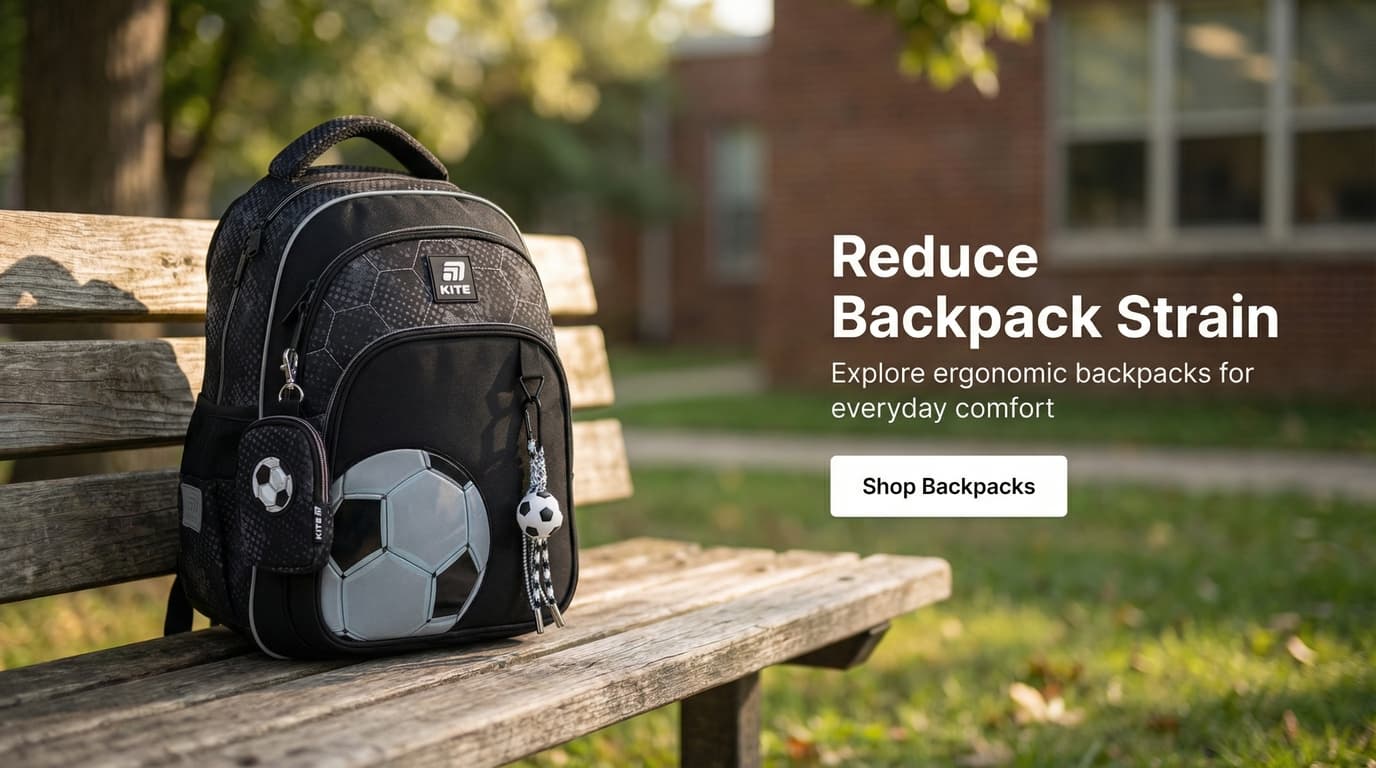
- Ergonomic backpack → structured back panel keeps the load against the body → weight distributed across back, shoulders, and torso → less forward lean, less concentrated pressure, less fatigue
The total weight doesn't change. How the body carries it does.
For children already at or near the safe weight limit, ergonomic design is not optional — it's the most direct way to make the same daily load more manageable through a full school day.
Browse our ergonomic backpacks for kids or see curated picks by age and grade in the best backpacks for kids guide.
Ergonomic vs Regular Backpacks: Weight Distribution Compared
What Is a Safe Backpack Weight in Canada?
What is the safe backpack weight for kids in Canada?
The same 10–15% rule applies as in other countries. The Canadian-specific factor is winter: a snow jacket, indoor shoes, and extra layers add significant weight before books enter the equation. This makes a lightweight empty bag and organized compartments more important, not less.
For children who walk or transit to school through Canadian winters, keeping the bag itself under 800 g empty is the single most practical lever parents can control before the school day even starts.
Backpack Features That Help With Weight Distribution
When comparing backpacks, these features affect how weight is carried — not just how much the bag holds:
- Wide padded shoulder straps — at least 5–6 cm wide for younger children. Spreads load over a larger surface and prevents concentration on the shoulder joint.
- Structured back panel — rigid or semi-rigid, holds the bag's shape, keeps heavier items from pressing into the spine. The single biggest differentiator between ergonomic and standard models.
- Chest strap (sternum strap) — connects shoulder straps across the chest, prevents slipping, stabilizes the bag during movement. Essential for active kids and longer commutes.
- Adjustable straps — allows repositioning as the child grows. The bag should sit between shoulder blades and the top of the hips, not below the waist.
- Lightweight construction — reinforced stitching and quality zippers without adding unnecessary material weight. Target under 800 g empty.
- Multiple compartments — keeps heavier items positioned closest to the back. Proper organization changes the effective balance of the load even without reducing total weight.
If your child's daily load is already at or near the limit — reducing items further isn't always realistic. At that point, choosing a backpack with the right structural support matters more than removing another binder. See our ergonomic backpacks for kids and best backpacks for kids to compare options designed specifically for daily school loads.
Frequently Asked Questions
How heavy should a school backpack be?
No more than 10–15% of the child's body weight, fully loaded — bag included. For a 30 kg child, that's 3 to 4.5 kg total. Younger children and longer commutes mean staying closer to the 10% end.
Is 20 lbs too heavy for a school backpack?
Yes, for most school-age children. 20 lbs (9 kg) only falls within safe limits for a child weighing 60–90 kg — high school age at minimum. For elementary or middle school students, it significantly exceeds what is recommended for daily carry.
What happens if a backpack is too heavy?
Consistent overloading causes forward-lean posture, back and shoulder pain, neck tension, and fatigue. Over time, repeated strain during growth years can lead to lasting postural patterns and muscular imbalances. Pediatric and chiropractic associations flag it as one of the most preventable sources of musculoskeletal strain in children.
What is heavy backpack syndrome?
The term used by physiotherapists and pediatricians to describe the cluster of complaints — back pain, neck tension, shoulder soreness, postural changes — linked to prolonged backpack overloading in children. Not a formal diagnosis, but a well-recognized and preventable pattern.
What is the ideal backpack weight for Grade 3?
A Grade 3 student typically weighs 27–32 kg. Safe loaded weight is approximately 2.7–4.8 kg including the bag. If the bag regularly exceeds that, review what actually needs to come home each day.
Should kids use rolling backpacks instead?
They can work for children with very heavy loads or existing back concerns. The trade-off is practicality — stairs, crowded hallways, and Canadian winter surfaces (ice, slush, snow) all make rolling bags harder to manage than a well-fitted backpack worn on both shoulders.
Does an ergonomic backpack make a heavy load safer?
Yes — significantly. An ergonomic backpack keeps the load closer to the body, distributes weight across the back and torso rather than concentrating it on the shoulders, and reduces the forward lean that causes most of the strain. The total weight doesn't change. How the body carries it does.
Related Guides
- Backpack Size by Grade in Canada — full sizing guide by school stage and torso height.
- Ergonomic Backpacks for Kids — what makes ergonomic design different and when it matters most.
- Best Backpacks for Kids — curated picks by age, grade, and daily use.
- How to Choose a School Backpack — complete buying guide covering fit, features, and materials.
- Backpack Buying Guides Hub — all guides in one place.
Find the Right Backpack for Your Child
Browse our full range of school backpacks or go straight to ergonomic backpacks for kids — designed for Canadian school routines, built to carry daily loads without exceeding safe weight limits.