




Most parents spend time choosing a good backpack the right size, the right straps, the right style. But once it is purchased, how it gets packed every morning often gets much less attention. That is a mistake, because even a well-designed backpack can feel heavier and less comfortable when it is packed badly.
Proper packing affects how weight sits against the body, how balanced the bag feels during the walk to school, and how easy it is for a child to use the backpack throughout the day. This guide explains where to place heavy books, binders, laptops, lunch items, and water bottles, how to reduce overall backpack weight, and how to build a simple daily packing routine. You can also explore our full backpack guides hub for more practical advice.
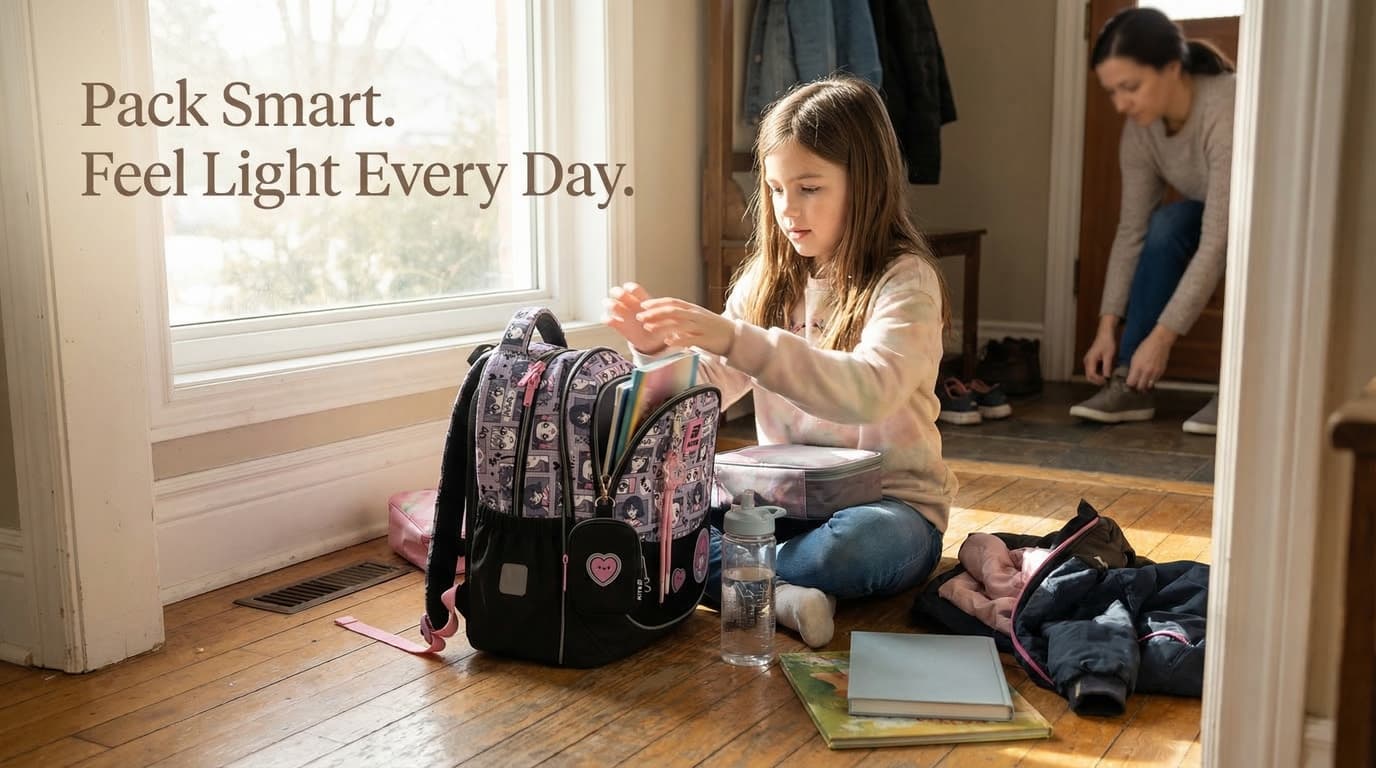
TL;DR Quick Packing Rules
Why Proper Backpack Packing Matters
A backpack is only as effective as the way it is used. A bag with padded straps, a structured back panel, and a chest strap can still feel uncomfortable if the heaviest items are packed badly or if everything gets stuffed into the wrong compartment.
Poor packing creates two common problems. First, weight shifts away from the back and starts pulling the child backward. Second, poor organization turns the backpack into one cluttered space where items move around, get bent, and become harder to find during the day.
A well-packed backpack keeps weight centred, helps the bag stay balanced, and makes school mornings faster and less stressful. Browse our full range of school backpacks designed for better everyday comfort and organization.
The Basic Rule of Backpack Weight Distribution
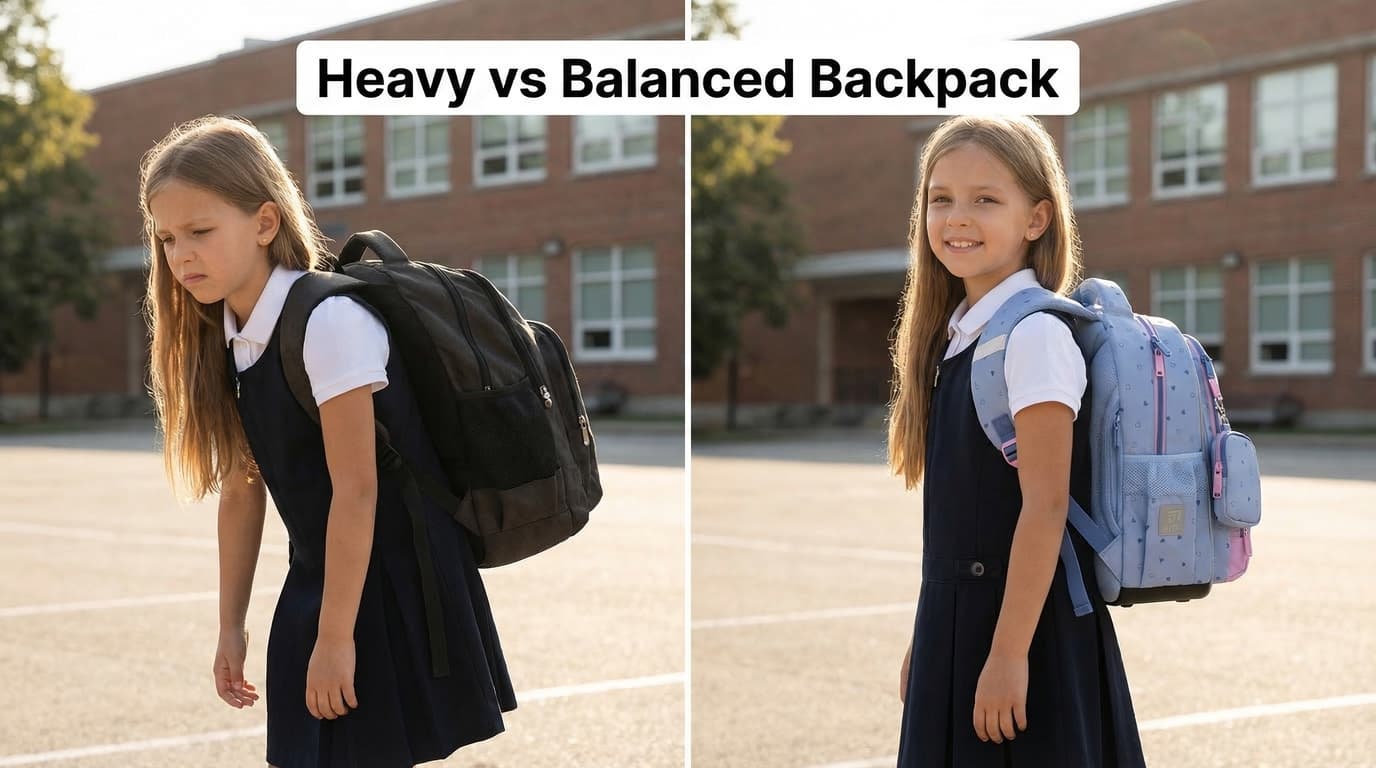
The main rule of backpack packing is simple: heavy items belong closest to the back, and lighter items belong furthest from it. This matters because weight packed far from the spine pulls the backpack outward and makes it feel heavier than it actually is.
Think of the bag in three practical zones:
- Back zone: heaviest items such as textbooks, binders, and laptops
- Middle zone: medium-weight items such as notebooks, lunch kits, and pencil cases
- Front zone: light accessories such as keys, snacks, transit cards, and small personal items
Weight should also stay reasonably high in the backpack. A bag that droops low or becomes bottom-heavy is harder to carry comfortably and usually pulls more on the lower back.
Where to Place Heavy Books and Binders
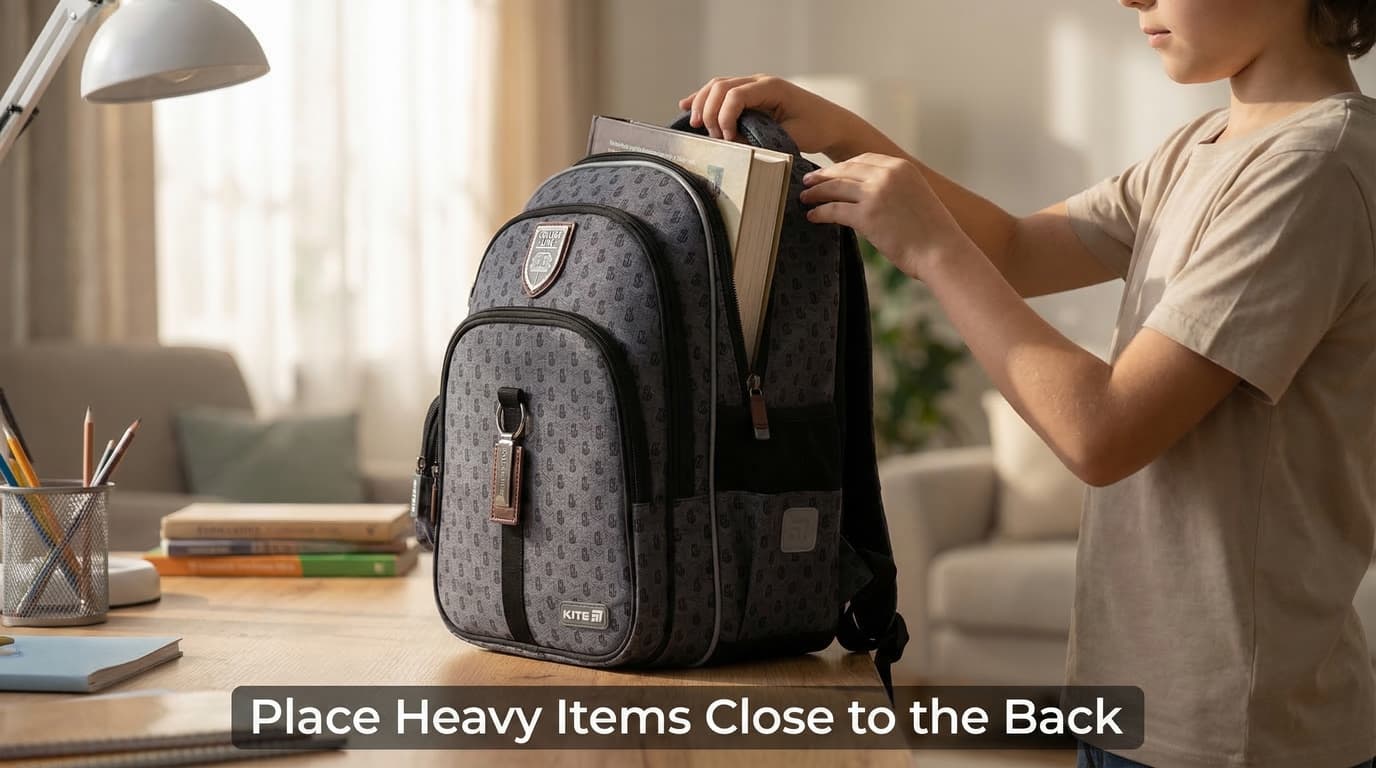
Textbooks and binders are usually the heaviest things in a school backpack, so they matter most. These items should go in the main compartment, packed flat against the back panel the side closest to the child’s spine.
The best order is:
- put the heaviest textbook in first against the back panel
- place binders or medium-weight books in front of it
- put thinner notebooks and folders closer to the front of the main compartment
Avoid these common mistakes:
- stacking books loosely at the bottom of the bag
- placing the heaviest book furthest from the back panel
- forcing binders into the front pocket
A typical school-day order might look like this: math textbook against the back panel, binder in front of that, thin notebook next, and agenda or folders nearest the front. That keeps the load stable and easier to carry.
Where to Put a Laptop or Tablet
For older students, a laptop or tablet is often part of the daily school load. If the backpack has a padded laptop sleeve, use it. That sleeve is usually positioned close to the back panel, which is the correct place for carrying electronics more safely and comfortably.
If there is no dedicated sleeve, place the device in the most stable inner section of the main compartment, as close to the back panel as possible. Keeping it upright usually works better than laying it flat at the bottom, where it can create a rigid base and force the rest of the contents outward.
Avoid placing laptops or tablets in front pockets or unsupported outer sections. Those areas usually offer less protection and can make the bag feel off-balance.
Where to Place a Water Bottle, Lunch Bag, and Small Items
Water Bottles
A water bottle is usually best placed in a secure side pocket. That keeps it upright, accessible, and separate from books or electronics. If the side pocket is too loose or too shallow, the bottle may swing or slip out, which can make the backpack feel unbalanced.
If needed, place the bottle upright inside the main compartment with a leak-proof lid, ideally beside books rather than loose at the bottom.
Lunch Bags
A compact lunch bag can usually go in the main compartment if it does not push the books out of position. If it is bulky and forces the backpack outward, carrying it separately may be the better choice.
Small Items
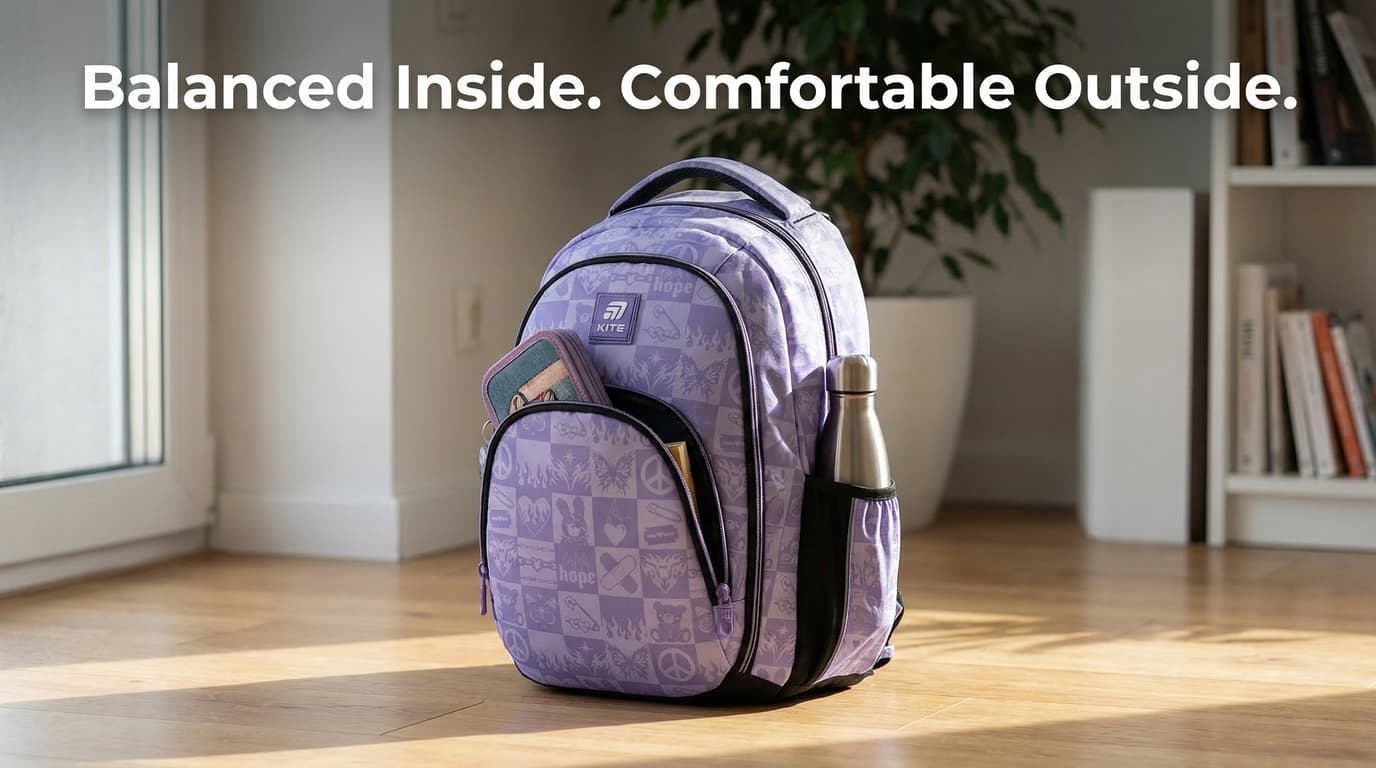
Small, frequently used items should go in the front compartment:
- pencil case
- charger or cable
- keys or transit card
- small snack
- small personal essentials
How to Reduce Backpack Weight
Good packing helps, but reducing the actual load matters just as much. These habits make the biggest difference:
- remove old papers, notices, and wrappers every few days
- only pack the books needed for the next day
- use lockers or cubbies when available
- choose lighter supplies where possible
- pick a lighter backpack to begin with
- repack the bag each evening instead of relying on yesterday’s contents
For a more detailed breakdown of safe backpack weight, read our guide on what backpack weight is safe for kids.
Daily School Backpack Packing Checklist
Use this quick checklist each evening:
- remove all items not needed tomorrow
- place heavy flat items against the back panel
- place medium-weight items in the centre of the main compartment
- keep pencil case and small accessories in the front compartment
- secure the water bottle in a side pocket or upright inside
- make sure the bag closes fully without bulging
- check that the straps are adjusted properly before school
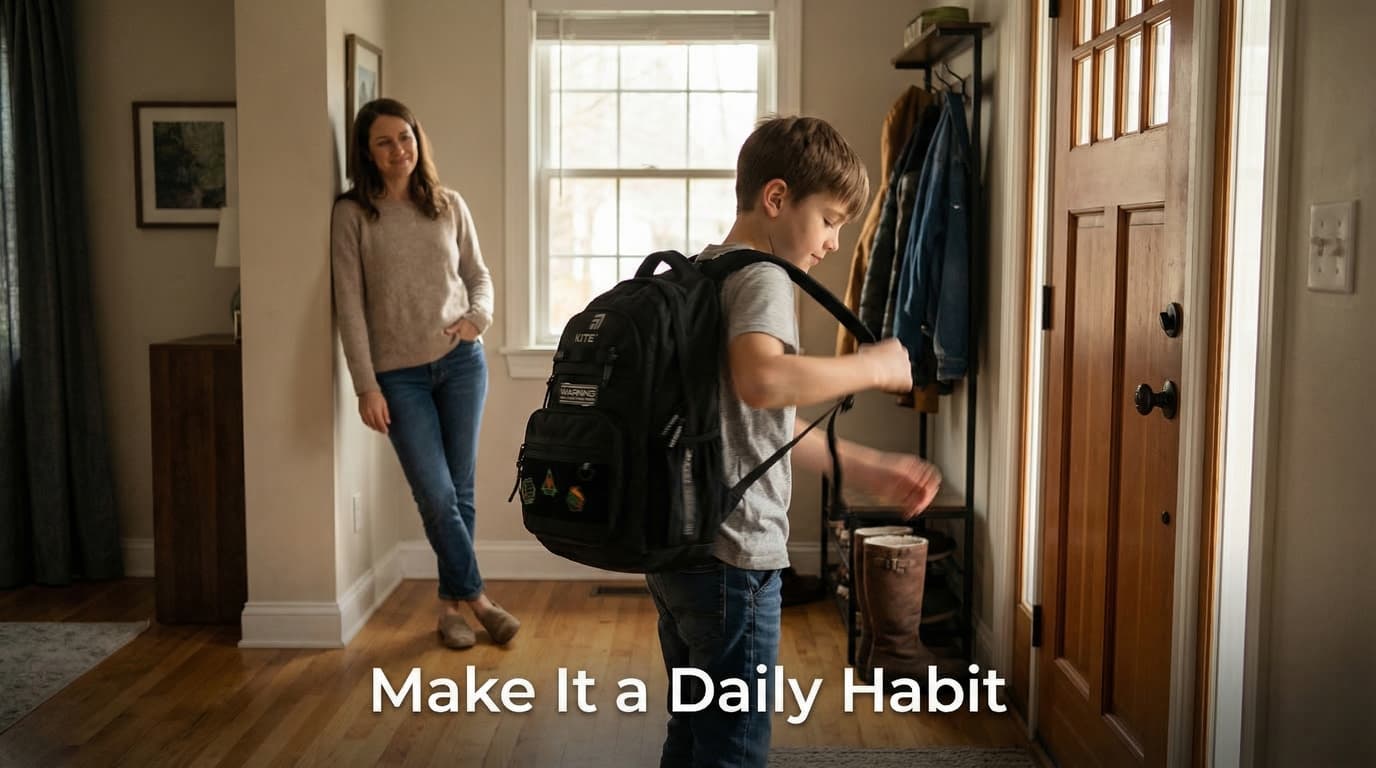
Packing Tips by School Stage
Grades 1–2
Younger children usually carry lighter loads. Keep the backpack simple and easy to manage, and repack it with them each evening.
Grades 3–5
This is when textbooks and binders become more common. Teach the basic rule early: heaviest items go closest to the back.
Grades 6–8
Students often start packing on their own and may carry devices, gym clothes, and changing subject materials. Evening checks become more important here.
Grade 9+
High school students usually manage the heaviest load. A backpack with a padded laptop sleeve, better compartments, and a supportive back panel becomes much more valuable.
Why Ergonomic Backpacks Work Better When Packed Properly
Ergonomic backpacks are built to carry weight more comfortably, but they work best when the contents are packed properly. Padded straps, chest straps, and structured back panels can only do their job well when the load stays centred and close to the body.
A badly packed bag can still feel awkward even if the backpack itself is well designed. Explore our range of ergonomic school backpacks designed for better support and weight distribution.
How to Choose a Backpack That Is Easier to Pack Well
Some backpacks make proper packing much easier. Useful features include:
- multiple compartments with a clear purpose
- a padded laptop sleeve
- deep side pockets for water bottles
- a stable base that helps the bag hold its shape
- a supportive back panel
- adjustable padded shoulder straps
For a full buying checklist, visit our guide on how to choose a school backpack.
Common Backpack Packing Mistakes
- Putting heavy books in the outermost part of the bag — this pulls the backpack away from the body.
- Using one compartment as a dump space — items shift constantly and become harder to manage.
- Overloading the front pocket — too much weight in front makes the bag feel worse immediately.
- Carrying unnecessary items all week — extra supplies and papers build up fast.
- Loose water bottle inside the main compartment — rolling weight creates imbalance.
- Letting the bag hang too low — poor adjustment makes even a well-packed bag less comfortable.
Frequently Asked Questions
How should a school backpack be packed?
Pack the heaviest flat items against the back panel, medium-weight items in the centre, and lightweight accessories in the front pocket. Keep the load high, centred, and close to the spine.
Where should heavy books go in a backpack?
Heavy books should go in the main compartment, flat against the back panel. The heaviest book goes in first, closest to the child’s back.
Where should a laptop go in a school backpack?
A laptop should go in a dedicated padded sleeve if the backpack has one. If not, place it in the most stable inner section near the back panel.
How do I reduce backpack weight for school?
Remove old papers and unnecessary items regularly, only pack what is needed for the next day, and repack the backpack each evening.
What should go in the front pocket of a backpack?
The front pocket is best for small, lightweight items such as a pencil case, charger, keys, transit card, and snack.
Should a water bottle go inside or outside a backpack?
A water bottle is best carried in a secure side pocket. If that is not possible, place it upright inside the main compartment with a leak-proof lid.
How do I organize a child’s school backpack?
Give each section of the backpack a clear purpose: books in the main compartment, small items in the front pocket, and daily essentials packed intentionally each evening.
Why does a backpack feel heavier than it is?
A backpack often feels heavier when weight is packed far from the back or low in the bag. Poor weight distribution makes the body work harder to stay balanced.
How often should a child’s backpack be checked and repacked?
Ideally, check and repack it every evening. At minimum, do a proper cleanout several times a week so unnecessary items do not build up.
Related Guides
- What Backpack Weight Is Safe for Kids — how much a child should safely carry by body weight.
- Ergonomic Backpacks — supportive designs that work better with proper packing.
- How to Choose a School Backpack — fit, structure, and features that matter most.
- Backpack Buying Guides Hub — all backpack guides in one place.
Explore School Backpacks Designed for Better Daily Packing
Browse our school backpacks and compare models built for smarter organization, better weight distribution, and everyday comfort for Canadian students.