




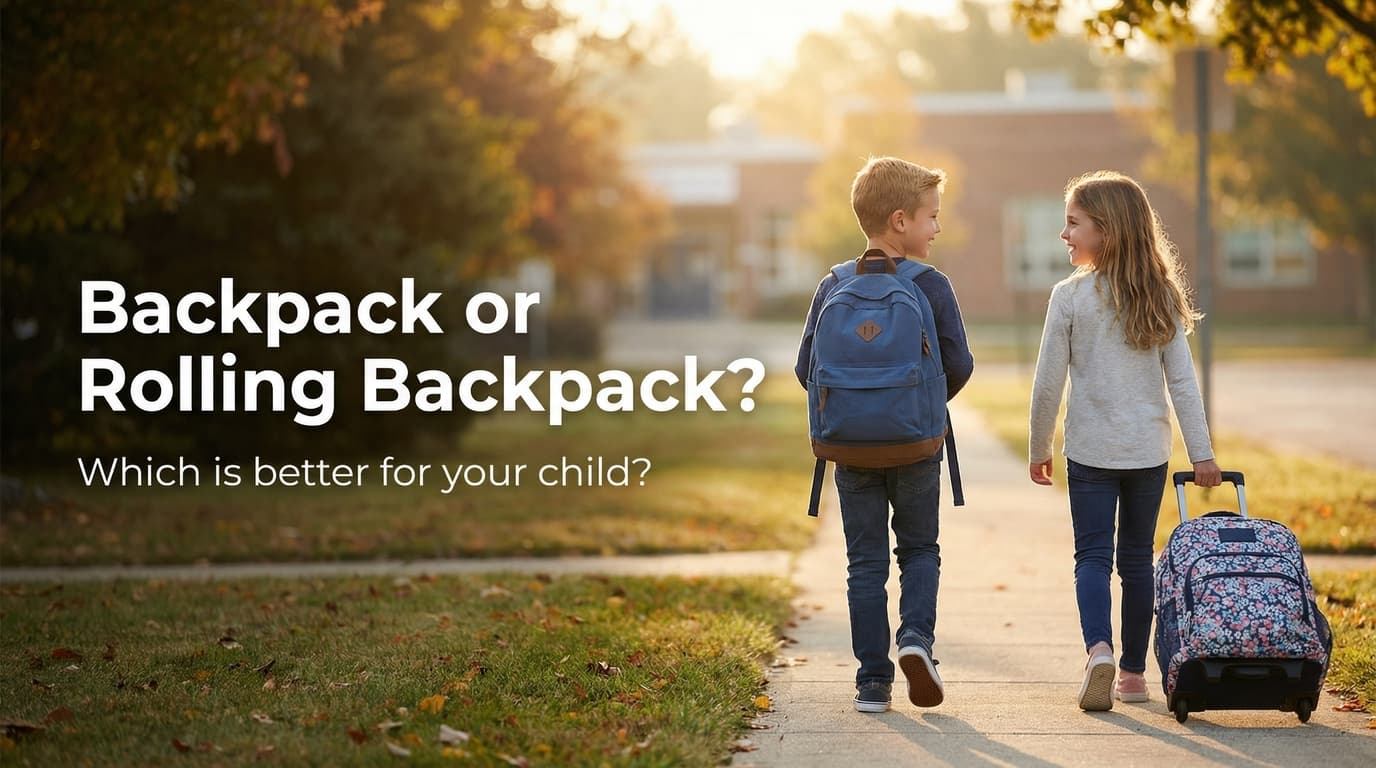
Backpack or rolling backpack - which is better for kids? For most Canadian students, a well-fitted backpack worn on both shoulders. But the right answer depends on the child's age, daily load, school layout, and commute.
Backpack vs rolling backpack: a backpack is better for most kids; rolling backpacks only work in specific flat, low-stair environments.
This guide compares both options across posture, practicality, durability, and school-specific factors so parents can make the right call for their child's situation. Browse our full range of school backpacks for kids or learn about ergonomic backpacks if weight distribution is the main concern.
Quick Comparison Table
Backpack vs rolling backpack at a glance:
Pros and Cons of Backpacks
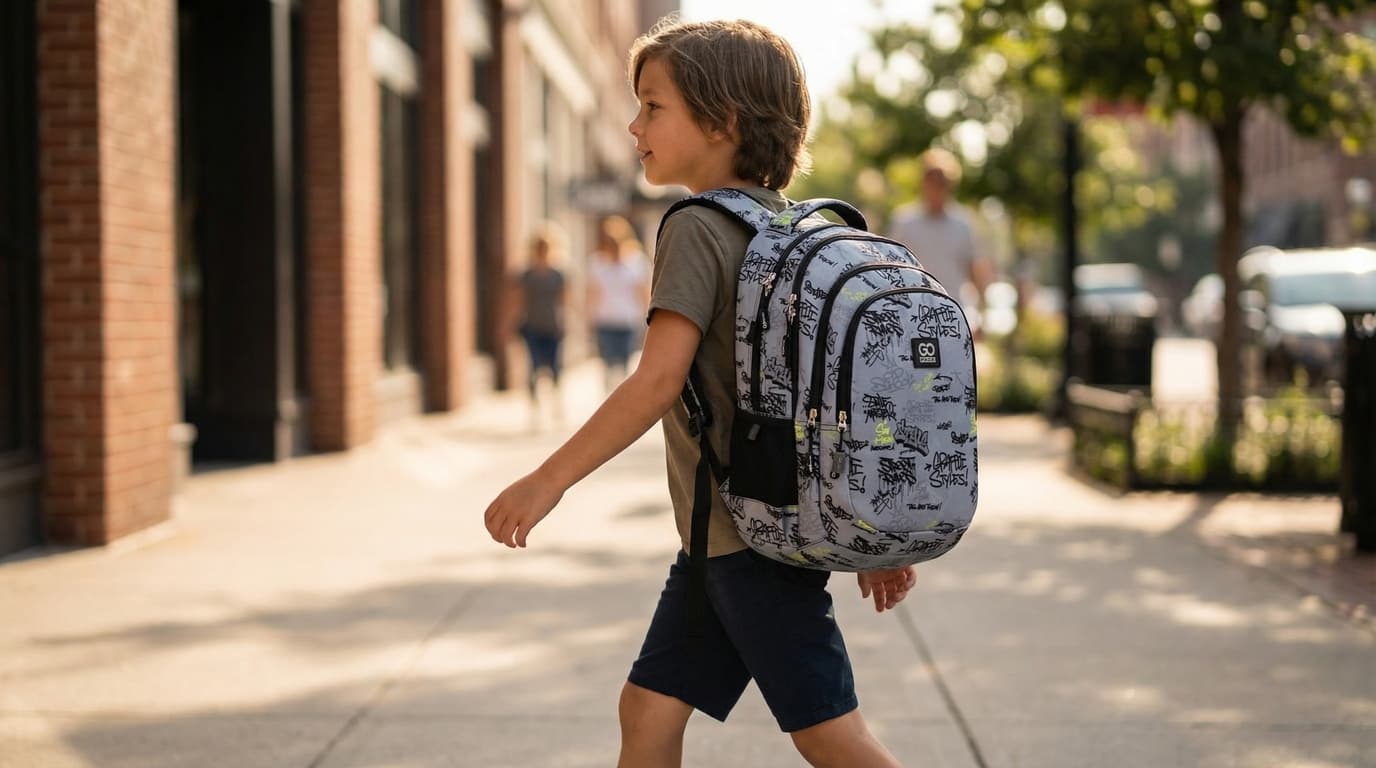
A properly fitted backpack worn on both shoulders is the standard for a reason — it works well for most children in most school environments.
Pros:
- Works on any surface — stairs, snow, gravel, wet floors, transit
- Fits standard school lockers without issue
- Easy to manage in crowded hallways and buses
- No mechanical parts to break or maintain
- Universally allowed under school policies
- Ergonomic models distribute weight effectively when fitted correctly
Cons:
- Total weight is physically carried — overloading creates strain
- Requires correct fit and both-shoulder wear to be effective
- Children with back or shoulder conditions may need alternatives
Pros and Cons of Rolling Backpacks
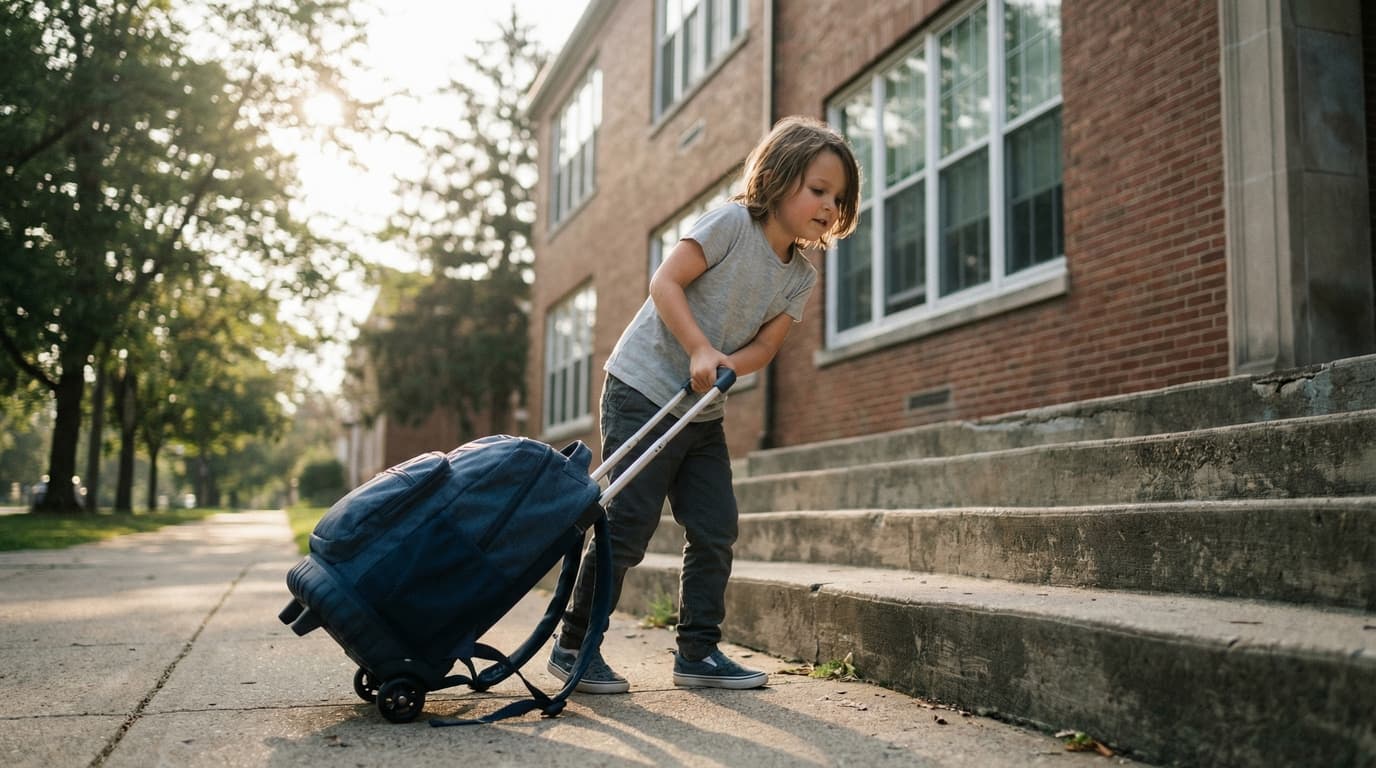
Rolling backpacks solve one specific problem well — carrying heavy loads without shoulder strain. Everything else is a trade-off.
Pros:
- Removes shoulder and back load entirely when rolling on flat surfaces
- Allows heavier loads without exceeding the 10–15% body weight guideline
- Useful for children with existing back, shoulder, or joint conditions
- Can double as carry-on luggage for travel
Cons:
- Difficult on stairs — must be lifted or dragged at every staircase
- Wheels clog and jam in snow, slush, gravel, and wet surfaces
- Takes more floor space in hallways, buses, and classrooms
- Often too large for standard school lockers
- Banned in some Canadian schools due to hallway safety concerns
- Wheels and retractable handle wear out and are expensive to repair
- Pulling with one arm on uneven surfaces can create lateral posture strain
Which Is Better for Posture?
Are rolling backpacks bad for posture? Not inherently — but they are not automatically better either.
Rolling backpacks eliminate shoulder load when rolling on flat surfaces, which helps children who are already carrying too much weight. That is their main posture benefit. The problem is what happens the rest of the time: when the bag needs to be lifted onto a bus, carried up stairs, or pulled across uneven ground with one arm, the posture load shifts rather than disappears — often concentrating on one side of the body.
A well-fitted backpack worn on both shoulders, kept within the 10–15% body weight limit, distributes load symmetrically across the back and shoulders. An ergonomic backpack with a structured back panel improves this further — keeping the load close to the body and reducing forward lean. For most children in most school situations, this is the better posture outcome.
The exception is a child who genuinely cannot carry their daily load within safe weight limits — due to medical reasons or an unavoidably heavy curriculum. In that case, a rolling backpack on a flat route is a valid solution. For everything else, ergonomic backpack design addresses the posture problem more practically. Read more about ergonomic backpack benefits for a full breakdown.
Which Is Better for Elementary vs High School?
Elementary School (Grades 1–5)
A backpack is almost always the better choice at this stage. Elementary schools typically have stairs, active movement between areas, and smaller hallways. Rolling backpacks are harder for younger children to manage independently — lifting them up stairs, navigating through doors, and storing them in a small cubby or hook space all create practical problems that don't exist with a standard backpack. Loads at this age are also lighter, which means a well-fitted, lightweight backpack handles the weight without issue.
Middle School (Grades 6–8)
Still typically a backpack. Middle school loads get heavier, which is a reason to look at better-designed backpacks — not necessarily rolling alternatives. At this stage, a structured ergonomic backpack handles the increased load better than a rolling bag handles the logistical challenges of a multi-floor school building.
High School (Grades 9–12)
The case for rolling backpacks is strongest here — loads are heaviest, students are larger, and some high school layouts have longer flat corridors. Even so, most high schools have multiple floors, crowded hallways, and lockers too small for rolling bags. A backpack with strong ergonomic support remains the more practical daily option for the majority of students.
When to Choose a Backpack
- The school has stairs — which applies to most Canadian schools
- The child walks to school or uses transit through Canadian winters
- The school has standard-sized lockers
- The child's daily load falls within the safe 10–15% body weight limit
- The child needs to move quickly and independently between classes
- The school policy does not specifically permit rolling bags in hallways
When to Choose a Rolling Backpack
- The child has a documented back, shoulder, or joint condition that makes carrying weight painful
- The daily load genuinely cannot be reduced and consistently exceeds safe carry limits
- The school is single-floor or has elevator access throughout
- The commute is entirely on flat, paved surfaces — no ice, slush, or gravel
- The school explicitly allows rolling backpacks in hallways and classrooms
- The child is mature enough to manage the bag independently, including lifting when needed
Canadian School Considerations
Canadian school conditions create specific challenges for rolling backpacks that parents in other climates may not face to the same degree.
Stairs
The majority of Canadian school buildings — particularly those built before the 1990s — are multi-storey. Rolling backpacks must be lifted at every staircase, which partly defeats their purpose and adds a different physical demand. For younger or smaller children, lifting a heavy rolling bag up stairs repeatedly is more physically demanding than simply wearing a well-fitted backpack.
Snow, Slush, and Ice
From October through April across most of Canada, outdoor surfaces are routinely covered in snow, slush, ice, or wet pavement. Rolling backpack wheels clog quickly in these conditions and become difficult to maneuver. A child who is also managing winter gear — a heavy coat, boots, mitts — has little spare capacity to wrestle a stuck rolling bag across a snowy schoolyard.
School Policies
Are rolling backpacks allowed in schools? This varies by school and board. Some Canadian schools have banned rolling backpacks due to hallway safety concerns — they create trip hazards in crowded corridors and slow movement between classes. Before purchasing a rolling backpack, check the specific policy at your child's school. A backpack has no such restrictions.
Final Recommendation
For most Canadian kids: choose a backpack.
A well-fitted backpack worn on both shoulders, kept within safe weight limits, and built with ergonomic support handles the real demands of Canadian school life — stairs, winter weather, crowded hallways, and standard lockers — better than a rolling alternative.
The right backpack is not just lighter than a rolling bag. It is more practical, more durable, and more appropriate for the school environments most Canadian children actually navigate.
Choose a rolling backpack if:
- There is a medical reason that makes carrying weight genuinely difficult
- The school is single-floor with flat routes and permits rolling bags
- The daily load cannot be reduced to safe carry limits any other way
Looking for a backpack that handles heavier loads without the rolling trade-offs? Ergonomic backpacks for kids are designed to distribute weight more comfortably — making the same load feel lighter without wheels. Browse our full range of school backpacks for kids to compare options by age and grade.
Frequently Asked Questions
Are rolling backpacks better for kids?
Not for most kids in most school situations. Rolling backpacks solve the weight-carrying problem but create practical challenges — stairs, winter surfaces, crowded hallways, and locker sizing — that affect daily school life in Canada. A well-fitted ergonomic backpack handles the same load more practically for the majority of students.
Are rolling backpacks bad for posture?
Not inherently — but they are not automatically better for posture either. On flat surfaces they remove shoulder load, which is helpful. But pulling with one arm on uneven ground, or lifting the bag up stairs repeatedly, can create lateral strain. A backpack worn correctly on both shoulders with ergonomic support distributes weight more symmetrically through the school day.
Should kids use rolling backpacks?
In specific situations — yes. If a child has a medical condition that makes carrying weight painful, if the school is single-floor with flat outdoor routes, and if the school policy permits it, a rolling backpack is a reasonable choice. For most Canadian students, a properly fitted backpack is more practical.
Are rolling backpacks allowed in schools?
It depends on the school and board. Some Canadian schools have banned rolling backpacks due to hallway safety concerns — they create trip hazards in crowded corridors. Check your child's specific school policy before purchasing. Standard backpacks have no such restrictions.
What is better for a heavy school load — rolling or ergonomic backpack?
If the load is heavy but manageable within the 10–15% body weight guideline, an ergonomic backpack is the better choice — it distributes the weight more effectively without the logistical problems of a rolling bag. If the load consistently exceeds safe carry limits and cannot be reduced, a rolling backpack becomes worth considering — but only if the school environment supports it.
At what age should a child switch from a backpack to a rolling backpack?
There is no set age — it depends on the child's specific situation, not their grade. Most children through high school are better served by a properly fitted backpack. A rolling backpack makes sense when there is a clear medical or logistical reason, not simply because the load is heavy. Better backpack design — not a different bag type — is usually the right solution for heavier loads.
Related Guides
- Backpack Weight Limit for Kids — safe load guidelines by age and grade.
- Ergonomic Backpack Benefits — how structured design changes the carrying experience.
- Ergonomic Backpacks for Kids — browse options by age and grade.
- Best Backpacks for Kids — curated picks by school stage.
- Backpack Buying Guides Hub — all guides in one place.
Find the Right Backpack for Your Child
Browse our full range of school backpacks for kids or go straight to ergonomic backpacks — built for Canadian school routines, designed to carry daily loads comfortably without the trade-offs of a rolling bag.