




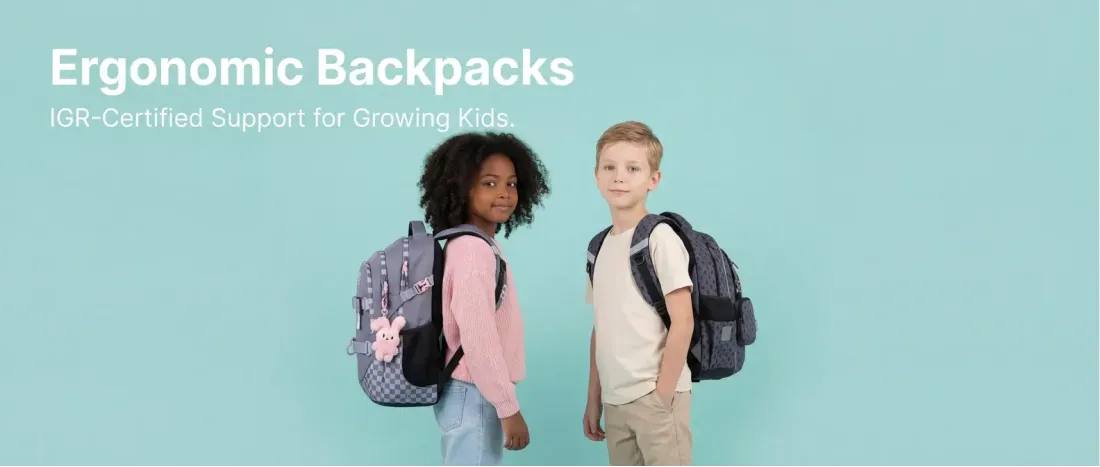

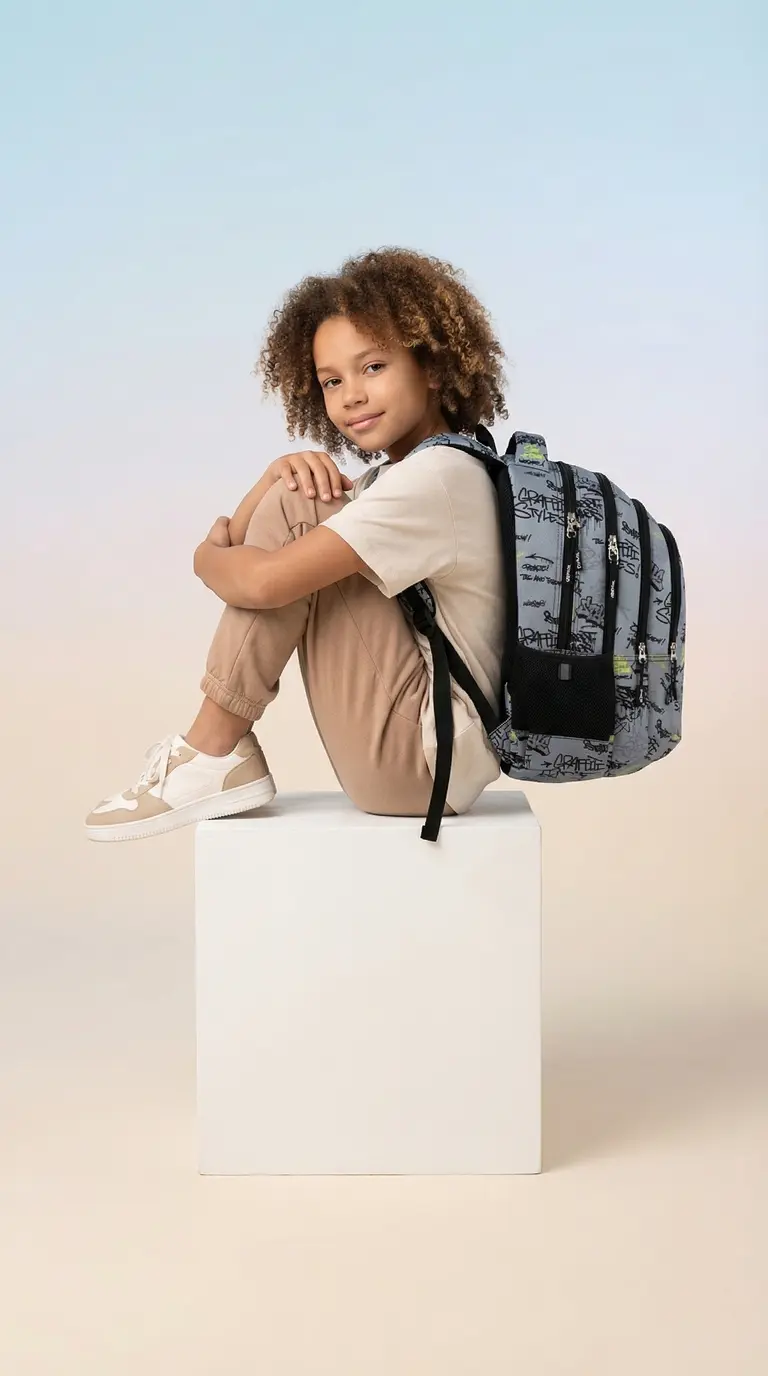
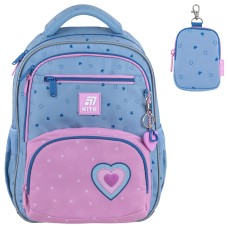
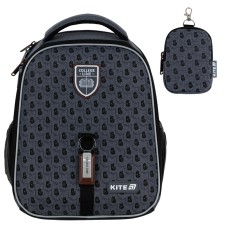
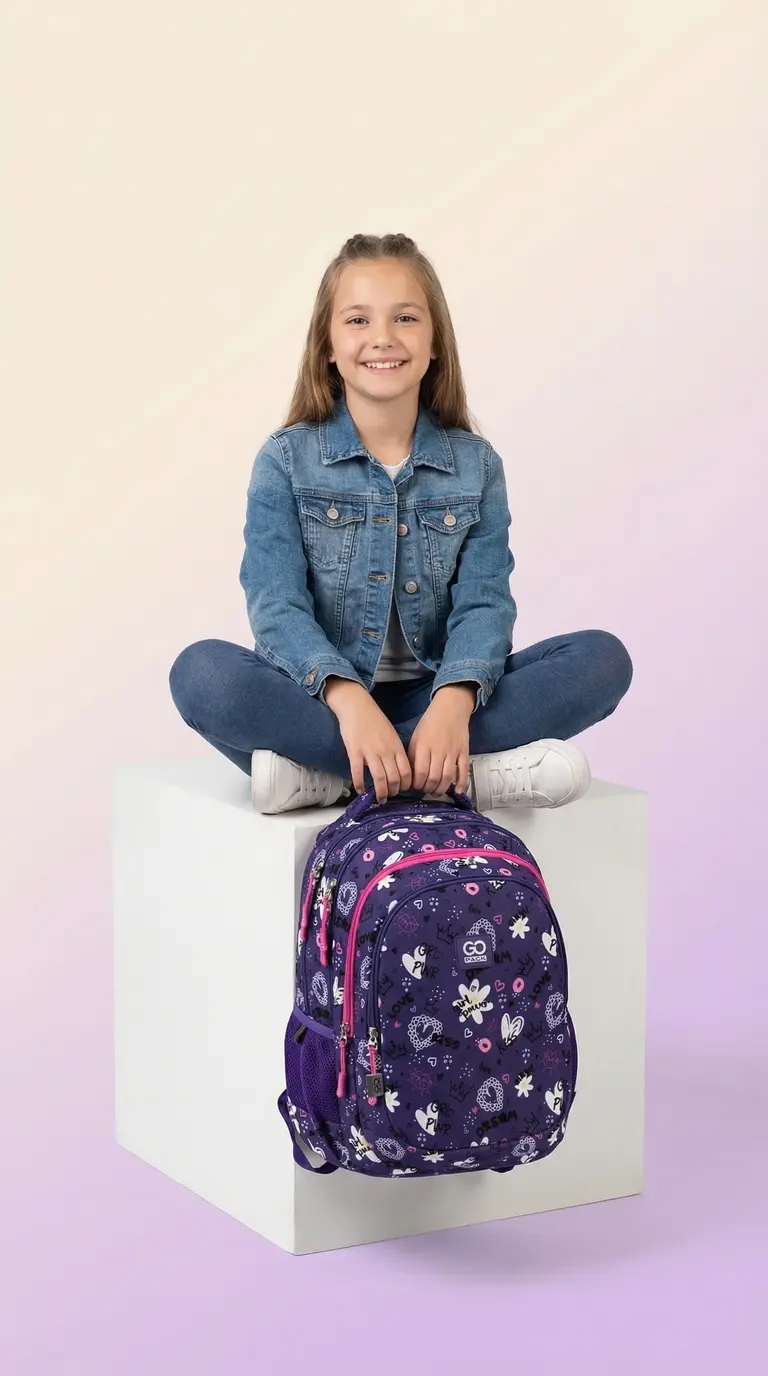
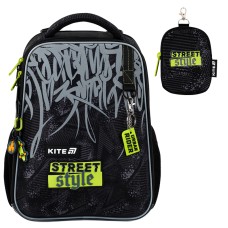
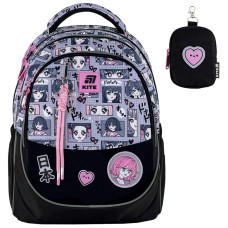
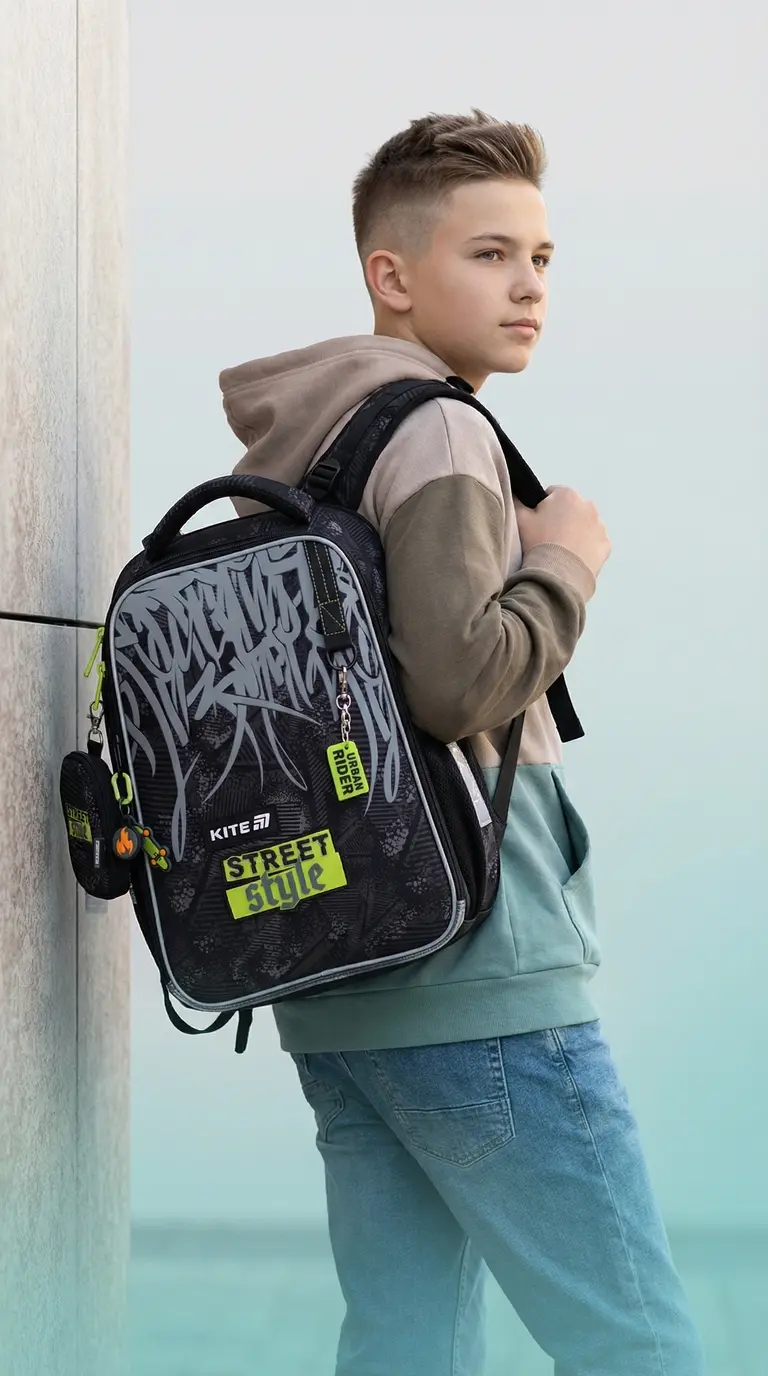
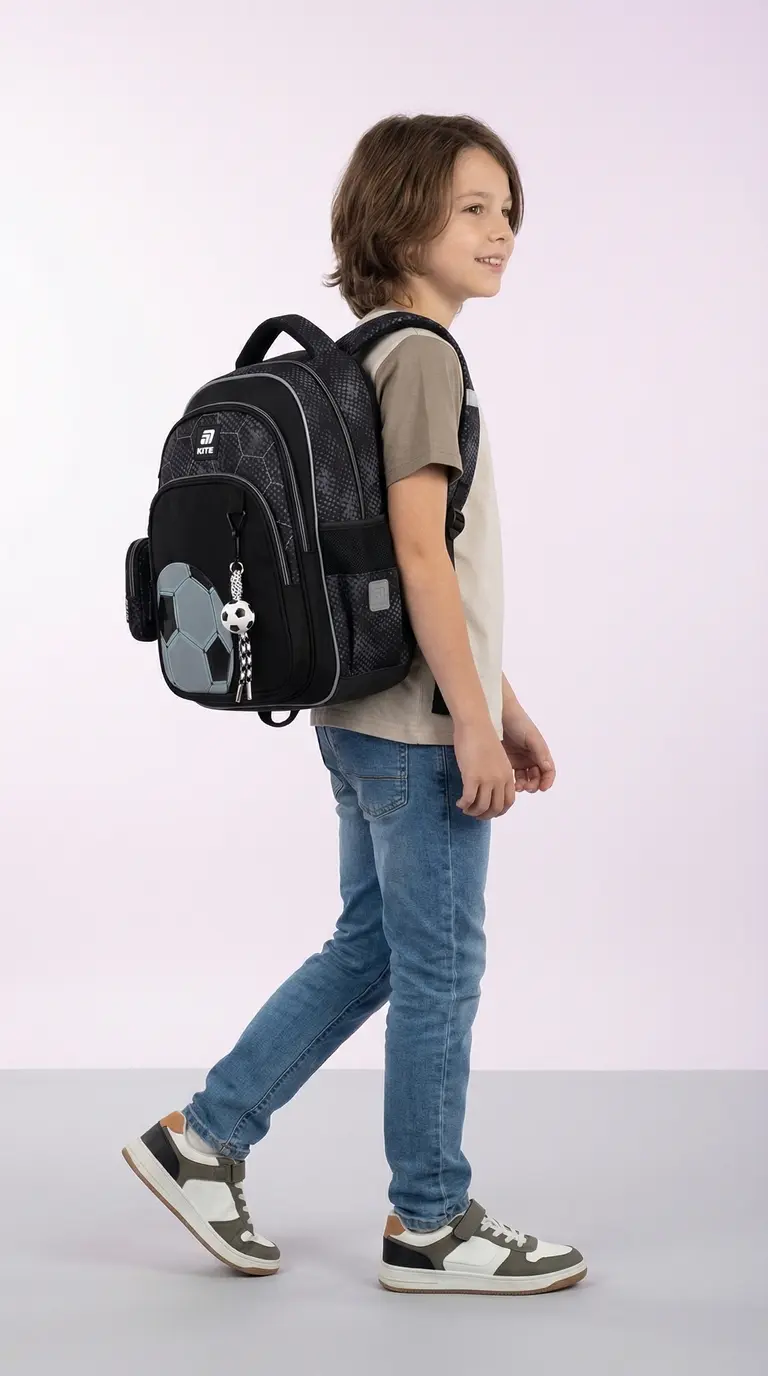
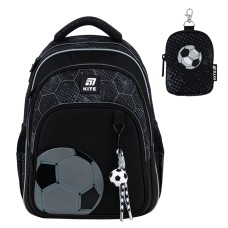
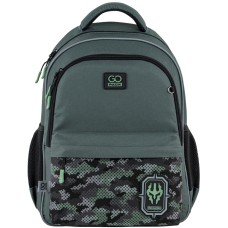
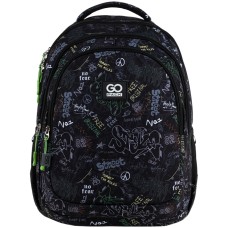
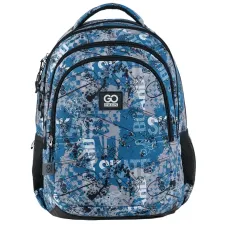
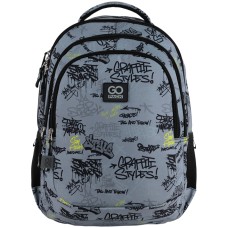
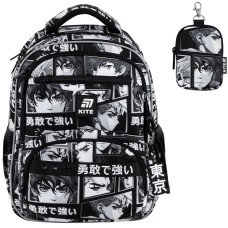
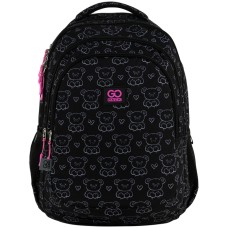
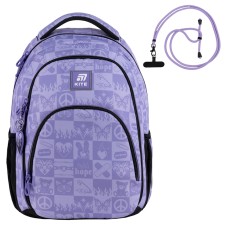
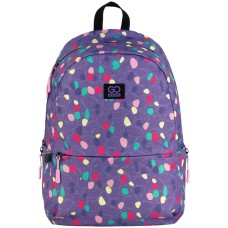
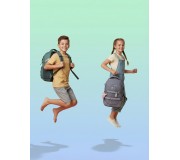
Discover elementary school backpacks in Canada designed for students in Grades 1 through 6 — ages 6 to 11. These kids school backpacks from Kite and GoPack are built for the real demands of Canadian elementary school routines: heavier textbooks from Grade 3 onward, lunch kits, water bottles, indoor shoes, and the kind of daily wear that soft-shell generic bags cannot handle across a full 195-day school year.
This is the longest school phase — six grades across five years of rapid physical development. A school bag for a 7-year-old has completely different requirements than a school bag for a 10 or 11-year-old. The right backpack at each stage keeps the load balanced, supports developing posture, and makes the daily school routine easier for both students and parents. The wrong one creates habits that are hard to undo.
This category is part of our broader kids backpacks collection. For younger children starting daycare or kindergarten, see our preschool backpacks. For Grade 7 and above, see our high school backpacks.
Quick guides
Backpack size by grade (Canada) · Safe backpack weight for kids · Best ergonomic school backpacks
- Child leans forward while walking — the bag is pulling them backward
- Shoulder straps leave visible red marks after the school day
- Bag sags below the waist rather than sitting at back level
- Complaints of neck, shoulder, or upper back discomfort after school
- Numbness or tingling in the arms or hands
- Child has difficulty putting the bag on independently with a full load
According to the Canadian Paediatric Society and the American Academy of Pediatrics, a child's loaded backpack should not exceed 10–15% of their body weight. For a typical 8-year-old weighing around 25 kg, that is a maximum of 2.5–3.75 kg. Many elementary students — especially in Grades 4–6 with binder-heavy subjects — regularly exceed this. A structured, well-organized bag helps stay within this limit by keeping contents distributed rather than compressed at the bottom.
School Bags for Boys and Girls in Grades 1–6
Whether you are choosing school bags for boys or girls backpacks for school, the structural requirements are the same — proper fit, correct capacity for the grade, and enough organization to keep the daily load balanced. Where they differ is in design preferences, and both Kite and GoPack offer a wide range of colours and styles across the collection.
Boys school backpacks in Grades 3–6 tend to prioritize durability — reinforced stitching, structured bottoms that hold up when the bag is dropped repeatedly, and reliable zippers that survive daily locker cycles. Girls school backpacks for the same grades often prioritize a slimmer profile and front organizer pockets for smaller accessories. Both needs are met in this collection without compromising the ergonomic structure that matters for posture and daily comfort.
Choosing a Backpack by Grade: What Changes at Each Stage
Grades 1–2 — Ages 6–8 (The Grade 1 Backpack)
A Grade 1 backpack or school bag for a 7-year-old needs to be the smallest structured bag that fits the daily load — not the largest bag that will accommodate growth. At this stage, children carry a communication folder, a pencil case, a lunch kit, a water bottle, and indoor shoes. That is it. A compact 11–14L bag handles this perfectly while keeping the bottom of the bag at waist level where it belongs.
Wide-opening main compartments are critical at this age — younger students should not have to dig blindly to find their snack or retrieve a folder. A chest strap is still important here because Grade 1 students wear thick snowsuits from November through March, and without one the shoulder straps slide off constantly.
Grades 3–4 — Ages 8–10 (The Grade 4 Backpack)
By Grade 3, the daily load increases noticeably. A Grade 4 backpack or school bag for a 9-year-old now needs to hold two or three subject binders, a heavier lunch kit, a 750ml water bottle, and often a geometry set or art supplies. The 15–18L range covers this well. The key structural requirement at this stage is a reinforced bottom panel — books are heavier and the bag gets set on floors, lockers, and wet pavement multiple times daily.
Internal organization becomes more important here. A dedicated water bottle pocket on the side keeps moisture separated from paper. A front organizer pocket with a key clip and pen loops reduces the morning scramble. A padded tech sleeve protects school-issued tablets that many students carry from Grade 3 or 4 onward.
Grades 5–6 — Ages 10–11 (The Upper Elementary Backpack)
Upper elementary is the heaviest load stage in the kids backpack range. A school bag for a 10 or 11-year-old often carries three or four subject binders, a laptop or Chromebook, lunch gear, and sports equipment on some days. The 18–22L range is appropriate here — but slim profile matters as much as volume. Lockers in Canadian elementary schools are typically 30 cm (12 inches) deep, and a bag that is too thick will not fit alongside a winter jacket. Look for bags under 15 cm in depth.
Elementary School Backpack Size Guide
| Grade | Age | Capacity | Key contents |
|---|---|---|---|
| Grades 1–2 | Ages 6–8 | 11–14L | Folder, pencil case, lunch, water bottle, indoor shoes |
| Grades 3–4 | Ages 8–10 | 15–18L | Binders, tablet, lunch, water bottle, pencil case |
| Grades 5–6 | Ages 10–11 | 18–22L | Multiple binders, laptop, lunch, water bottle, gym clothes |
For more detail including torso measurement guidelines, see our backpack size by grade guide (Canada).
Kite and GoPack vs Generic School Bags
Most generic kids backpacks for school from big-box retailers are unstructured soft shells. When filled, everything sinks to the bottom. The child compensates by leaning forward — which over six years of elementary school becomes a deeply ingrained posture habit. Kite and GoPack are built differently at every structural level.
| Feature | Generic bag | Kite / GoPack |
|---|---|---|
| Back panel | Flat fabric — books poke into the back | Structured orthopedic panel — follows the spine's natural curve |
| Shoulder straps | Narrow and straight — digs into shoulders | Wide padded S-shaped — distributes weight across the trapezius |
| Chest strap | Rarely included — slips off winter coats | Included — stabilizes the load on active school days |
| Bottom panel | Soft — collapses under book weight | Reinforced — maintains shape and protects from wet floors |
| Load position | Everything drops to bottom — pulls backward | Internal dividers keep heavy items against the spine |
| Durability | Zipper fails first — often mid-year | YKK/SBS zippers, reinforced stitching at all stress points |
Built for Canadian Elementary School Conditions
Elementary school students in Canada deal with conditions that test bags harder than most consumer products are designed for. From September rain in Vancouver to February deep freezes in Toronto and Calgary, a school bag for kids in Canada needs to handle it all without soaking through, freezing shut, or falling apart by March break.
- DWR water-repellent coating — repels rain and light snow; keeps homework and electronics dry during walks to school and bus stop waits
- Reinforced bottom panel — protects contents when the bag is set on wet pavement, snowy sidewalks, and school bus floors
- Reflective safety strips — on straps and back panel for visibility during dark fall and winter mornings when children leave home before sunrise
- Easy-clean lining — lunch leaks and crayon marks are inevitable; wipeable interior keeps the bag functional for multiple school years
Trusted by families in Toronto, Vancouver, Calgary, Montreal, and across Canada — parents searching for school backpacks in Canada for elementary students will find back to school backpacks and backpacks for elementary schoolers shipping free on orders over $75 CAD. Primary school backpacks and upper elementary models are in stock year-round, not just in August.
How to Pack an Elementary School Backpack
Even the best ergonomic backpack for kids performs poorly when packed incorrectly. The principle is the same at every grade: heaviest items go closest to the back panel.
- Against the back panel: heaviest textbooks, binders, or a tablet/Chromebook
- Middle compartment: notebooks, folders, lighter supplies
- Front compartment: pencil case, keys, small accessories
- Side pockets: water bottle — never inside the main compartment where it shifts weight unpredictably and risks leaking onto books
School Essentials to Pair With Your Child's Backpack
- Insulated Lunch Boxes — sized to fit the main compartment of 15–22L elementary models
- Water bottles — sized for the side bottle pockets
- Pencil cases — structured cases protect supplies under the weight of heavy books
Free shipping across Canada on orders over $75 CAD · Toronto local pickup available at checkout · Hassle-free returns and exchanges
Elementary School Backpack FAQ
What size backpack is best for elementary school students?
Size depends on the grade. Grades 1–2 need 11–14L. Grades 3–4 need 15–18L. Grades 5–6 need 18–22L. The most important fit rule at every grade: the bottom of the bag should rest at waist level, never below it. A bag that hangs lower shifts the centre of gravity and causes forward lean regardless of how light the contents are.
How many litres is a regular school backpack?
For elementary school students, a standard school backpack ranges from 11L to 22L depending on the grade. The Canadian average for a full school day in Grades 3–5 is typically 15–18L. Higher volumes (20L+) are only appropriate from Grade 5 or 6 onward when the daily subject load justifies the extra capacity.
What is the best school bag for a 7, 8, 9, or 10-year-old?
For a 7 or 8-year-old in Grades 1–2, a compact 11–14L structured backpack with a chest strap and wide padded straps is the right choice. For a 9 or 10-year-old in Grades 3–4, a 15–18L model with an internal padded tablet sleeve and reinforced bottom handles the heavier load. Both should have a chest strap, especially for Canadian winters when outer layers change how the bag sits.
Is a 20L backpack big enough for elementary school?
For most elementary students, 20L is at the upper end of what is appropriate — and only from Grade 5 or 6. For Grades 1–4, 20L is too large. An oversized bag almost always gets overpacked, pushing the total weight above the 10–15% of body weight recommended by the Canadian Paediatric Society. Choose the smallest bag that fits the actual daily load.
Are ergonomic backpacks worth it for elementary school?
Yes. Structured ergonomic school backpacks keep weight closer to the spine and reduce the forward lean that unstructured bags cause. The Canadian Paediatric Society and the American Academy of Pediatrics both note that how weight is distributed matters as much as the total weight. A structured bag with a chest strap, orthopedic back panel, and internal dividers outperforms a soft generic bag at the same weight by a significant margin.
Do these backpacks fit in Canadian school lockers?
Most Kite and GoPack elementary models are designed with a slim depth profile — typically under 15 cm — which fits inside standard Canadian school lockers (usually 30 cm / 12 inches deep) alongside a winter jacket and boots. Check each product page for exact dimensions if locker fit is a priority.
What is the best backpack for Grade 4 students in Canada?
A Grade 4 backpack should be in the 15–18L range with a padded tablet sleeve, reinforced bottom panel, front organizer pocket, and a water bottle side pocket. Kite models in this range include a chest strap and structured back panel — both important for the heavier load that Grade 4 students carry. GoPack models offer the same practical organization at a more accessible price point.
Are these backpacks water-resistant for Canadian winters?
Yes. Kite and GoPack elementary models use DWR water-repellent fabric that handles rain, slush, and light snow — the everyday conditions of a Canadian school year from September through April. All models include reflective safety elements for dark fall and winter mornings. They are water-resistant rather than fully waterproof, which is sufficient for regular daily school use.