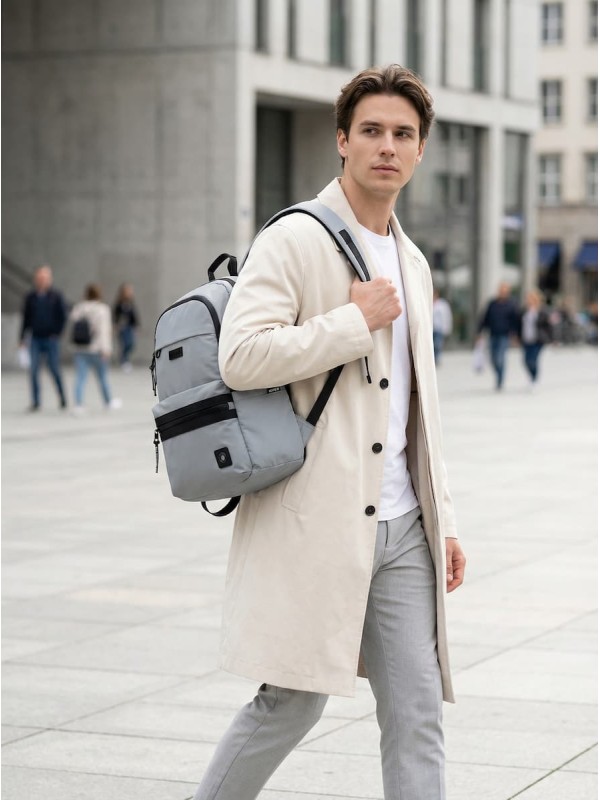
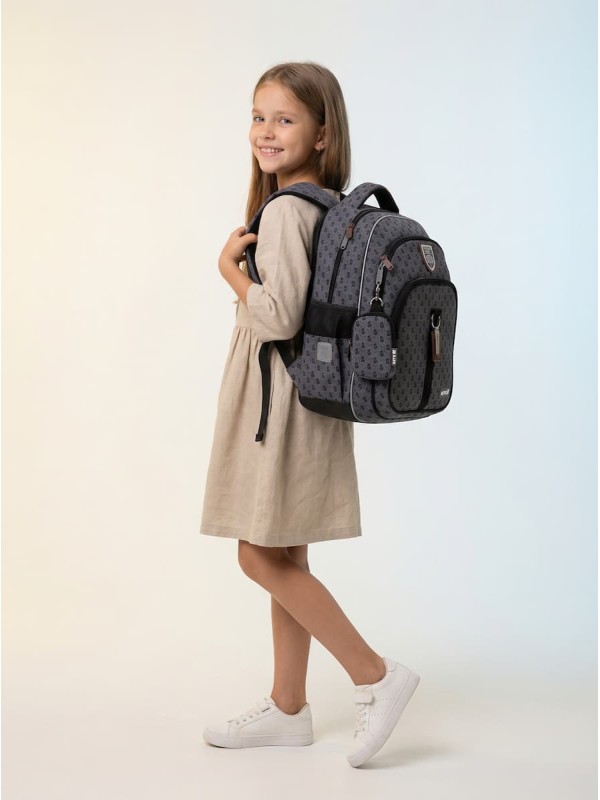
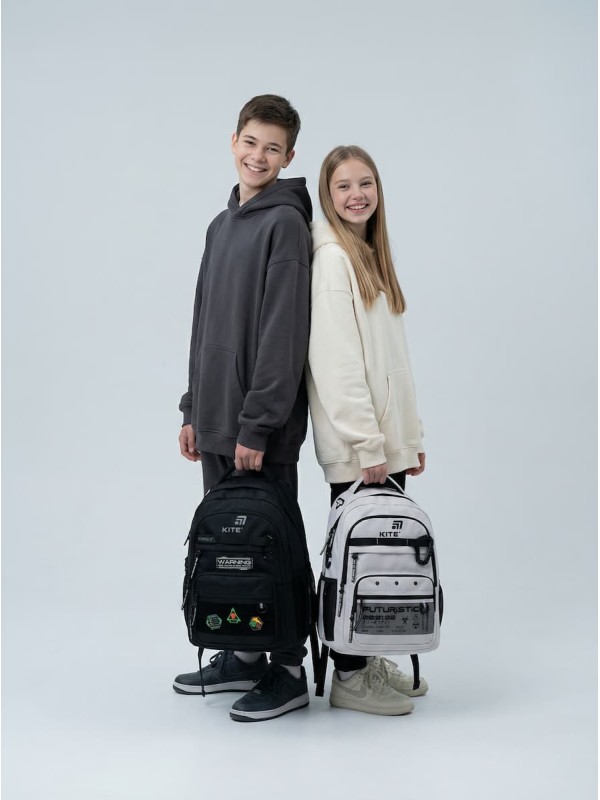
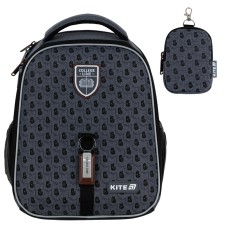
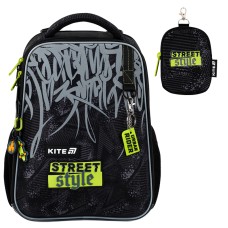
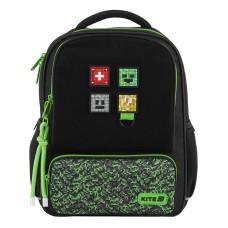
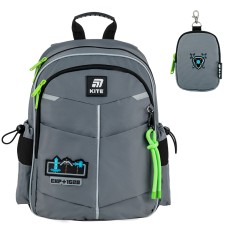
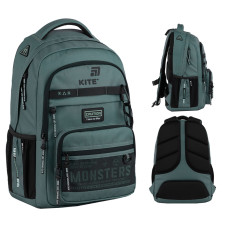
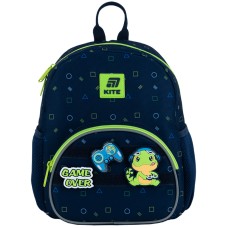
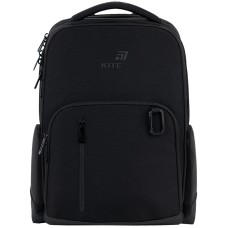
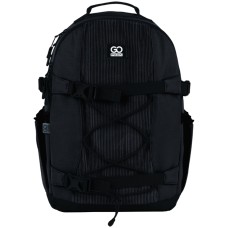
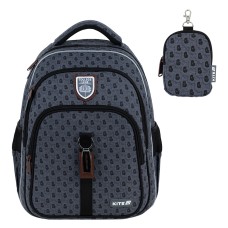
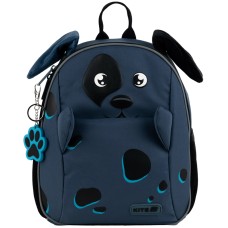
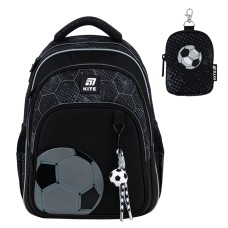
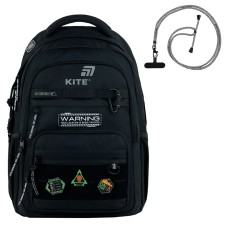
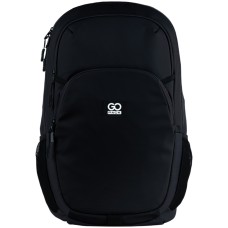
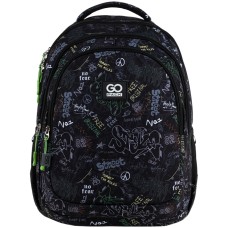
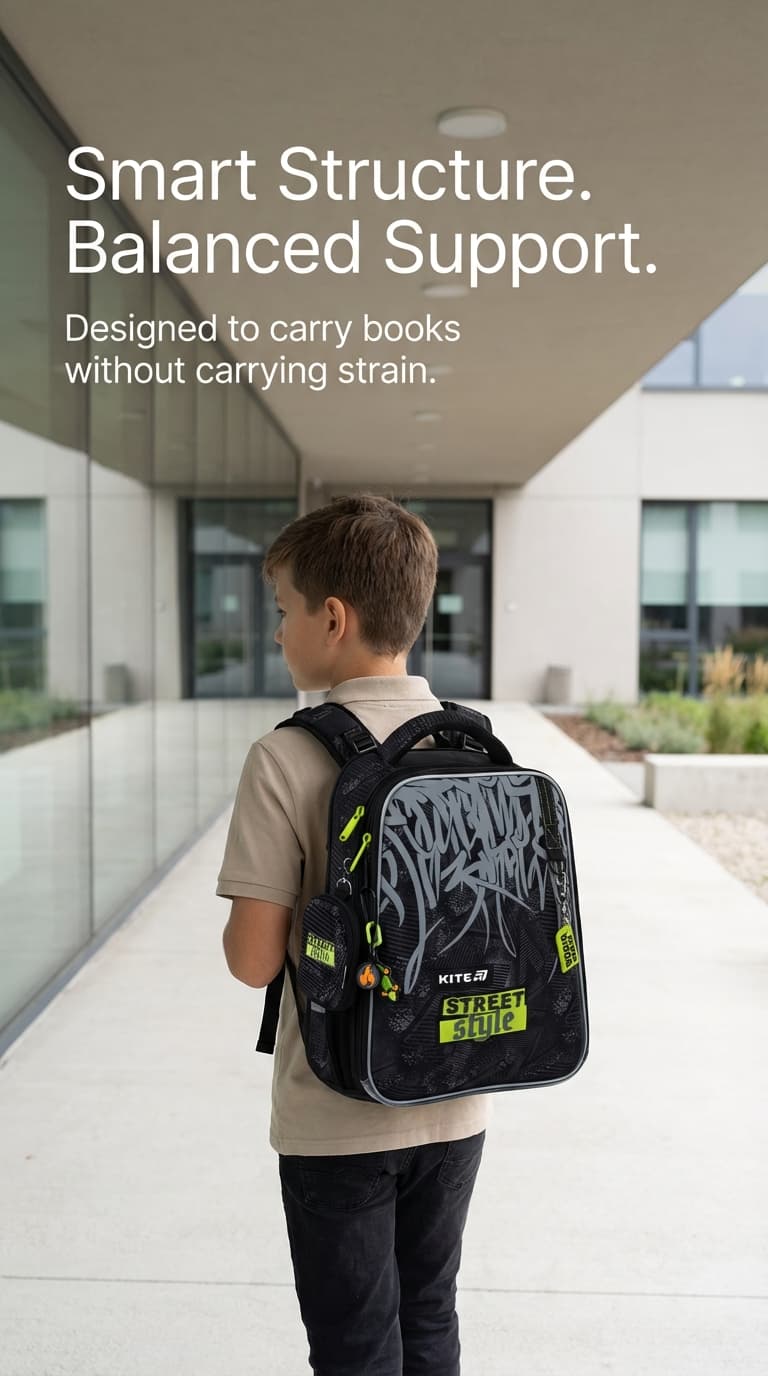
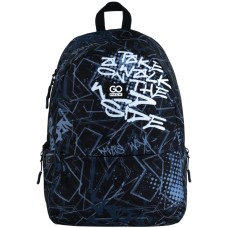
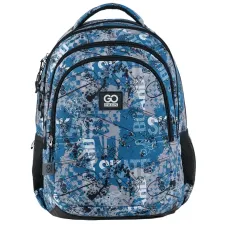
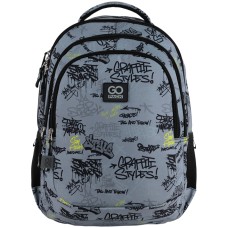
Discover boys school backpacks in Canada built for the real demands of a Canadian school year — heavy textbooks, daily locker cycles, wet sidewalks, and the kind of active use that soft-shell generic bags cannot survive. This collection from Kite and GoPack covers every stage from elementary through high school, with construction that holds up across a full Canadian school year of drops, locker cycles, and daily rough handling.
This category is part of our broader kids backpacks collection. For girls, see girls school backpacks. For Grade 7 and above, see high school backpacks.
For a full breakdown of back support, strap design, and load distribution, see our ergonomic backpacks collection.
Signs a boys school backpack is failing
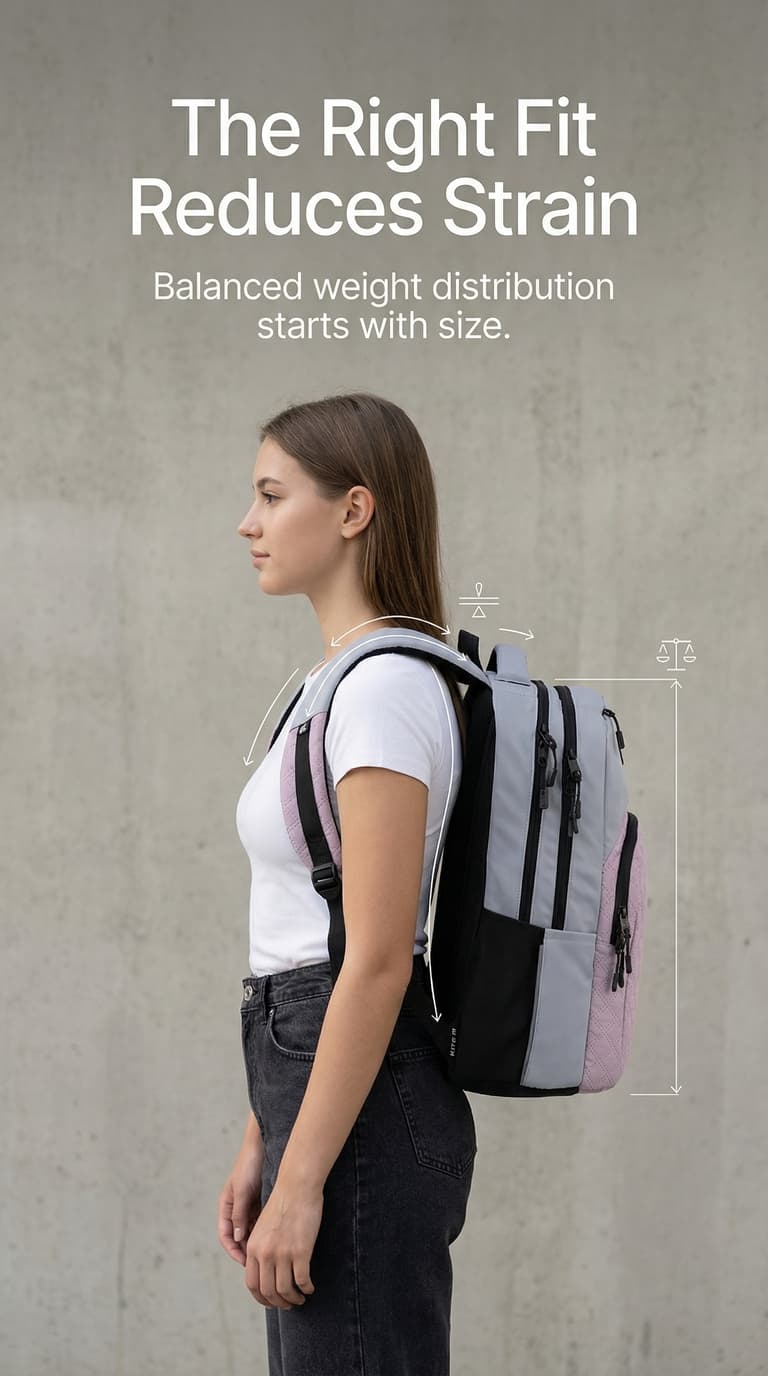
- He leans forward while walking — the bag is pulling him backward, not sitting against his back
- The shoulder straps leave red marks or slide off constantly, especially over a winter jacket
- The zipper has failed — usually within the first semester on cheap bags
- The bottom has blown out or sagged — books are sitting below his waist
- He complains of neck, shoulder, or upper back pain after a full school day
- The bag cannot stand upright on its own when set down — everything collapses to one side
Boys Backpacks by Grade
Grades 1–3
Ages 6–8 · 11–14L
Compact bag for folder, pencil case, lunch kit, and water bottle. Wide-opening main compartment, chest strap for winter snowsuit. Empty weight under 600g — every gram of bag is a gram less he can carry.
→ Shop elementary boys backpacks
Grades 4–6
Ages 9–11 · 15–18L
Heavier load: two or three binders, tablet, water bottle, lunch kit. This is when construction quality starts to matter — bags get dropped on wet pavement, shoved into lockers, and dragged across bus floors daily. Reinforced bottom panel and YKK zippers are non-negotiable at this stage.
→ Shop upper elementary boys backpacks
Grades 7–12
Ages 12–18 · 18–28L · Laptop sleeve 13–15"
Full load: multiple binders, Chromebook or laptop, charger, lunch gear, gym clothes. For boys commuting by transit in Toronto, Vancouver, or Montreal — slim enough not to block a subway aisle, structured enough to stand upright on a crowded bus floor. Suspended laptop sleeve required (not a slip pocket resting on the bottom panel).
→ Shop high school boys backpacks
Boys School Backpack Size Guide
| Grade |
Age |
Capacity |
Key fit check |
| Grades 1–3 |
Ages 6–8 |
11–14L |
Bottom at waist, chest strap reachable, under 600g empty |
| Grades 4–6 |
Ages 9–11 |
15–18L |
Reinforced bottom, tablet sleeve, side water bottle pocket |
| Grades 7–9 |
Ages 12–14 |
18–22L |
Suspended laptop sleeve, chest strap at mid-sternum |
| Grades 10–12 |
Ages 15–18 |
22–28L |
Load lifters, reinforced base, 13–15" laptop compartment |
Where Generic Boys Bags Fail — and Why
Boys treat bags hard. That's not a construction brief — it's a buying reality. Many generic school bags for boys prioritize appearance over long-term structural durability. Here's where they typically fail, in order:
Zippers — first to go
Cheap zipper pulls separate from the slider within the first semester. YKK and SBS zippers — the standard on Kite and GoPack — use a self-locking mechanism and reinforced stitching at the pull attachment point. The difference between a bag that lasts one year and one that lasts three starts here.
Strap seams — second
The point where shoulder straps attach to the bag body is the highest stress zone under a heavy load. Single-stitched seams tear within months when a boy swings the bag by one strap or lifts it off the floor by the handle while fully loaded. Kite and GoPack use bar-tacked or double-stitched reinforcement at every attachment point.
Bottom panel — third
Soft bottom panels compress under book weight and soak through on wet pavement. A reinforced base panel holds its shape, keeps the bag standing upright when set down, and protects contents from wet school bus floors and snowy sidewalks — a daily occurrence from October through March.
Kite — Ergonomic Priority
European orthopedic back panel, Air Comfort ventilation, S-shaped straps with chest strap. Best for heavier loads, longer commutes, or boys with existing shoulder or back discomfort from a poorly fitted previous bag.
GoPack — Practical Durability
Reinforced construction, YKK zippers, organized compartments. Strong everyday performance at a more accessible price — the right call when durability is the priority and ergonomic premium isn't needed.
All models use DWR water-repellent coating for rain and slush, reinforced stitching at all stress points, and reflective strips on straps and back panels for dark Canadian winter mornings. Adjustable padded shoulder straps re-adjust as boys grow during the school year and as winter coats change the fit from September to March. Free shipping across Canada on orders over $75 CAD.
Complete His School Setup
- Insulated lunch boxes — sized to fit the main compartment of elementary and middle school models
- Water bottles — sized for the side bottle pockets so moisture stays out of the main compartment
- Pencil cases — structured cases that protect supplies under the weight of heavy books
Free shipping across Canada on orders over $75 CAD · Toronto local pickup available at checkout · Hassle-free returns and exchanges
Boys School Backpack FAQ
What size backpack is best for boys at school?
Grade is the guide, not age alone. Grades 1–3: 11–14L. Grades 4–6: 15–18L. Grades 7–9: 18–22L. Grades 10–12: 22–28L with a laptop compartment. The non-negotiable fit rule at every grade: the bottom of the bag rests at waist level, not below. A bag hanging at hip level shifts the centre of gravity and forces a forward lean regardless of how light the load is.
What is the best school bag for a teenage boy?
For Grades 9–12: a 22–28L structured bag with a suspended padded laptop compartment, reinforced base, front organizer pocket, and a top handle for transit carry. For boys commuting by TTC, SkyTrain, or STM, a slim upright profile matters as much as volume — a bag that widens under full load is difficult to manage in a crowded transit car. Kite models in this range include load lifter straps that draw the bag closer to the upper back and reduce backward pull significantly.
What features matter most in a durable boys school bag?
In order of where bags fail: YKK or SBS zippers (first failure point on cheap bags), bar-tacked or double-stitched strap attachment points (where most bags tear under repeated heavy lifting), a reinforced bottom panel (for daily drops on pavement and wet bus floors), and DWR water-repellent coating for Canadian weather. Internally: a chest strap, adjustable padded shoulder straps, and a dedicated side water bottle pocket that keeps moisture separated from paper and electronics.
What is a school knapsack — is it the same as a school backpack?
Yes — school knapsack is widely used across Canada, particularly in Ontario and Quebec, as an alternate name for a school backpack. The structural requirements are identical: adjustable padded shoulder straps, a chest strap, a structured back panel, and organized compartments for a full school day. All models in this collection qualify as both.
Are these backpacks water-resistant for Canadian winters?
Yes. Kite and GoPack boys school backpacks use DWR water-repellent fabric that handles rain, slush, and light snow — the standard daily conditions of a Canadian school year from October through April. Water-resistant rather than fully waterproof, which is sufficient for walks to school, bus stop waits, and general outdoor exposure. All models include reflective elements for dark fall and winter mornings.